Results by title
31 books match the query 'Oceans & Seas'
All the Fish in the Sea
Maximum Sustainable Yield and the Failure of Fisheries ManagementCarmel Finley
University of Chicago Press, 2011
Carmel Finley reveals that the fallibility of MSY lies at its very inception—as a tool of government rather than science. The foundational doctrine of MSY emerged at a time when the US government was using science to promote and transfer Western knowledge and technology, and to ensure that American ships and planes would have free passage through the world’s seas and skies. Finley charts the history of US fisheries science using MSY as her focus, and in particular its application to halibut, tuna, and salmon fisheries. Fish populations the world over are threatened, and All the Fish in the Sea helps to sound warnings of the effect of any management policies divested from science itself.
An Ocean Garden
The Secret Life of SeaweedJosie Iselin
Oregon State University Press, 2023
Blue Legalities
The Life and Laws of the SeaIrus Braverman and Elizabeth R. Johnson, editors
Duke University Press, 2019
Contributors. Stacy Alaimo, Amy Braun, Irus Braverman, Holly Jean Buck, Jennifer L. Gaynor, Stefan Helmreich, Elizabeth R. Johnson, Stephanie Jones, Zsofia Korosy, Berit Kristoffersen, Jessica Lehman, Astrida Neimanis, Susan Reid, Alison Rieser, Katherine G. Sammler, Astrid Schrader, Kristen L. Shake, Phil Steinberg
Chasing Science at Sea
Racing Hurricanes, Stalking Sharks, and Living Undersea with Ocean ExpertsEllen Prager
University of Chicago Press, 2008
With passion and wit, well-known marine scientist Ellen Prager shares her stories as well as those of her colleagues, revealing that in the field ingenuity and a good sense of humor are as essential as water, sunblock, and GPS. Serendipity is invaluable, and while collecting data is the goal, sometimes just getting back to shore means success. But despite the physical hardship and emotional duress that come with the work, optimism and adventure prompt a particularly hardy species of scientist to return again and again to the sea.
Filled with firsthand accounts of the challenges and triumphs of dealing with the extreme forces of nature and the unpredictable world of the ocean, Chasing Science at Sea is a unique glimpse below the water line at what it is like and why it is important to study, explore, and spend time in one of our planet’s most fascinating and foreign environments.
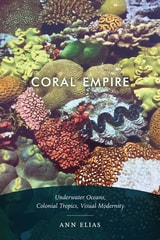
Coral Empire
Underwater Oceans, Colonial Tropics, Visual ModernityAnn Elias
Duke University Press, 2019
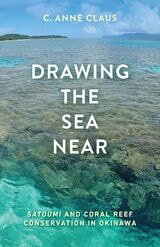
Drawing the Sea Near
Satoumi and Coral Reef Conservation in OkinawaC. Anne Claus
University of Minnesota Press, 2020
How Japanese coastal residents and transnational conservationists collaborated to foster relationships between humans and sea life
Drawing the Sea Near opens a new window to our understanding of transnational conservation by investigating projects in Okinawa shaped by a “conservation-near” approach—which draws on the senses, the body, and memory to collapse the distance between people and their surroundings and to foster collaboration and equity between coastal residents and transnational conservation organizations. This approach contrasts with the traditional Western “conservation-far” model premised on the separation of humans from the environment.
Based on twenty months of participant observation and interviews, this richly detailed, engagingly written ethnography focuses on Okinawa’s coral reefs to explore an unusually inclusive, experiential, and socially just approach to conservation. In doing so, C. Anne Claus challenges orthodox assumptions about nature, wilderness, and the future of environmentalism within transnational organizations. She provides a compelling look at how transnational conservation organizations—in this case a field office of the World Wide Fund for Nature in Okinawa—negotiate institutional expectations for conservation with localized approaches to caring for ocean life.
In pursuing how particular projects off the coast of Japan unfolded, Drawing the Sea Near illuminates the real challenges and possibilities of work within the multifaceted transnational structures of global conservation organizations. Uniquely, it focuses on the conservationists themselves: why and how has their approach to project work changed, and how have they themselves been transformed in the process?

Hidden Ocean Forests
An Undersea Journey to Uncover a Fascinating World of KelpRoss Frylinck and Faine Loubser
University of Chicago Press, 2027
Stunning underwater photography of the world’s great marine kelp forests and the wildlife they shelter.
Kelp forests, which thrive in cold, nutrient-rich waters, are found along the coasts of every continent except Antarctica. These underwater realms are stunningly beautiful and host entire ecosystems, providing food, shelter, and breeding grounds for an abundance of marine life.
With transcendent photography and compelling accounts from freedivers and storytellers Ross Frylinck and Faine Loubser, this book offers a captivating glimpse into these ocean forests. Dive beneath the midnight sun in the Arctic Circle and watch the northern lights dance over the waters of Shetland, Scotland. In Aotearoa New Zealand, swim with playful sea lions off Rakiura Stewart Island. In South Africa’s Cape Peninsula, cross paths with dusky dolphins, whales, and sharks. Meet an austral sea wolf in the icy Strait of Magellan and learn from kelp harvesters on remote islands in Japan.
Hidden Ocean Forests documents kelp forests around the world, showcasing their rich biodiversity and long-lasting impacts on human culture. These remarkable images and enchanting essays reveal the hidden beauty, significance, and fragility of these submerged wonderlands.
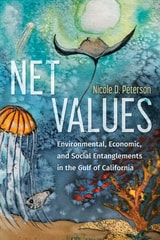
Net Values
Environmental, Economic, and Social Entanglements in the Gulf of CaliforniaNicole D. Peterson
University of Arizona Press, 2025
In Loreto, Baja California Sur, Mexico, artisanal fishing families and staff of Loreto Bay National Park face an array of choices as tourism, environmental concerns, and economic precarity challenge livelihoods and natural resource availability. In Net Values, Nicole D. Peterson offers a critical examination of how the idea of “choice” is understood, and what it means for policies, planning, and programs to ignore the social, political, economic, and cultural contexts surrounding these choices.
Anchored by more than twenty years of research, Peterson provides insight into the fishing community of Loreto and reveals an important role in decision-making that diverges from previous studies. She argues that decisions about fishing, natural resource management, and other aspects of life are influenced by context, values, and expectations in ways that go beyond the typical psychological or cognitive theories of choice. Instead, Net Values highlights the ways that choices are constrained and enabled by values and expectations of cultures, histories, relationships, and experiences, both personal and shared. Peterson answers questions such as “why do the fishermen fish?” or “what is the marine park staff doing?” These decisions and choices are related to the larger implication addressed by this book: that in order to make effective policies around natural resource management and other issues, we must understand how those potential policies interact with the decision processes already underway.
Divided into five chapters, Net Values is rich in ethnographic detail, drawing from real people to inform the narratives, chapters, and theoretical elaboration. Peterson’s interactions with fishers such as Don Javier and his family and friends support the ideas offered around choice, values, and strategies, connecting ideas to real experiences.
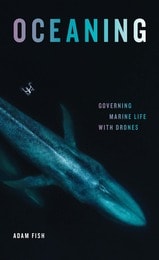
Oceaning
Governing Marine Life with DronesAdam Fish
Duke University Press, 2024
Oceans
An Illustrated ReferenceDorrik Stow
University of Chicago Press, 2005
Oceans: An Illustrated Reference tells the story of this last great frontier. With hundreds of beautiful full-color photographs and explanatory diagrams, charts, and maps, Oceans combines the visual splendor of ocean life with up-to-date scientific information to provide an invaluable and fascinating resource on this vital realm. Covering all major areas of oceanographic knowledge and research, Oceans is divided into two parts. The first, "Ocean Systems," examines the physical nature of the oceans, including plate tectonics, temperature and climate, waves and tides, natural resources and much more. The second, "Ocean Life,"explores biodiversity, evolution and adaptation, marine ecosystems and complex communities, and the preservation of fragile marine environments.
Oceans also offers readers a host of tools to better understand the magnificent world of the sea. A special section of bathymetric maps-made possible by satellite observation, deep-towed surveying craft, and remotely operated submarine vessels-provides a view of the depth and texture of ocean floors around the globe, giving us a glimpse of worlds rarely seen. And throughout the book, engagingly written special features delve into specific marine environments and phenomena such as the lost Tethys Ocean, from which the Himalayas were born. Cross-references and a detailed index help readers navigate this multifaceted volume, and a glossary provides clear definitions of scientific vocabulary.
Although the oceans are vast, their resources are finite. Oceans clearly presents the future challenge to us all-that of ensuring that our common ocean heritage is duly respected, wisely managed, and carefully harnessed for the benefit of the whole planet. Lavishly illustrated and filled with current research, Oceans is a step in that direction: a rich, magnificent, and illuminating volume for anyone who has ever heard the siren song of the sea.
Our Threatened Oceans
Stefan Rahmstorf
Haus Publishing, 2009
Plankton
Wonders of the Drifting WorldChristian Sardet
University of Chicago Press, 2015
Viewing these creatures up close for the first time can be a thrilling experience—an elaborate but hidden world truly opens up before your eyes. Through hundreds of close-up photographs, Plankton transports readers into the currents, where jeweled chains hang next to phosphorescent chandeliers, spidery claws jut out from sinuous bodies, and gelatinous barrels protect microscopic hearts. The creatures’ vibrant colors pop against the black pages, allowing readers to examine every eye and follow every tentacle. Jellyfish, tadpoles, and bacteria all find a place in the book, representing the broad scope of organisms dependent on drifting currents.
Christian Sardet’s enlightening text explains the biological underpinnings of each species while connecting them to the larger living world. He begins with plankton’s origins and history, then dives into each group, covering ctenophores and cnidarians, crustaceans and mollusks, and worms and tadpoles. He also demonstrates the indisputable impact of plankton in our lives. Plankton drift through our world mostly unseen, yet they are diverse organisms that form ninety-five percent of ocean life. Biologically, they are the foundation of the aquatic food web and consume as much carbon dioxide as land-based plants. Culturally, they have driven new industries and captured artists’ imaginations.
While scientists and entrepreneurs are just starting to tap the potential of this undersea forest, for most people these pages will represent uncharted waters. Plankton is a spectacular journey that will leave readers seeing the ocean in ways they never imagined.
RISINGTIDEFALLINGSTAR
In Search of the Soul of the SeaPhilip Hoare
University of Chicago Press, 2018
Many of us visit the sea. Admire it. Even profess to love it. But very few of us live it. Philip Hoare does. He swims in the sea every day, either off the coast of his native Southampton or his adopted Cape Cod. He watches its daily and seasonal changes. He collects and communes with the wrack—both dead and never living—that it throws up on the shingle. He thinks with, at, through the sea.
All of which should prepare readers: RISINGTIDEFALLINGSTAR is no ordinary book. It mounts no straight-ahead argument. It hews to no single genre. Instead, like the sea itself, it moves, flows, absorbs, transforms. In its pages we find passages of beautiful nature and travel writing, lyrical memoir, seams of American and English history and much more. We find Thoreau and Melville, Bowie and Byron, John Waters and Virginia Woolf, all linked through a certain refusal to be contained, to be strictly defined—an openness to discovery and change. Running throughout is an air of elegy, a reminder that the sea is an ending, a repository of lost ships, lost people, lost ways of being. It is where we came from; for Hoare, it is where he is going.
“Every swim is a little death,” Hoare writes, “but it is also a reminder that you are alive.” Few books have ever made that knife’s edge so palpable. Read RISINGTIDEFALLINGSTAR. Let it settle into the seabed of your soul. You’ll never forget it.
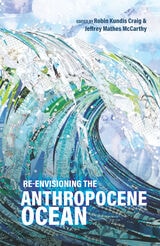
Re-envisioning the Anthropocene Ocean
Edited by Robin Kundis Craig and Jeffrey Mathes McCarthy
University of Utah Press, 2022
The world is at a critical moment, when humans must grapple with thinking about the planet’s oceans from ecological, physical, social, and legal perspectives. Warming ocean temperatures, changing currents, cultural displacement, Indigenous resilience, melting polar ice, habitat loss, are but a few of the global issues reflected in the planetary ocean as a front line in the unfolding drama of climate change. Re-envisioning the Anthropocene Ocean brings together leading scientists, lawyers, humanists, and Indigenous voices to tell of the ocean’s precarious position in the twenty-first century. The contributors affirm that the planetary ocean is crucial to our well-being and overdue for a positive change in public action to enhance the world’s resilience to climate change, ocean acidification, and other stressors. These essays engage that important work of positively re-imagining the ocean in the Anthropocene.
This volume brings diverse perspectives to the planet’s ocean future. New essays are contextualized with narratives woven by earlier ocean writers, showing readers how past perceptions of the ocean have led us to where we are today in terms of both problems and potential new visions. In this one volume, readers experience both the history of humanity’s multi- and interdisciplinary interactions with the ocean, find new perspectives on that history, and discover ideas for looking forward.
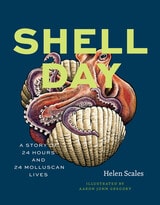
Shell Day
A Story of 24 Hours and 24 Molluscan LivesHelen Scales
University of Chicago Press, 2026
From morning to night and from the Arctic to the equator, snails, clams, and other shell-making mollusks have busy days. In this short book, acclaimed author and marine biologist Helen Scales shows readers exactly how these animals spend their time. Each chapter of Shell Day features a single mollusk during a single hour, highlighting twenty-four different species.
Far in the north, the Svalbard archipelago lies deep in the darkness of the polar night. And yet, in what remains a scientific mystery, Iceland scallops continue their daily rhythms, closing and opening their fan-shaped shells using an internal clock. At noon, we observe a clam shell sitting still on the seabed of a sandy tropical lagoon. The two shells open slightly, and a pair of rounded eyes peep out. A small, rust-colored coconut octopus hiding inside lets the clam shells fall apart and gathers them up in her arms. This mollusk’s ancestors long ago lost the ability to produce their own shells, but the cephalopod is happy to use another animal’s castoff as a temporary home. At ten that night, we find ourselves in Southern France. A male moon snail uses his huge, fleshy foot like a plow as he digs down into the seabed in search of food. When the moon snail finds a cockle, he swiftly smothers it, then sets about drilling, aided by a daub of acidic slime. Cockles are tasty, but so are other moon snails, and his snacking has a cannibalistic flavor.
For each chapter, illustrator and cartoonist Aaron John Gregory has depicted molluscan scenes with entrancing pen-and-ink drawings. Working together to narrate and illustrate these unique moments in time, Scales and Gregory have created an engaging read that is a perfect way to spend an hour or two—and a true gift for beachcombers, naturalists, or anyone eager to learn about the mollusks that make their favorite shells.
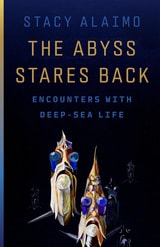
The Abyss Stares Back
Encounters with Deep-Sea LifeStacy Alaimo
University of Minnesota Press, 2025
In an era of accelerating extinctions, what does it mean to discover thousands of new species in the deep sea?
As we see the catastrophic effects of the Anthropocene proliferate, advanced technologies also grant us greater access to the furthest reaches of the world’s oceans, facilitating the discovery of countless new species. Sorting through the implications of this strange paradox, Stacy Alaimo explores the influence this newfound intimacy with the deep sea might have on our broader relationship to the nonhuman world. While many images of these abyssal creatures circulate as shallow clickbait, aesthetic representations can be enticing lures for speculating about their lives, profoundly expanding our environmental concern.
The Abyss Stares Back analyzes a diverse range of scientific, literary, and artistic accounts of deep-sea exploration, including work from the naturalist William Beebe and the artist Else Bostelmann as well as results of the Census of Marine Life that began at the turn of the twenty-first century. As she focuses on oft-overlooked creatures of the deep, such as tubeworms, hatchetfish, siphonophores, and cephalopods, which are typically cast as “alien,” Alaimo shows how depictions of the deep seas have been enmeshed in long colonial histories and racist constructions of a threatening abyss.
Drawing on feminist environmentalism, posthumanism, science and technology studies, and Indigenous and non-Western perspectives, Alaimo details how our understanding of science is fundamentally altered by aesthetic encounters with these otherworldly life forms. She argues that, although the deep sea is often thought of as a lifeless void with little connection to human existence, our increasing devastation of this realm underscores our ethical obligation to protect the biodiverse life in the depths. When the abyss stares back, it demands recognition.
Retail e-book files for this title are screen-reader friendly with images accompanied by short alt text and/or extended descriptions.
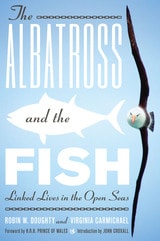
The Albatross and the Fish
Linked Lives in the Open SeasBy Robin W. Doughty and Virginia Carmichael
University of Texas Press, 2011
Breeding on remote ocean islands and spending much of its life foraging for food across vast stretches of seemingly empty seas, the albatross remains a legend for most people. And yet, humans are threatening the albatross family to such an extent that it is currently the most threatened bird group in the world. In this extensively researched, highly readable book, Robin W. Doughty and Virginia Carmichael tell the story of a potentially catastrophic extinction that has been interrupted by an unlikely alliance of governments, conservation groups, and fishermen.
Doughty and Carmichael authoritatively establish that the albatross's fate is linked to the fate of two of the highest-value table fish, Bluefin Tuna and Patagonian Toothfish, which are threatened by unregulated commercial harvesting. The authors tell us that commercial fishing techniques are annually killing tens of thousands of albatrosses. And the authors explain how the breeding biology of albatrosses makes them unable to replenish their numbers at the rate they are being depleted. Doughty and Carmichael set the albatross's fate in the larger context of threats facing the ocean commons, ranging from industrial overfishing to our habit of dumping chemicals, solid waste, and plastic trash into the open seas. They also highlight the efforts of dedicated individuals, environmental groups, fishery management bodies, and governments who are working for seabird and fish conservation and demonstrate that these efforts can lead to sustainable solutions for the iconic seabirds and the entire ocean ecosystem.
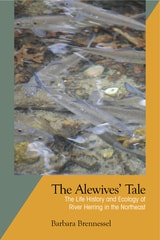
The Alewives' Tale
The Life History and Ecology of River Herring in the NortheastBarbara Brennessel
University of Massachusetts Press, 2014
The Alewives' Tale describes the plight of alewives and blueback herring, two fish species that have similar life histories and are difficult to distinguish by sight. Collectively referred to as river herring, they have been economically important since colonial times as food, fertilizer, and bait. In recent years they have attracted much attention from environmentalists, especially as attempts are being made, on and beyond Cape Cod, to restore the rivers, streams, ponds, lakes, and estuaries that are crucial for their reproduction and survival.
Brennessel provides an overview of the biology of the fish—from fertilized eggs to large schools of adults that migrate in the Atlantic Ocean—while describing the habitats at different stages of their life history. She explores the causes of the dramatic decline of river herring since the mid-twentieth century and the various efforts to restore these iconic fish to the historic populations that treated many onlookers to spectacular inland migrations each spring.
The Economic Approach
Unpublished Writings of Gary S. BeckerGary S. Becker
University of Chicago Press, 2023
Now in paperback, a revealing collection from the intellectual titan whose work shaped the modern world.
As an economist and public intellectual, Gary S. Becker was a giant. The recipient of a Nobel Prize, a John Bates Clark Medal, and a Presidential Medal of Freedom, Becker is widely regarded as the greatest microeconomist in history.
After forty years at the University of Chicago, Becker left a slew of unpublished writings that used an economic approach to human behavior, analyzing such topics as preference formation, rational indoctrination, income inequality, drugs and addiction, and the economics of family.
These papers unveil the process and personality—direct, critical, curious—that made him a beloved figure in his field and beyond. The Economic Approach examines these extant works as a capstone to the Becker oeuvre—not because the works are perfect, but because they offer an illuminating, instructive glimpse into the machinations of an economist who wasn’t motivated by publications. Here, and throughout his works, an inquisitive spirit remains remarkable and forever resonant.
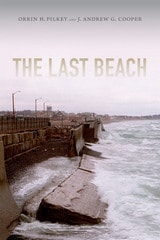
The Last Beach
Orrin H. Pilkey and J. Andrew G. Cooper
Duke University Press, 2014
After explaining beaches as dynamic ecosystems, Pilkey and Cooper assess the harm done by dense oceanfront development accompanied by the construction of massive seawalls to protect new buildings from a shoreline that encroaches as sea levels rise. They discuss the toll taken by sand mining, trash that washes up on beaches, and pollution, which has contaminated not only the water but also, surprisingly, the sand. Acknowledging the challenge of reconciling our actions with our love of beaches, the geologists offer suggestions for reversing course, insisting that given the space, beaches can take care of themselves and provide us with multiple benefits.
The Ocean Reader
History, Culture, PoliticsEric Paul Roorda, editor
Duke University Press, 2020
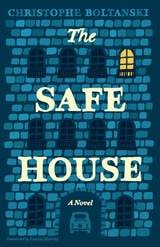
The Safe House
A NovelChristophe Boltanski
University of Chicago Press, 2017
When the Nazis came, Étienne Boltanski divorced his wife and walked out the front door, never to be seen again during the war. So far as the outside world knew, the Jewish doctor had fled. The truth was that he had sneaked back to hide in a secret crawl space at the heart of the house. There he lived for the duration of the war. With the Liberation, Étienne finally emerged, but he and his family were changed forever—anxious, reclusive, yet proudly eccentric. Their lives were spent, amid Bohemian disarray and lingering wartime fears, in the mansion’s recesses or packed comically into the protective cocoon of a Fiat.
That house (and its vehicular appendage) is at the heart of Christophe Boltanski’s ingeniously structured, lightly fictionalized account of his grandparents and their extended family. The novel unfolds room by room—each chapter opening with a floorplan—introducing us to the characters who occupy each room, including the narrator’s grandmother—a woman of “savage appetites”—and his uncle Christian, whose haunted artworks would one day make him famous. “The house was a palace,” Boltanski writes, “and they lived like hobos.” Rejecting convention as they’d rejected the outside world, the family never celebrated birthdays or even marked the passage of time, living instead in permanent stasis, ever more closely bonded to the house itself.
The Safe House was a literary sensation when published in France in 2015 and won the Prix de Prix, France’s most prestigious book prize. A French-language film adaptation, La cache, was released in 2025 from director Lionel Baier. With hints of Oulipian playfulness and an atmosphere of dark humor, The Safe House is an unforgettable portrait of a self-imprisoned family.
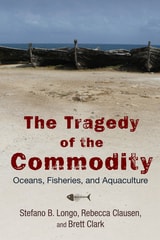
The Tragedy of the Commodity
Oceans, Fisheries, and AquacultureLongo, Stefano B
Rutgers University Press, 2015
Although humans have long depended on oceans and aquatic ecosystems for sustenance and trade, only recently has human influence on these resources dramatically increased, transforming and undermining oceanic environments throughout the world. Marine ecosystems are in a crisis that is global in scope, rapid in pace, and colossal in scale. In The Tragedy of the Commodity, sociologists Stefano B. Longo, Rebecca Clausen, and Brett Clark explore the role human influence plays in this crisis, highlighting the social and economic forces that are at the heart of this looming ecological problem.
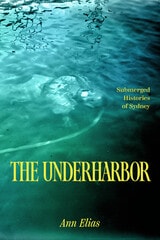
The Underharbor
Submerged Histories of SydneyAnn Elias
University of Chicago Press, 2026
An underwater look at Sydney that surfaces new and unfamiliar histories of people, objects, spaces, and environmental and social change.
The Underharbor places the ocean at the center of a cultural history of Sydney, Australia, a place built on and around seawater, where the community is linked historically, emotionally, and psychologically to the water. Drawing on a series of vignettes that focus on Sydney’s underwater dimensions—including the harbor’s relationship to technological modernity, Indigenous ideas and practices, artistic experimentation, and scientific inquiry—Ann Elias creates a unique portrait of a city and its past. By shifting the terrestrial perspective to the subaquatic, Elias uncovers an area filled with political meaning, poetic significance, and ideological struggles.
Few harbors are as researched as Sydney’s, where fishing, exploration, colonialism, warfare, science, and industry all shaped cultural ideas about underwater space. Between 1850 to 1950, only a few groups of people had access to the remote underharbor: Indigenous divers and First Nations peoples, who were dispossessed by colonizers; divers working primarily to further the maritime industrialization of the growing city and to salvage objects from the harbor floor; researchers in the emerging field of marine science who dove for first-hand observation; and beachcombers, naturalists, and dredgers who got to know the underharbor by bringing it to the surface. Through press stories, models, illustrations, maps, and photographic and cinematic representations, The Underharbor reveals how these watery visions of Sydney shifted over the course of a century.
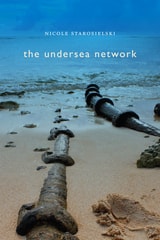
The Undersea Network
Nicole Starosielski
Duke University Press, 2015
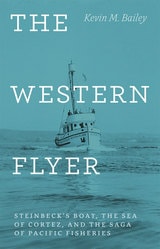
The Western Flyer
Steinbeck's Boat, the Sea of Cortez, and the Saga of Pacific FisheriesKevin M. Bailey
University of Chicago Press, 2015
In this book, Kevin M. Bailey resurrects this forgotten witness to the changing tides of Pacific fisheries. He draws on the Steinbeck archives, interviews with family members of crew, and more than three decades of working in Pacific Northwest fisheries to trace the depletion of marine life through the voyages of a single ship. After Steinbeck and his friend Ed Ricketts—a pioneer in the study of the West Coast’s diverse sea life and the inspiration behind “Doc” in Cannery Row—chartered the boat for their now-famous 1940 expedition, the Western Flyer returned to its life as a sardine seiner in California. But when the sardine fishery in Monterey collapsed, the boat moved on: fishing for Pacific ocean perch off Washington, king crab in the Bering Sea off Alaska, and finally wild Pacific salmon—all industries that would also face collapse.
As the Western Flyer herself faces an uncertain future—a businessman has bought her, intending to bring the boat to Salinas, California, and turn it into a restaurant feature just blocks from Steinbeck’s grave—debates about the status of the California sardine, and of West Coast fisheries generally, have resurfaced. A compelling and timely tale of a boat and the people it carried, of fisheries exploited, and of fortunes won and lost, The Western Flyer is environmental history at its best: a journey through time and across the sea, charting the ebb and flow of the cobalt waters of the Pacific coast.
Touching This Leviathan
Peter Wayne Moe
Oregon State University Press, 2021
Touching This Leviathan asks how we might come to know the unknowable—in this case, whales, animals so large yet so elusive, revealing just a sliver of back, a glimpse of a fluke, or a split-second breach before diving away.
Whale books often sit within disciplinary silos. Touching This Leviathan starts a conversation among them. Drawing on biology, theology, natural history, literature, and writing studies, Peter Wayne Moe offers a deep dive into the alluring and impalpable mysteries of Earth’s largest mammal.
Entertaining, thought-provoking, and swimming with intelligence and wit, Touching is Leviathan is creative nonfiction that gestures toward science and literary criticism as it invites readers into the belly of the whale.
Underwater Eden
Saving the Last Coral Wilderness on EarthEdited by Gregory S. Stone and David Obura
University of Chicago Press, 2012
Visualizing Posthuman Conservation in the Age of the Anthropocene
Amy D. Propen
The Ohio State University Press, 2018
Through case studies in which visual technologies and science play a prominent role in arguments to protect threatened marine species—from photographs showing the impact of ocean plastics on vulnerable sea birds, to debates about seismic testing and its impact on marine species, to maps created from GPS tracking projects—Propen advances a notion of posthuman environmental conservation that decenters the human enough to consider ideas about the material world from the vantage point of the nonhuman animal. In so bringing together work in environmental humanities, animal studies, human geography, and visual-material rhetoric, Propen further shows how interdisciplinary ways of knowing can further shape and illuminate our various lived and embodied experiences.
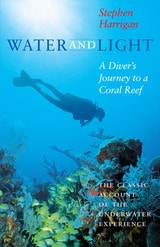
Water and Light
A Diver's Journey to a Coral ReefBy Stephen Harrigan
University of Texas Press, 1999
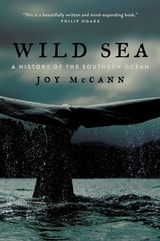
Wild Sea
A History of the Southern OceanJoy McCann
University of Chicago Press, 2019
So begins Joy McCann’s Wild Sea, the remarkable story of the world’s remote Southern, or Antarctic, Ocean. Unlike the Pacific, Atlantic, Indian, and Arctic Oceans with their long maritime histories, little is known about the Southern Ocean. This book takes readers beyond the familiar heroic narratives of polar exploration to explore the nature of this stormy circumpolar ocean and its place in Western and Indigenous histories. Drawing from a vast archive of charts and maps, sea captains’ journals, whalers’ log books, missionaries’ correspondence, voyagers’ letters, scientific reports, stories, myths, and her own experiences, McCann embarks on a voyage of discovery across its surfaces and into its depths, revealing its distinctive physical and biological processes as well as the people, species, events, and ideas that have shaped our perceptions of it. The result is both a global story of changing scientific knowledge about oceans and their vulnerability to human actions and a local one, showing how the Southern Ocean has defined and sustained southern environments and people over time.
Beautifully and powerfully written, Wild Sea will raise a broader awareness and appreciation of the natural and cultural history of this little-known ocean and its emerging importance as a barometer of planetary climate change.