Results by title

3 books match the query 'Oedipus Rex'
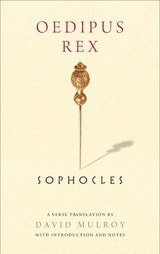
cover of Oedipus Rex

Oedipus Rex

David Sophocles

University of Wisconsin Press, 2011

Oedipus Rex is the greatest of the Greek tragedies, a profound meditation on the human condition. The story of the mythological king, who is doomed to kill his father and marry his mother, has resonated in world culture for almost 2,500 years. But Sophocles’ drama as originally performed was much more than a great story—it was a superb poetic script and exciting theatrical experience. The actors spoke in pulsing rhythms with hypnotic forward momentum, making it hard for audiences to look away. Interspersed among the verbal rants and duels were energetic songs performed by the chorus.
            David Mulroy’s brilliant verse translation of Oedipus Rex recaptures the aesthetic power of Sophocles’ masterpiece while also achieving a highly accurate translation in clear, contemporary English. Speeches are rendered with the same kind of regular iambic rhythm that gave the Sophoclean originals their drive. The choral parts are translated as fluid rhymed songs. Mulroy also supplies an introduction, notes, and appendixes to provide helpful context for general readers and students.
[more]
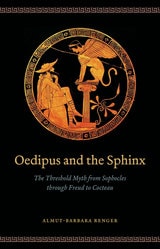
cover of Oedipus and the Sphinx: The Threshold Myth from Sophocles through Freud to Cocteau

Oedipus and the Sphinx

The Threshold Myth from Sophocles through Freud to Cocteau

Almut-Barbara Renger

University of Chicago Press, 2013
When Oedipus met the Sphinx on the road to Thebes, he did more than answer a riddle—he spawned a myth that, told and retold, would become one of Western culture’s central narratives about self-understanding. Identifying the story as a threshold myth—in which the hero crosses over into an unknown and dangerous realm where rules and limits are not known—Oedipus and the Sphinx offers a fresh account of this mythic encounter and how it deals with the concepts of liminality and otherness.
 
Almut-Barbara Renger assesses the story’s meanings and functions in classical antiquity—from its presence in ancient vase painting to its absence in Sophocles’s tragedy—before arriving at two of its major reworkings in European modernity: the psychoanalytic theory of Sigmund Freud and the poetics of Jean Cocteau. Through her readings, she highlights the ambiguous status of the Sphinx and reveals Oedipus himself to be a liminal creature, providing key insights into Sophocles’s portrayal and establishing a theoretical framework that organizes evaluations of the myth’s reception in the twentieth century. Revealing the narrative of Oedipus and the Sphinx to be the very paradigm of a key transition experienced by all of humankind, Renger situates myth between the competing claims of science and art in an engagement that has important implications for current debates in literary studies, psychoanalytic theory, cultural history, and aesthetics.
[more]
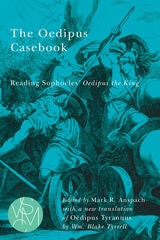
cover of The Oedipus Casebook: Reading Sophocles' Oedipus the King

The Oedipus Casebook

Reading Sophocles' Oedipus the King

Mark R. Anspach

Michigan State University Press, 2019

Who killed Laius? Most readers assume Oedipus did. At the play’s end, he stands convicted of murdering his father, marrying his mother, and triggering a deadly plague. With selections from a stellar assortment of critics including Walter Burkert, Terry Eagleton, Michel Foucault, René Girard, and Jean-Pierre Vernant, this book reopens the Oedipus case and lets readers judge for themselves. The Greek word for tragedy means “goat song.” Is Oedipus the goat? Helene Peet Foley calls him “the kind of leader a democracy would both love and desire to ostracize.” The Oedipus Casebook readings weigh the evidence against Oedipus, place the play in the context of Greek scapegoat rites, and explore the origins of tragedy in the festival of Dionysus. This unique critical edition includes a new translation of the play by distinguished classics scholar Wm. Blake Tyrrell and the authoritative Greek text established by H. Lloyd-Jones and N. G. Wilson.
[more]