Results by title
87 books match the query 'Officials and employees' and 6 start with a
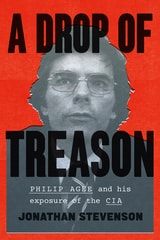
A Drop of Treason
Philip Agee and His Exposure of the CIAJonathan Stevenson
University of Chicago Press, 2021
The first biography of this contentious, legendary man, Jonathan Stevenson’s A Drop of Treason is a thorough portrait of Agee and his place in the history of American foreign policy and the intelligence community during the Cold War and beyond. Unlike mere whistleblowers, Agee exposed American spies by publicly blowing their covers. And he didn’t stop there—his was a lifelong political struggle that firmly allied him with the social movements of the global left and against the American project itself from the early 1970s on. Stevenson examines Agee’s decision to turn, how he sustained it, and how his actions intersected with world events.
Having made profound betrayals and questionable decisions, Agee lived a rollicking, existentially fraught life filled with risk. He traveled the world, enlisted Gabriel García Márquez in his cause, married a ballerina, and fought for what he believed was right. Raised a conservative Jesuit in Tampa, he died a socialist expat in Havana. In A Drop of Treason, Stevenson reveals what made Agee tick—and what made him run.
A Feminist Legacy
The Rhetoric and Pedagogy of Gertrude BuckSuzanne Bordelon
Southern Illinois University Press, 2007
The first book-length investigation of a pioneering English professor and theorist at Vassar College, A Feminist Legacy: The Rhetoric and Pedagogy of Gertrude Buck explores Buck’s contribution to the fields of education and rhetoric during the Progressive Era. By contextualizing Buck’s academic and theoretical work within the rise of women’s educational institutions like Vassar College, the social and political movement toward suffrage, and Buck’s own egalitarian political and social ideals, Suzanne Bordelon offers a scholarly and well-informed treatment of Buck’s achievements that elucidates the historical and contemporary impact of her work and life.
Bordelon argues that while Buck did not call herself a feminist, she embodied feminist ideals by demanding the full participation of her female students and by challenging power imbalances at every academic, social, and political level.
A Feminist Legacy reveals that Vassar College is an undervalued but significant site in the history of women’s argumentation and pedagogy. Drawing on a rich variety of archival sources, including previously unexamined primary material, A Feminist Legacy traces the beginnings of feminist theories of argumentation and pedagogy and their lasting legacy within the fields of education and rhetoric.
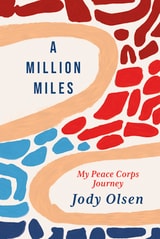
A Million Miles
My Peace Corps JourneyJody Olsen
University of Utah Press, 2024
Olsen’s captivating memoir, A Million Miles, reveals the personal and professional challenges she faced throughout her career, which spanned the Reagan era, 9/11, and the Trump administration. She writes candidly about her struggles as a woman in leadership, as well as personal hardships such as the
sudden death of her brother and her emotionally difficult divorce after her husband’s coming out. This memoir is a sharp, vulnerable portrait, a testament to the transformative power of leadership and self-discovery.
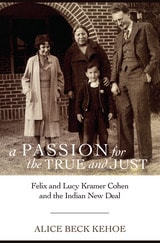
A Passion for the True and Just
Felix and Lucy Kramer Cohen and the Indian New DealAlice Beck Kehoe
University of Arizona Press, 2014
Kehoe argues that, due to anti-Semitism in 1930s America, Cohen could not speak for his legislation before Congress, and that Collier, an upper-class WASP, became the spokesman as well as the administrator. According to the author, historians of the Indian New Deal have not given due weight to Cohen’s work, nor have they recognized its foundation in his liberal secular Jewish culture. Both Felix and Lucy Cohen shared a belief in the moral duty of mitzvah, creating a commitment to the “true and the just” that was rooted in their Jewish intellectual and moral heritage, and their Social Democrat principles.
A Passion for the True and Just takes a fresh look at the Indian New Deal and the radical reversal of US Indian policies it caused, moving from ethnocide to retention of Indian homelands. Shifting attention to the Jewish tradition of moral obligation that served as a foundation for Felix and Lucy Kramer Cohen (and her professor Franz Boas), the book discusses Cohen’s landmark contributions to the principle of sovereignty that so significantly influenced American legal philosophy.
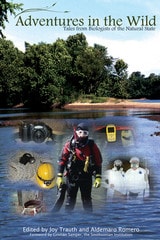
Adventures in the Wild
Tales from Biologists of the Natural StateJoy Trauth
University of Arkansas Press, 2008
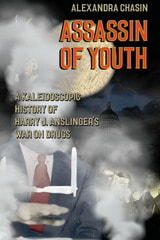
Assassin of Youth
A Kaleidoscopic History of Harry J. Anslinger’s War on DrugsAlexandra Chasin
University of Chicago Press, 2016
In Assassin of Youth, Alexandra Chasin gives us a lyrical, digressive, funny, and ultimately riveting quasi-biography of Anslinger. Her treatment of the man, his times, and the world that arose around and through him is part cultural history, part kaleidoscopic meditation. Each of the short chapters is anchored in a historical document—the court decision in Webb v. US (1925), a 1935 map of East Harlem, FBN training materials from the 1950s, a personal letter from the Treasury Department in 1985—each of which opens onto Anslinger and his context. From the Pharmacopeia of 1820 to death of Sandra Bland in 2015, from the Pennsylvania Railroad to the last passenger pigeon, and with forays into gangster lives, CIA operatives, and popular detective stories, Chasin covers impressive ground. Assassin of Youth is as riotous and loose a history of drug laws as can be imagined—and yet it culminates in an arresting and precise revision of the emergence of drug prohibition.
Today, even as marijuana is slowly being legalized, we still have not fully reckoned with the racist and xenophobic foundations of our cultural appetite for the severe punishment of drug offenders. In Assassin of Youth, Chasin shows us the deep, twisted roots of both our love and our hatred for drug prohibition.