Results by title
19 books match the query 'Old age'
Advances in the Economics of Aging
Edited by David A. Wise
University of Chicago Press, 1996
Specific topics include the effect of labor market rigidities on the employment of older workers; the effect on retirement of the availability of continuation coverage benefits; and the influence of the prospective payment system (PPS) on rising Medicare costs. Also considered are the effects of health and wealth on living arrangement decisions; the incentive effects of employer-provided pension plans; the degree of substitution between 401(k) plans and other employer-provided retirement saving arrangements; and the extent to which housing wealth determines how much the elderly save and consume.
Two final studies use simulations that describe the implications of stylized economic models of behavior among the elderly. This timely volume will be of interest to anyone concerned with the economics of aging.
Aged by Culture
Margaret Morganroth Gullette
University of Chicago Press, 2003
In this illuminating book, Margaret Morganroth Gullette reveals that aging doesn't start in our chromosomes, but in midlife downsizing, the erosion of workplace seniority, threats to Social Security, or media portrayals of "aging Xers" and "greedy" Baby Boomers. To combat the forces aging us prematurely, Gullette invites us to change our attitudes, our life storytelling, and our society. Part intimate autobiography, part startling cultural expose, this book does for age what gender and race studies have done for their categories. Aged by Culture is an impassioned manifesto against the pernicious ideologies that steal hope from every stage of our lives.
Aging and Old Age
Richard A. Posner
University of Chicago Press, 1995
Aging and Old Age offers fresh insight into a wide range of social and political issues relating to the elderly, such as health care, crime, social security, and discrimination. From the dread of death to the inordinate law-abidingness of the old, from their loquacity to their penny-pinching, Posner paints a surprisingly rich, revealing, and unsentimental portrait of the millions of elderly people in the United States. He explores issues such as age discrimination in employment, creativity and leadership as functions of age, and the changing social status of the elderly. Why are old people, presumably with less to lose, more unwilling to take risks than young people? Why don't the elderly in the United States command the respect and affection they once did and still do in other countries? How does aging affect driving and criminal records? And how does aging relate to creativity across different careers?
Gray Matters
Finding Meaning in the Stories of Later LifeEllyn Lem
Rutgers University Press, 2020
Finalist for the 2021 American Book Fest Best Book Awards
Aging is one of the most compelling issues today, with record numbers of seniors over sixty-five worldwide. Gray Matters: Finding Meaning in the Stories of Later Life examines a diverse array of cultural works including films, literature, and even art that represent this time of life, often made by people who are seniors themselves. These works, focusing on important topics such as housing, memory loss, and intimacy, are analyzed in dialogue with recent research to explore how “stories” illuminate the dynamics of growing old by blending fact with imagination. Gray Matters also incorporates the life experiences of seniors gathered from over two hundred in-depth surveys with a range of questions on growing old, not often included in other age studies works. Combining cultural texts, gerontology research, and observations from older adults will give all readers a fuller picture of the struggles and pleasures of aging and avoids over-simplified representations of the process as all negative or positive.

History of Old Age
From Antiquity to the RenaissanceGeorges Minois
University of Chicago Press, 1990
Minois shows how, in ancient Greece, the cult of youth and beauty on the one hand, and the reverence for the figure of the Homeric sage, on the other, created an ambivalent attitude toward the aged. This ambiguity appears again in the contrast between the active role that older citizens played in Roman politics and their depiction in satirical literature of the period. Christian literature in the Middle Ages also played a large part in defining society's perception of the old, both in the image of the revered holy sage and in the total condemnation of the aged sinner.
Drawing on literary texts throughout, Minois considers the interrelation of literary, religious, medical, and political factors in determining the social fate of the elderly and their relationship to society. This book will be of great interest to social and cultural historians, as well as to general readers interested in the subject of the aged in society today.
Issues in the Economics of Aging
Edited by David A. Wise
University of Chicago Press, 1990
Market Friendly or Family Friendly?
The State and Gender Inequality in Old AgeMadonna Harrington Meyer
Russell Sage Foundation, 2007
Middle Age and Aging
Edited by Bernice L. Neugarten
University of Chicago Press, 1968
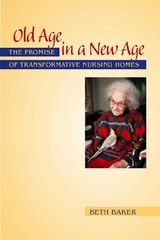
Old Age in a New Age
The Promise of Transformative Nursing HomesBeth Baker
Vanderbilt University Press, 2007
In Old Age in a New Age, Baker tell the story of a better way to live in old age. Although each home is different, they share common values: respecting individual choices; empowering staff; fostering a strong community of elders, staff, family members, and volunteers; redesigning buildings from a hospital model to a home (where pets and children are part of everyday life); and honoring people when they die. Her visits to more than two dozen facilities include those associated with the Eden Alternative, Green House, Kendal, and the Pioneer Network. Whether these transformational homes become the norm or the domain of a lucky few is the question that faces the next generation of elders, the baby boomers.
Out of Time
Geoff Schmidt
University of North Texas Press, 2011
Studies in the Economics of Aging
Edited by David A. Wise
University of Chicago Press, 1994
The Economics of Aging
Edited by David A. Wise
University of Chicago Press, 1988
The Economics of Aging presents results from an ongoing National Bureau of Economic Research project. Contributors consider the housing mobility and living arrangements of the elderly, their labor force participation and retirement, the economics of their health care, and their financial status. The goal of the research is to further our understanding both of the factors that determine the well-being of the elderly and of the consequences that follow from an increasingly older population with longer individual life spans. Each paper is accompanied by critical commentary.
The Essential Guide to Aging in the Twenty-First Century
Mind, Body, and BehaviorDonald H. Kausler, Barry C. Kausler & Jill A. Krupsaw
University of Missouri Press, 2007
For more than a decade, The Graying of America has helped thousands of middle-aged and senior citizens find their way through the thickets and thorns of growing old. Now greatly revised and expanded to include information gleaned from studies of the past five years, this third edition has been retitled to stress its ongoing purpose: conveying a wealth of commonsense information for general readers in nontechnical language.
The book is a storehouse of concise, useful information on the effects of aging on health, the mind, and behavior. Its 588 entries (including 172 new and 150 substantially revised) cover a broad spectrum of topics—from adjusting to retirement to grandparenting, sleep disorders to Alzheimer’s disease. All are directed to the average reader; all stress successful aging and how to accomplish it.
New entries cover such topics as the incidence and causes of frailty, the cognitive benefits of diversified activity, and findings of the Women’s Health Initiative. There is new information on matters like the effects of untreated hearing impairment on spouses and the impact of insufficient exposure to sunlight on sleep, plus new insight into what to look for in searching for a quality nursing home for a loved one.
Also included are results of recent studies on interventions that help to reduce age-related declines in mental and physical health, among them revelations that reports on age-related declines in memory have been skewed by testing errors. And with memory a concern for seniors fearful of declining mental agility, the book tells how to bypass memory problems—such as how to remember where you parked your car—and how physical exercise and challenging mental games can help reduce the risk of dementia. Other “how to avoid” entries offer ways to protect against eye fatigue in computer use, hip fractures when falling, and back injuries while lifting heavy objects.
No other book is so specifically geared to the challenges of how to reduce or even eliminate many of the problems associated with growing old. Aging in the Twenty-First Century can help seniors come to grips with their own aging process—and help younger adults understand what is happening to older family members.

The Graying of America
An Encyclopedia of Aging, Health, Mind, and Behavior (2d ed.)Donald H. Kausler and Barry C. Kausler
University of Illinois Press, 2001
Featuring nontechnical language, user-friendly indexes, and more than 150 new entries, the second edition covers new topics such as acupuncture, wheelchairs, adjusting to bifocals, preparing for traveling, improving communication with physicians, and avoiding eye strain in computer use. Among other updates are more detailed coverage of health problems including arthritis, diabetes, osteoporosis, and various kinds of cancer, as well as advice on reducing the stress of caring for a family member with Alzheimer's disease. In addition to discussing hundreds of common ailments and conditions, Kausler and Kausler provide constructive guidance on regular physical activity, mental stimulation, and other behaviors that promote "successful aging."
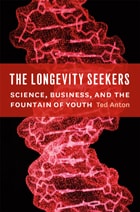
The Longevity Seekers
Science, Business, and the Fountain of YouthTed Anton
University of Chicago Press, 2013
With The Longevity Seekers, science writer Ted Anton takes readers inside this tale that began with worms and branched out to snare innovative minds from California to Crete, investments from big biotech, and endorsements from TV personalities like Oprah and Dr. Oz. Some of the research was remarkable, such as the discovery of an enzyme in humans that stops cells from aging. And some, like an oft-cited study touting the compound resveratrol, found in red wine—proved highly controversial, igniting a science war over truth, credit, and potential profit. As the pace of discovery accelerated, so too did powerful personal rivalries and public fascination, driven by the hope that a longer, healthier life was right around the corner. Anton has spent years interviewing and working with the scientists at the frontier of longevity science, and this book offers a behind-the-scenes look at the state-of-the-art research and the impact it might have on global public health, society, and even our friends and family.
With spectacular science and an unforgettable cast of characters, The Longevity Seekers has all the elements of a great story and sheds light on discoveriesthat could fundamentally reshape human life.
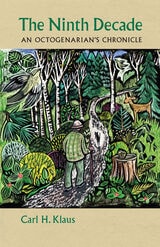
The Ninth Decade
An Octogenarian’s ChronicleKlaus, Carl H.
University of Iowa Press, 2021
The multi-year scope of his chronicle reveals the numerous physical and mental problems that arise during octogenarian life and how eighty-year-olds have dealt with those challenges. The Ninth Decade is a unique, first-hand source of information for anyone in their sixties, seventies, or eighties, as well as for persons devoted to care of the aged. Though the challenges of octogenarian life often require specialized care, The Ninth Decade also shows the pleasures of it to be so special as to have inspired Lillian Hellman’s paradoxical description of “longer life” as “the happy problem of our time.”
Topics in the Economics of Aging
Edited by David A. Wise
University of Chicago Press, 1992
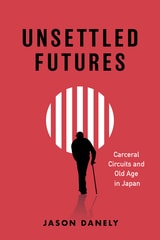
Unsettled Futures
Carceral Circuits and Old Age in JapanJason Danely
Vanderbilt University Press, 2024
Elderly ex-offenders are some of the most vulnerable and marginalized groups in Japan today, with high levels of poverty and homelessness, disability, mental health problems, and social isolation. Those with a history of incarceration and, by extension, their family, face stigma and discrimination that further erodes their ability to reintegrate and puts them at greater risk of reoffending. Unlike in any other country in the world, older people in Japan have a higher rate of reoffending than other age groups. In Unsettled Futures, author Jason Danely argues that we cannot dismiss these individuals merely as deviants; rather, their circumstances reveal deep contradictions in the overlapping terrain of welfare and punishment, and the precarity that forecloses on possibilities for older people to build a good life.
What Does It Mean to Grow Old?
Reflections from the HumanitiesThomas R. Cole and Sally Gadow, eds.
Duke University Press, 1986