Results by title
18 books match the query 'Older women'
"Tell Me a Riddle"
Tillie OlsenRosenfelt, Deborah S
Rutgers University Press, 1995
This casebook includes an introduction by the editor, a chronology of Olsen’s life, an authoritative text of “Tell Me a Riddle,” relevant essays by Olsen, seven critical essays, and a bibliography.
The contributors are: Joanne Trautmann Banks, Constance Coiner, Rachel Blau Duplessis, Mara Faulkner, Elaine Orr, Linda Ray Pratt, and Deborah Silverton Rosenfelt.
A Stitch in Time
The Needlework of Aging Women in Antebellum AmericaAimee E. Newell
Ohio University Press, 2014
Drawing from 167 examples of decorative needlework—primarily samplers and quilts from 114 collections across the United States—made by individual women aged forty years and over between 1820 and 1860, this exquisitely illustrated book explores how women experienced social and cultural change in antebellum America.
The book is filled with individual examples, stories, and over eighty fine color photographs that illuminate the role that samplers and needlework played in the culture of the time. For example, in October 1852, Amy Fiske (1785–1859) of Sturbridge, Massachusetts, stitched a sampler. But she was not a schoolgirl making a sampler to learn her letters. Instead, as she explained, “The above is what I have taken from my sampler that I wrought when I was nine years old. It was w[rough]t on fine cloth [and] it tattered to pieces. My age at this time is 66 years.”
Situated at the intersection of women’s history, material culture study, and the history of aging, this book brings together objects, diaries, letters, portraits, and prescriptive literature to consider how middle-class American women experienced the aging process. Chapters explore the physical and mental effects of “old age” on antebellum women and their needlework, technological developments related to needlework during the antebellum period and the tensions that arose from the increased mechanization of textile production, and how gift needlework functioned among friends and family members. Far from being solely decorative ornaments or functional household textiles, these samplers and quilts served their own ends. They offered aging women a means of coping, of sharing and of expressing themselves. These “threads of time” provide a valuable and revealing source for the lives of mature antebellum women.
Publication of this book was made possible in part through generous funding from the Coby Foundation, Ltd and from the Quilters Guild of Dallas, Helena Hibbs Endowment Fund.
A View from Life's Edge
Discovering What Really Matters with Older Women Across the GlobeCorinne G. Dempsey
Rutgers University Press, 2026
Speaking with nearly one hundred women over the age of eighty in four locations—northern Iceland, south India, a retirement community in California, and a convent in upstate New York—Corinne G. Dempsey finds that, as we near life’s end, we gain clarity about what really matters in life. Women’s stories and reflections, in which sorrow and loss are central to a life well lived, help to expand our sense of what it means to be human.
Drawing on the paradoxical wisdom of world religions and mystical traditions to frame late-life tendencies across cultures, Dempsey portrays these accounts as a corrective to mainstream values that defeat and diminish us. Dempsey encourages us to turn away from ageist fears rather than denying life’s inevitable end. Learning from older women’s perspectives, we might move their edge-of-life views closer to the center.
An Intimate Rebuke
Female Genital Power in Ritual and Politics in West AfricaLaura S. Grillo
Duke University Press, 2018
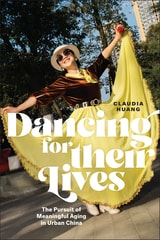
Dancing for Their Lives
The Pursuit of Meaningful Aging in Urban ChinaClaudia Huang
Rutgers University Press, 2025

Everyday Erotics
Older Chinese Women and Same-Sex DesireDenise Tse-Shang Tang
Duke University Press, 2026
FROM OLD WOMAN TO OLDER WOMEN
Contemporary Culture and Women’s NarrativesSally Chivers
The Ohio State University Press, 2003
Sally Chivers provides a fascinating look at and challenge to how North American popular culture has portrayed old age as a time of disease, decline, and death. Within contemporary Canadian literary and film production, a tradition of articulate central elderly female characters challenges what the aging body has come to signify in a broader cultural context. Rather than seek positive images of aging, which can do their own prescriptive damage, the author focuses on constructive depictions that provide a basis on which to create new stories and readings of growing old. This type of humanities approach to the study of aging promises neither to fixate on nor avoid consideration of the role of the body in the much broader process of getting older. The progression implied in the title from the solitary symbol of The Old Woman toward a community of older women, indicates not a move toward euphemism, but rather an increasing and necessary awareness of the social and cultural dimensions of aging.
Grandmotherhood
The Evolutionary Significance of the Second Half of Female LifeVoland, Eckart
Rutgers University Press, 2014
By the year 2030, the average life expectancy of women in industrialized countries could reach ninety—exceeding that of men by about ten years. At the present time, postmenopausal women represent more than fifteen percent of the world’s population and this figure is likely to grow.
From an evolutionary perspective, these demographic numbers pose some intriguing questions. Darwinian theory holds that a successful life is measured in terms of reproduction. How is it, then, that a woman’s lifespan can greatly exceed her childbearing and childrearing years? Is this phenomenon simply a byproduct of improved standards of living, or do older women—grandmothers in particular—play a measurable role in increasing their family members’ biological success?
Until now, these questions have not been examined in a thorough and comprehensive manner. Bringing togethertheoretical and empirical work byinternationally recognized scholars in anthropology, psychology, ethnography, and the social sciences, Grandmotherhood explores the evolutionary purpose and possibilities of female post-generative life. Students and scholars of human evolution, anthropology, and even gerontology will look to this volume as a major contribution to the current literature in evolutionary studies.
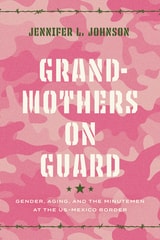
Grandmothers on Guard
Gender, Aging, and the Minutemen at the US-Mexico BorderBy Jennifer L. Johnson
University of Texas Press, 2021
For about a decade, one of the most influential forces in US anti-immigrant politics was the Minuteman Project. The armed volunteers made headlines patrolling the southern border. What drove their ethno-nationalist politics?
Jennifer L. Johnson spent hundreds of hours observing and interviewing Minutemen, hoping to answer that question. She reached surprising conclusions. While the public face of border politics is hypermasculine—men in uniforms, fatigues, and suits—older women were central to the Minutemen. Women mobilized support and took part in border missions. These women compel us to look beyond ideological commitments and material benefits in seeking to understand the appeal of right-wing politics. Johnson argues that the women of the Minutemen were motivated in part by the gendered experience of aging in America. In a society that makes old women irrelevant, aging white women found their place through anti-immigrant activism, which wedded native politics to their concern for the safety of their families. Grandmothers on Guard emphasizes another side of nationalism: the yearning for inclusion. The nation the Minutemen imagined was not only a space of exclusion but also one in which these women could belong.

In Praise of Older Women
The Amorous Recollections of A. VStephen Vizinczey
University of Chicago Press, 1990
"A pleasure. Vizinczey writes of women beautifully, with sympathy, tact and delight, and he writes about sex with more lucidity and grace than most writers ever acquire."—Larry McMurtry, Houston Post
"Like James Joyce, who was as far from being a writer of erotica as Dostoevsky, Vizinczey has a refreshing message to deliver: Life is not about sex, sex is about life."—John Podhoretz, Washington Times
"The gracefully written story of a young man growing up among older women . . . although some passages may well arouse the reader, this novel brims with what the courts have termed "redeeming literary merit."—Clarence Petersen, Chicago Tribune
"A funny novel about sex, or rather (which is rarer) a novel which is funny as well as touching about sex . . . elegant, exact and melodious—has style, presence and individuality."—Isabel Quigly, Sunday Telegraph
"The delicious adventures of a young Casanova who appreciates maturity while acquiring it himself. In turn naive, sophisticated, arrogant, disarming, the narrator woos his women and his tale wins the reader."—Polly Devlin, Vogue
Market Friendly or Family Friendly?
The State and Gender Inequality in Old AgeMadonna Harrington Meyer
Russell Sage Foundation, 2007
Maturing with Moxie
A Woman’s Guide to Life after 60Jan Cannon
University Press of New England, 2018
Never Married Women
Barbara Levy Simon
Temple University Press, 1989
The Babushka Phenomenon
Older Women and the Political Sociology of Ageing in RussiaAnna Shadrina
University College London, 2025
The word “babushka” literally means “grandmother,” but it has come to represent much more since the Soviet era, not least the family caregiver. In her new study, Anna Shadrina explores the marginalization of older women in post-Soviet Russia, shedding light on the complex image of the babushka as both the cornerstone of the family unit and a passive recipient of social benefits. The author argues that this image has been shaped in no small part by welfare cutbacks that shifted the responsibility of family care from the state to individual women, as well as the increasing frustration of working-age people with the post-socialist economic system. Ultimately, she shows that despite being ostracized from society for defying age- and gender-specific social expectations, older women occupy a crucial position as active contributors to the economy.
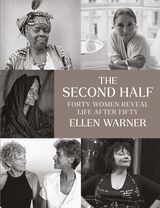
The Second Half
Forty Women Reveal Life After FiftyEllen Warner
Brandeis University Press, 2022
A frank, honest, and insightful look into the lives of women over fifty.
The Second Half explores, in photographic portraits and interviews, how the second half of life is experienced by women from many different cultures. From a French actress to a British novelist, from an Algerian nomad to a Saudi Arabian doctor, and an American politician, Ellen Warner traveled all over the world to interview women about their lives. She asked them what they learned in the first half that was helpful in the second, and what advice they would give to younger women. Their revealing and inspiring stories are enlightening for all readers, and are illustrated by Warner’s stunning portraits which tell their own story.
There Was an Old Woman
Reflections on These Strange, Surprising, Shining YearsAndrea Carlisle
Oregon State University Press, 2023
In these personal essays, Carlisle looks for new ways to bring herself more fully to this time of life, such as daily walks with other women and connecting to the natural world that surrounds her houseboat on an Oregon river at the foot of a forest. She writes about experiences shared with many, if not most, older women: wondering at her body’s transformation, discovering new talents, caregiving, facing loss, tuning in to life patterns and drawing strength through understanding them, letting go (or not) of pieces of the past, and facing other changes large and small. Those curious about, approaching, or living in old age will find wisdom and insight in her unique perspective.
In a voice that rings with clarity, humor, humility, Carlisle shows us that Old Age is not another country where we can expect to find The Old Woman grimly waiting, but is instead an expansion of the borders in the country we’re most familiar with: ourselves.
With Courage and Common Sense
Memoirs from the Older Women's Legacy CirclesEdited by Susan Wittig Albert and Dayna Finet
University of Texas Press, 2003
Women who were sixty or older at the turn of the twenty-first century have lived through some of recent history's most momentous moments—and yet these women often believe that their personal lives and stories are insignificant, not worthy of being recorded for future generations. To change that perception and capture some of these life stories before they are lost, the Story Circle Network, a national organization dedicated to helping women write about their lives, developed the Older Women's Legacy (OWL) Circle Memoir Workshops. During the first two years of the project (1998-2000), nearly 500 older women participated in workshops that offered them the opportunity and encouragement to reflect on and create written records of their lives.
With Courage and Common Sense presents an extensive selection of memoirs from the OWL Circle project. Organized thematically, they describe women's experiences of identity, place, work, family life, love and marriage, loss and healing, adventures great and small, major historical events, and legacies to keep and pass along. Taken as a whole, the memoirs chronicle far-reaching changes in the ways that women participated in the world during the twentieth century. They show how women learned to surmount obstacles, to courageously make the most of the opportunities that came their way, and to move quietly and wisely beyond the limits that were imposed upon them.
Women Working Longer
Increased Employment at Older AgesEdited by Claudia Goldin and Lawrence F. Katz
University of Chicago Press, 2018
In Women Working Longer, editors Claudia Goldin and Lawrence F. Katz assemble new research that presents fresh insights on the phenomenon of working longer. Their findings suggest that education and work experience earlier in life are connected to women’s later-in-life work. Other contributors to the volume investigate additional factors that may play a role in late-life labor supply, such as marital disruption, household finances, and access to retirement benefits. A pioneering study of recent trends in older women’s labor force participation, this collection offers insights valuable to a wide array of social scientists, employers, and policy makers.