Results by title
10 books match the query 'Once Upon'
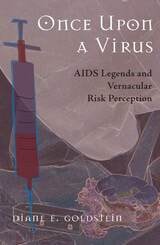
Once Upon A Virus
Diane E. Goldstein
Utah State University Press, 2004
Once Upon a Virus explores how contemporary, or "urban," legends are indicators of culturally complex attitudes toward health and illness.
Tracing the rich tradition of AIDS legends in relation to current scholarship on belief, Diane Goldstein shows how such stories not only articulate widespread perceptions of risk, health care, and health policy, they also influence official and scientific approaches to the disease and its management. Notions that appear in narratives of who gets AIDS, how and why, are indicators of broad issues involving health beliefs, concerns, and needs.
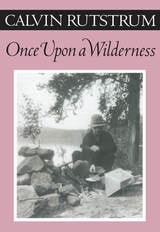
Once Upon A Wilderness
Calvin Rutstrum
University of Minnesota Press, 2002
The complete outdoorsman looks back on fifty years of wilderness adventures to find answers to today’s questions.
Though he began his life as a Twin Cities resident, Calvin Rutstrum came to see noise, material wealth, and perpetual frenzy as the narcotics of the city dweller. Like Henry David Thoreau, he set out to live a simpler, more meaningful life. In his pursuit, Rutstrum came to appreciate the natural world and the skills necessary to survive in it. Part memoir, part guidebook, and part environmental treatise, Once upon a Wilderness is a treasury of wilderness wisdom.
Rutstrum reminisces about lessons that his time in the wilderness has taught him. He writes about a range of backcountry issues, including environmental preservation, cultural sensitivity toward Native Americans, the urban versus the rural, and the artistic value of practical skills. Through his thoughtful consideration of the pleasure and value of wilderness, Rutstrum offers a clarion call for a saner, more socially responsible and environmentally sensitive way of living.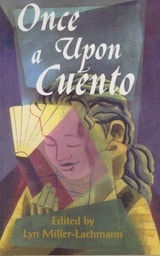
Once Upon a Cuento
Edited by Lyn Miller-Lachmann
Northwestern University Press, 2003
The stories are grouped by theme—heritage, holidays, and contemporary culture; family life; friends and other relationships; and dealing with differences. Individual stories explore additional themes such as the challenge of making do with little money, the process of moving to a new country and learning English, and young people's relationships to animals and to the natural world. Each story contains an introduction that offers historical, cultural, and biographical information. A general introduction and list of works by the thirteen contributors offer further avenues for research and discussion.

Once Upon a Cuento
Bilingual Storytimes in English and SpanishJamie Campbell Naidoo
American Library Association, 2016

Once Upon a Time in Texas
A Liberal in the Lone Star StateBy David Richards
University of Texas Press, 2002
Once upon a time in Texas...there were liberal activists of various stripes who sought to make the state more tolerant and more tolerable. David Richards was one of them. In this fast-paced, often humorous memoir, he remembers the players, the strategy sessions, the legal and political battles, and the wins and losses that brought significant gains in civil rights, voter rights, labor law, and civil liberties to the people of Texas from the 1950s to the 1990s.
In his work as a lawyer, Richards was involved in cases covering voters' rights, school finance reform, and a myriad of civil liberties and free speech cases. In telling these stories, he vividly evokes the "glory days" of Austin liberalism, when a who's who of Texas activists plotted strategy at watering holes such as Scholz Garden and the Armadillo World Headquarters. Likewise, he offers vivid portraits of liberal politicians from Ralph Yarborough to Ann Richards (his former wife), progressive journalists such as Molly Ivins and the Texas Observer staff, and the hippies, hellraisers, and musicians who all challenged Texas's conservative status quo.
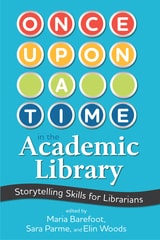
Once Upon a Time in the Academic Library
Storytelling Skills for LibrariansMaria Barefoot
American Library Association, 2022
Academic librarians can apply storytelling in the same way that teachers, entertainers, lawyers, and businesspeople have done for centuries, as education within information literacy instruction and as communication in the areas of reference, outreach, management, assessment, and more. Once Upon a Time in the Academic Library explores applications of storytelling across academic librarianship in three sections:
- The Information Literacy Classroom
- The Stacks
- Physical and Virtual Library Spaces
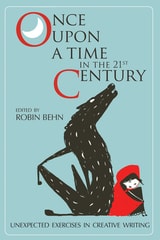
Once Upon a Time in the Twenty-First Century
Unexpected Exercises in Creative WritingEdited by Robin Behn
University of Alabama Press, 2020
Inspiring writers through creativity, experimentation, and unexpected discovery.
Once Upon a Time in the Twenty-First Century: Unexpected Exercises in Creative Writing is a unique creative writing text that will appeal to a wide range of readers and writers—from grade nine through college and beyond. Successful creative writers from numerous genres constructed these exercises, including poetry, fiction, and creative nonfiction to one-act plays, song lyrics, genre fiction, travel guides, comics and beyond. The exercises use a broad range of creative approaches, aesthetics, and voices, all with an emphasis on demystifying the writing process and having fun.
Editor Robin Behn has divided the book into three writing sections: Genres and Forms, Sources and Methods, and Style and Subject. In each section, Behn offers a brief introduction which explains how to get started and specific ways to develop one’s writing. Each introduction is followed by extensive exercises that draw on literature from classic to contemporary, as well as other art forms and popular culture. Examples range from Flannery O’Connor and Langston Hughes to Allen Ginsberg and Gertrude Stein, from Jamaica Kincaid and James Joyce to Arlo Guthrie and Harryette Mullen. Integrated within the exercises are apt examples of student writings that have emerged from actual use of the exercises in both the classroom and in writing groups. The book concludes with general advice and direction on how to get published.
Based on years of hands-on experiences in the teaching of creative writing in high schools, colleges, and after-school writing clubs, this volume of exercises offers inestimable value to students and teachers in the traditional classroom, as well as a growing number of homeschoolers, those who are part of a writing club or group, and independent writers and learners of all ages.
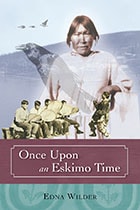
Once Upon an Eskimo Time
Edna Wilder
University of Alaska Press, 2009
Continuing the sacred tradition of her ancestors, in Once Upon an Eskimo Time Edna Wilder retells a year in her Eskimo mother’s life. Wilder eloquently captures the oral storytelling traditions of her people, and she employs descriptions of the weather and harsh climates of Alaska’s Norton Sound to illustrate the hardiness of her mother’s spirit. Family values, subsistence living, and the cycle’s of life form a narrative that captures the now-vanished lifestyle along the Bering Sea.
“Readers of whatever age will enjoy Nedercook’s delightful account of the day-to-day, legends, and beliefs of the ancient Eskimo village of Rocky Point.”—Ames Tribune
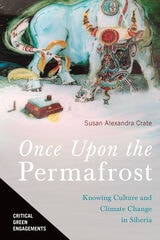
Once Upon the Permafrost
Knowing Culture and Climate Change in SiberiaSusan Alexandra Crate
University of Arizona Press, 2021
The author, anthropologist Susan Alexandra Crate, has spent three decades working with Sakha, the Turkic-speaking horse and cattle agropastoralists of northeastern Siberia, Russia. Crate reveals Sakha’s essential relationship with alaas, the foundational permafrost ecosystem of both their subsistence and cultural identity. Sakha know alaas via an Indigenous knowledge system imbued with spiritual qualities. This counters the scientific definition of alaas as geophysical phenomena of limited range. Climate change now threatens alaas due to thawing permafrost, which, entangled with the rural changes of economic globalization, youth out-migration, and language loss, make prescient the issues of ethnic sovereignty and cultural survival.
Through careful integration of contemporary narratives, on-site observations, and document analysis, Crate argues that local understandings of change and the vernacular knowledge systems they are founded on provide critical information for interdisciplinary collaboration and effective policy prescriptions. Furthermore, she makes her message relevant to a wider audience by clarifying linkages to the global permafrost system found in her comparative research in Mongolia, Arctic Canada, Kiribati, Peru, and Chesapeake Bay, Virginia. This reveals how permafrost provides one of the main structural foundations for Arctic ecosystems, which, in turn, work with the planet’s other ecosystems to maintain planetary balance.
Metaphorically speaking, we all live on permafrost.
once upon a twin
poemsRaymond Luczak
Gallaudet University Press, 2021