Results by title

22 books match the query 'Oncology'
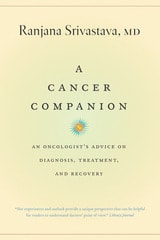
cover of A Cancer Companion: An Oncologist's Advice on Diagnosis, Treatment, and Recovery

A Cancer Companion

An Oncologist's Advice on Diagnosis, Treatment, and Recovery

Ranjana Srivastava

University of Chicago Press, 2015

Cancer. It’s the diagnosis no one wants to hear. Unfortunately though, these days most of us have known or will know someone who receives it. But what’s next? With the diagnosis comes not only fear and uncertainty, but numerous questions, and a lot of unsolicited advice. With A Cancer Companion, esteemed oncologist Ranjana Srivastava is here to help, bringing both experience and honesty to guide cancer patients and their families through this labyrinth of questions and treatments.

With candor and compassion, Srivastava provides an approachable and authoritative reference. She begins with the big questions, like what cancer actually is, and she moves on to offer very practical advice on how to find an oncologist, what to expect during and after treatments, and how to manage pain, diet, and exercise. She discusses in detail the different therapies for cancers and why some cancers are inoperable, and she skillfully addresses the emotional toll of the disease. She speaks clearly and directly to cancer patients, caretakers, and their loved ones, offering straightforward information and insight, something that many oncologists can’t always convey in the office.
 
[more]
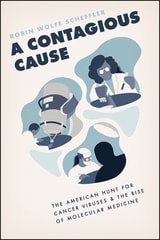
cover of A Contagious Cause: The American Hunt for Cancer Viruses and the Rise of Molecular Medicine

A Contagious Cause

The American Hunt for Cancer Viruses and the Rise of Molecular Medicine

Robin Wolfe Scheffler

University of Chicago Press, 2019

Is cancer a contagious disease? In the late nineteenth century this idea, and attending efforts to identify a cancer “germ,” inspired fear and ignited controversy. Yet speculation that cancer might be contagious also contained a kernel of hope that the strategies used against infectious diseases, especially vaccination, might be able to subdue this dread disease. Today, nearly one in six cancers are thought to have an infectious cause, but the path to that understanding was twisting and turbulent.
​
A Contagious Cause is the first book to trace the century-long hunt for a human cancer virus in America, an effort whose scale exceeded that of the Human Genome Project. The government’s campaign merged the worlds of molecular biology, public health, and military planning in the name of translating laboratory discoveries into useful medical therapies. However, its expansion into biomedical research sparked fierce conflict. Many biologists dismissed the suggestion that research should be planned and the idea of curing cancer by a vaccine or any other means as unrealistic, if not dangerous. Although the American hunt was ultimately fruitless, this effort nonetheless profoundly shaped our understanding of life at its most fundamental levels. A Contagious Cause links laboratory and legislature as has rarely been done before, creating a new chapter in the histories of science and American politics.
[more]
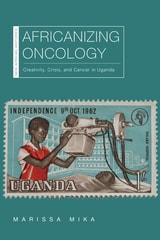
cover of Africanizing Oncology: Creativity, Crisis, and Cancer in Uganda

Africanizing Oncology

Creativity, Crisis, and Cancer in Uganda

Marissa Mika

Ohio University Press, 2021
An innovative contemporary history that blends insights from a variety of disciplines to highlight how a storied African cancer institute has shaped lives and identities in postcolonial Uganda. Over the past decade, an increasingly visible crisis of cancer in Uganda has made local and international headlines. Based on transcontinental research and public engagement with the Uganda Cancer Institute that began in 2010, Africanizing Oncology frames the cancer hospital as a microcosm of the Ugandan state, as a space where one can trace the lived experiences of Ugandans in the twentieth century. Ongoing ethnographic fieldwork, patient records, oral histories, private papers from US oncologists, American National Cancer Institute records, British colonial office reports, and even the architecture of the institute itself show how Ugandans understood and continue to shape ideas about national identity, political violence, epidemics, and economic life. Africanizing Oncology describes the political, social, technological, and biomedical dimensions of how Ugandans created, sustained, and transformed this institute over the past half century. With insights from science and technology studies and contemporary African history, Marissa Mika’s work joins a new wave of contemporary histories of the political, technological, moral, and intellectual aspirations and actions of Africans after independence. It contributes to a growing body of work on chronic disease and situates the contemporary urgency of the mounting cancer crisis on the continent in a longer history of global cancer research and care. With its creative integration of African studies, science and technology studies, and medical anthropology, Africanizing Oncology speaks to multiple scholarly communities.
[more]
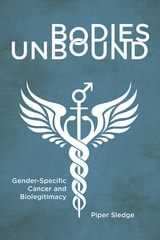
cover of Bodies Unbound: Gender-Specific Cancer and Biolegitimacy

Bodies Unbound

Gender-Specific Cancer and Biolegitimacy

Piper Sledge

Rutgers University Press, 2021

Bodies Unbound is a comparative study showing how ideologies of gendered bodies shape medical care and the ways in which patients respond to these ideologies through decisions about their bodies using three cases: transgender men seeking preventative gynecological care, cisgender men diagnosed with breast cancer, and cisgender women with breast cancer who elect to undergo prophylactic mastectomies. Bodies Unbound is a story about how the relationship between bodies and gender becomes socially intelligible as well as how medical professionals use their position of relative authority over bodies to dictate which combinations of bodies and genders are legitimate or not. Drawing on the experiences of individuals whose bodies and gender identities don't match medical and social expectations for gynecological and breast cancer care, Sledge unravels the taken-for-granted alignment of bodies and gender that provide the foundation of medical care in the United States. 
[more]
cover of Breast Cancer in the Academy: Solidarity in the Fight for Our Lives

Breast Cancer in the Academy

Solidarity in the Fight for Our Lives

Wendy K.Z. Anderson

Rutgers University Press, 2027

This edited collection is an interdisciplinary dialogue about how breast cancer diagnosis, treatment, and healing is experienced by academic women. The contributors fostered dialogue rooted in critical, qualitative, and autoethnographic traditions about how breast cancer diagnosis, treatment, and healing was experienced by a group with academic privileges, such as the ability to research and advocate for themselves. The book takes on a global perspective, incorporating pieces from medical doctors who became patients, BIPOC women, as well as scholars who identify as LBGTQIA, as they faced decisions about issues such as flat closures, fertility treatments, and being one-sided. These seventeen academic women navigated and resisted healthcare systems to develop a theory of coalitional survivorship.
[more]
cover of Cancer Entangled: Anticipation, Acceleration, and the Danish State

Cancer Entangled

Anticipation, Acceleration, and the Danish State

Rikke Sand Andersen

Rutgers University Press, 2023
Cancer Entangled explores the shifts that took place in Denmark around the millennium, when health promoters set out to minimize delays in cancer diagnoses in hope of improving cancer survival. The authors suggest a temporal reframing of cancer control that emphasizes the importance of focusing on how people – potential patients as well as health care professionals – experience and anticipate cancer before a diagnosis or a prediction has been made. This argument compellingly challenges and augments anthropological work on cancer control that has privileged attention to the productive role of science and technology and to life with cancer or cancer risk. By offering rich ethnographic insights into the introduction of the first cancer vaccine, cancer signs and symptoms, public discourses on delays, social class and care seeking, cancer suspicion in the clinic, as well as the work on fast-track referral – the book convincingly situates cancer control in an ethical registrar involving attention to acceleration and time, showing how cancer waiting times become an index of the "state of the nation".
[more]
cover of Cancer Screening in the Developing World: Case Studies and Strategies from the Field

Cancer Screening in the Developing World

Case Studies and Strategies from the Field

Edited by Madelon L. Finkel

Dartmouth College Press, 2018
Worldwide, cancer is responsible for one in eight deaths—more than AIDS, tuberculosis, and malaria combined. This global burden starkly illustrates the inequality between the developed and the developing world. While the majority of people living in developed countries receive timely treatment, those living in developing countries are not as fortunate and their survival rates are much lower—not only due to delays in diagnosis, but also to a lack of personnel, a paucity of treatment facilities, and the unavailability of many medications. Routine screening—a mainstay in the developed world—could greatly increase the likelihood of identifying individuals with early stage cancers and thus reduce the number of people who present with advanced disease. This book represents a critical addition to the literature of global health studies. Focusing on cervical, breast, and oral cancers, these case studies highlight innovative strategies in cancer screening in a diverse array of developing countries. The authors discuss common issues and share how obstacles—medical, economic, legal, social, and psychological—were addressed or overcome in specific settings. Each chapter offers an empirical discussion of the nature and scope of a screening program, the methodology used, and its findings, along with a candid discussion of challenges and limitations and suggestions for future efforts.
[more]
cover of Cancer on Trial: Oncology as a New Style of Practice

Cancer on Trial

Oncology as a New Style of Practice

Peter Keating and Alberto Cambrosio

University of Chicago Press, 2011

Until the early 1960s, cancer treatment consisted primarily of surgery and radiation therapy. Most practitioners then viewed the treatment of terminally ill cancer patients with heroic courses of chemotherapy as highly questionable. The randomized clinical trials that today sustain modern oncology were relatively rare and prompted stiff opposition from physicians, who were loath to assign patients randomly to competing treatments. Yet today these trials form the basis of medical oncology. How did such a spectacular change occur? How did medical oncology pivot from a nonentity and, in some regards, a reviled practice to the central position it now occupies in modern medicine?
           
In Cancer on Trial Peter Keating and Alberto Cambrosio explore how practitioners established a new style of practice, at the center of which lies the cancer clinical trial. Far from mere testing devices, these trials have become full-fledged experiments that have redefined the practices of clinicians, statisticians, and biologists. Keating and Cambrosio investigate these trials and how they have changed since the 1960s, all the while demonstrating their significant impact on the progression of oncology. A novel look at the institution of clinical cancer research and therapy, this book will be warmly welcomed by historians, sociologists, and anthropologists of science and medicine, as well as clinicians and researchers in the cancer field.
[more]
cover of Chronicling Childhood Cancer: A Collection of Personal Stories by Children and Teens with Cancer

Chronicling Childhood Cancer

A Collection of Personal Stories by Children and Teens with Cancer

Trisha Karena Paul

Michigan Publishing Services, 2014

In this narrative collection, ten children and teens use their own words and colorful drawings to share their personal experiences with cancer. This diverse collection of patient stories provides insight into the unique lives of these individuals; some are recently diagnosed and undergoing treatment for cancer while others are in remission or have relapsed. These children and teens are honest and perceptive, their stories told with heartfelt emotion. 
 
This book is a resource for all those interested in learning more about childhood cancer, including health practitioners, family, and friends. These stories also have the potential to help other youth diagnosed with cancer.  
 
All of the proceeds received by the University of Michigan Division of Pediatric Hematology/Oncology for this book will be donated: 50% to the Block Out Cancer campaign for pediatric cancer research at the University of Michigan and 50% to the Child and Family Life Program at the University of Michigan C.S. Mott Children’s Hospital.
[more]
cover of Clinical Trials in Ovarian Cancer

Clinical Trials in Ovarian Cancer

Walsh, Christine S

Rutgers University Press, 2017
When a patient is diagnosed with a gynecological malignancy, she and her doctors must make urgent, high-risk decisions about her course of treatment. In selecting an appropriate plan of care, physicians must weigh the patient’s individual needs, the tumor’s specific characteristics, and the treatment’s potential side effects. Because there is no one-size-fits-all treatment solution, a plethora of clinical trials have been performed on ovarian cancer patients, but clinicians may struggle to keep up with this ever-growing body of research.   
 
Collecting and synthesizing research findings from a wide array of medical journal articles and book chapters, Clinical Trials in Ovarian Cancer provides physicians with an invaluable resource. Gynecologic oncologist Christine S. Walsh systematically outlines each of the seminal Phase III trials that have shaped the treatment of ovarian cancers, detailing the rationale for the trial, the patient population studied, treatment delivery methods, efficacy, toxicity, and trial conclusions. She provides a clear overview of established treatments, as well as still-controversial experimental approaches. 
 
The first book to organize this cutting-edge research into an easy-to-use reference, Clinical Trials in Ovarian Cancer should help medical personnel at all levels provide their patients with the highest standard of care. 
 
[more]
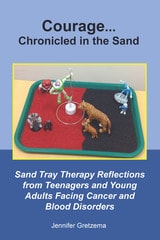
cover of Courage...Chronicled in the Sand: Sand Tray Therapy Reflections from Teenagers and Young Adults Facing  Cancer and Blood Disorders

Courage...Chronicled in the Sand

Sand Tray Therapy Reflections from Teenagers and Young Adults Facing Cancer and Blood Disorders

Jennifer Gretzema

Michigan Publishing Services, 2017

It is often difficult for young people facing an illness to verbalize their personal thoughts and feelings.  In the Child and Family Life department, at The University of Michigan C.S. Mott Children’s Hospital, sand tray therapy is used to help this vulnerable population communicate with their healthcare team, families, and loved ones. Sand tray therapy is a window into the thoughts, feelings, and coping styles of youth struggling with life-altering illnesses and hospitalizations. It helps them process their past and present medical experiences, set goals, and teach others about their needs.
 
The sand trays and stories in this book were created by patients and families living with Cancer and Blood Disorders. Their expressions, created in the sand and conveyed through the written word, provide insight into their world. Sand tray therapy provides a sacred space to process experiences using symbols instead of language.
 
This collection of photos and personal stories was compiled so that other patients, their families, and their friends can share the authors’ journeys.
 
[more]
cover of Fighting to Care: Children, Cancer, and Agency in a Pediatric Hospital in Argentina

Fighting to Care

Children, Cancer, and Agency in a Pediatric Hospital in Argentina

Rafael E. Wainer

Rutgers University Press, 2027

Fighting to Care explores the lived experiences of children with pediatric blood cancer in Argentina, centering the struggles to care from the moment a child is labelled as experiencing "strangeness in the blood.” The book focuses on the notion of "permeable bodies" to understand children’s corporeal and subjective dynamic experience of cancer treatment and interpersonal care. Despite their vulnerability, throughout the course of demanding treatment, children display significant agency, actively navigating their medical journeys through various forms of communication and action. Fighting to Care also highlights the collective forms of care and the personal and interpersonal pain experienced by children, their families, and healthcare professionals in contexts of urgency and against health bureaucracies. In Argentina, caregiving, that is, fighting to care, is deeply intertwined with fighting for health rights within a public healthcare system that, while historically universal and free, is complex and impacted by recurring economic crises and social inequalities.
[more]
cover of Improvising Medicine: An African Oncology Ward in an Emerging Cancer Epidemic

Improvising Medicine

An African Oncology Ward in an Emerging Cancer Epidemic

Julie Livingston

Duke University Press, 2012
In Improvising Medicine, Julie Livingston tells the story of Botswana's only dedicated cancer ward, located in its capital city of Gaborone. This affecting ethnography follows patients, their relatives, and ward staff as a cancer epidemic emerged in Botswana. The epidemic is part of an ongoing surge in cancers across the global south; the stories of Botswana's oncology ward dramatize the human stakes and intellectual and institutional challenges of an epidemic that will shape the future of global health. They convey the contingencies of high-tech medicine in a hospital where vital machines are often broken, drugs go in and out of stock, and bed-space is always at a premium. They also reveal cancer as something that happens between people. Serious illness, care, pain, disfigurement, and even death emerge as deeply social experiences. Livingston describes the cancer ward in terms of the bureaucracy, vulnerability, power, biomedical science, mortality, and hope that shape contemporary experience in southern Africa. Her ethnography is a profound reflection on the social orchestration of hope and futility in an African hospital, the politics and economics of healthcare in Africa, and palliation and disfigurement across the global south.
[more]
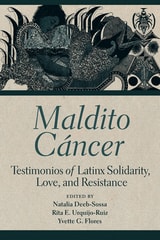
cover of Maldito Cáncer: Testimonios of Latinx Solidarity, Love, and Resistance

Maldito Cáncer

Testimonios of Latinx Solidarity, Love, and Resistance

Natalia Deeb-Sossa

University of Arizona Press, 2027

This poignant collection brings together powerful testimonios from Chicanx and Latinx patients, family members, caregivers, and community advocates who have faced el maldito cáncer. Authors share first-person narratives of illness, fear, love, solidarity, and resilience, illuminating how Latinx communities navigate cancer journeys within a complex and often inequitable health-care system.

The contributors—ranging from students and community members to renowned scholars and artists—offer their stories through essays, creative nonfiction, poetry, bilingual chapters, and drawings. 

These testimonios honor the diverse ways Latinxs process and communicate the emotional, physical, and cultural realities of cancer. Each section is framed by a short editor introduction that highlights key themes and invites readers to reflect on the resonant insights each story brings. Across four sections—patient voices, family members, community perspectives, and closing reflections—the book reveals how individuals confront illness with courage and how families and communities create networks of care grounded in culture, love, and collective strength.

Exposing physical and emotional vulnerabilities, instances of pain, suffering, worry, and anguish, Maldito Cáncer also opens a space for healing and connection. It offers a new lens to understanding cancer through culturally informed, justice-centered narratives. These acts of testimoniando offer a gift to us: resistance, connection, and hope.

Contributors
Alfonso Aranda
Cathy Arellano
Estela Mara Bensimon
Cindy Camacho-Gutierrez
Daniela A. Carreon
Angie Chabram
Natalia Deeb-Sossa
Yvette G. Flores
Fran García Vásquez
Jennifer Gottlieb
Osa Hidalgo de la Riva
Ekta Kandhway
Skye Kelty
Jorge Antonio Losoya
Dalia Magaña
Maribel Martínez
Pedro Noguera
Lorraine Ramos
Mónica Torreiro-Casal
Rita E. Urquijo-Ruiz
Patricia Zavella
[more]
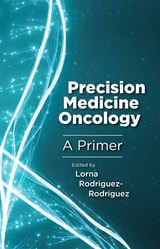
cover of Precision Medicine Oncology: A Primer

Precision Medicine Oncology

A Primer

Lorna Rodriguez-Rodriguez

Rutgers University Press, 2019

Precision medicine is rapidly becoming the standard-of-care for the treatment of cancer patients. This is made possible, in part, by the ready availability and reasonable costs of comprehensive DNA and RNA sequencing assays. However, precision medicine is complex and incorporates entirely new types of data and treatment paradigms that are outside of the training of most oncologists in practice today.

Precision Medicine Oncology: A Primer is a concise review of the fundamental principles and applications of precision medicine, intended for clinicians, particularly those working in oncology. It provides an accessible introduction to the technological advances in DNA and RNA sequencing, gives a detailed overview of approaches to the interpretation of molecular test results and their point-of-care implementation for individual patients, and describes innovative clinical trial designs in oncology as well as characteristics of the computational infrastructures through which massive quantities of data are collected, stored, and used in precision medicine oncology.
 
[more]
cover of Precision Radiation Oncology

Precision Radiation Oncology

Haffty, Bruce G

Rutgers University Press, 2018

Precision medicine is a rapidly-evolving field in the management of cancer. The use of novel molecular or genetic signatures in local-regional management is still in its infancy. Precision Radiation Oncology demystifies this state-of-the-art research and technology. 

By describing current existing clinical and pathologic features, and focusing on the ability to improve outcomes in cancer using radiation therapy, this book discusses incorporating novel genomic- or biology-based biomarkers in the treatment of patients moving radiation oncology into precision/personalized medicine. Precision Radiation Oncology provides readers with an overview of the new developments of precision medicine in radiation oncology, further advancing the integration of new research findings into individualized radiation therapy and its clinical applications.  
 
[more]
cover of Prostate Cancer: Making Survival Decisions

Prostate Cancer

Making Survival Decisions

Sylvan Meyer and Seymour C. Nash, M.D., F.A.C.S.

University of Chicago Press, 1994

Written by a surviving prostate cancer patient and his urologist, Prostate Cancer: Making Survival Decisions provides not just a physician's overview of the disease, but the compassion, understanding, and frankness of a man who's lived through the experience. From the first symptoms to early diagnosis to life after treatment, journalist Sylvan Meyer details every facet of the disease from the patient's point of view. Along with a clear, complete guide to the latest treatments, techniques, and findings, Meyer outlines the tough decisions the patient will face; describes what it's like to go through all the tests, the treatment, and the recovery; and provides an understanding of how the patient himself can affect the outcome.

Thoroughly researched and imbued with great sensitivity, Prostate Cancer: Making Survival Decisions is the most informative and illuminating book about prostate cancer available. Not just an indispensable tool for those who have been diagnosed or are at risk, this is an important guide for anyone who seeks a better understanding of this enigmatic disease and the controversies surrounding it.
[more]
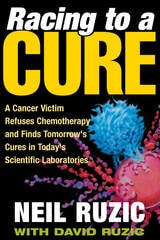
cover of Racing to a Cure: A Cancer Victim Refuses Chemotherapy and Finds Tomorrow's Cures in Today's Scientific Laboratories

Racing to a Cure

A Cancer Victim Refuses Chemotherapy and Finds Tomorrow's Cures in Today's Scientific Laboratories

Neil Ruzic

University of Illinois Press, 2003

Racing to a Cure is not a cancer memoir. It is a cancer cure memoir. In 1998 Neil Ruzic was diagnosed with mantle-cell lymphoma, the deadliest cancer of the lymph system, whose spread is reaching epidemic levels in the U.S. and Europe. Instead of following recommended courses of chemotherapy and radiation, he took control of his treatment by investigating cures being developed in the nation's cancer-research laboratories.

Although chemotherapy harms the immune system and is increasingly demonstrated to be an ineffective long-term cure for the vast majority of cancers, it remains the standard treatment for most cancer patients. Ruzic, a former scientific magazine publisher and originator of a science center, refused to accept this status quo, and instead plunged into the world of cutting-edge treatments, exploring the frontiers of cancer science with revolutionary results.

Ruzic went on the offensive: visiting scores of laboratories, gathering information, talking to researchers, and effectively becoming his own patient-care advocate. This book presents his findings. A scathing critique of the chemotherapy culture as well as unscientific "alternative" therapies, the book endorses state-of-the-art molecularly based technologies, making it an illuminating and necessary read for anyone interested in cancer research, especially patients and their families and physicians.

Neil Ruzic was expected to die within two years of his initial diagnosis. Five years later he has been declared cancer-free and considers himself cured.
[more]
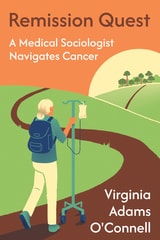
cover of Remission Quest: A Medical Sociologist Navigates Cancer

Remission Quest

A Medical Sociologist Navigates Cancer

Virginia Adams O’Connell

Temple University Press, 2025

As a medical sociologist, Virginia Adams O’Connell long studied the healthcare system and people navigating illness. Then, in 2019, she confronted her own reality of being diagnosed with primary bone lymphoma. “Since my diagnosis, I joined a club of current and past patients that I never wanted or intended to join,” she writes with both candor and poignancy, adding, “But we can collectively work to make it the best club it can be.”

In the course of diagnosis, treatment, and recovery, Adams O’Connell lived through theories she had researched and applied her sociological ideas to help make sense of her personal experiences. Remission Quest chronicles how the reality of living with cancer changed her perspective on what she had studied. Adams O’Connell found her knowledge illustrated and enriched her sociological analysis of our medical institutions and that her own illness narrative shone new light on her theories.

With moving prose, Remission Quest captures the emotions of having cancer and dealing with elaborate medical systems, learning how to be a “good patient” while also managing indescribable fear and fatigue, and confronting questions about the meaning of life. Adams O’Connell’s experiences are both personal and universal. They provide inspiration, compassion, and understanding.
[more]
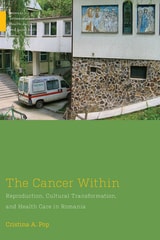
cover of The Cancer Within: Reproduction, Cultural Transformation, and Health Care in Romania

The Cancer Within

Reproduction, Cultural Transformation, and Health Care in Romania

Cristina A. Pop

Rutgers University Press, 2022
The Cancer Within examines cervical cancer in Romania as a point of entry into an anthropological reflection on contemporary health care. Cervical cancer prevention reveals the inner workings of emerging post-communist medicine, which aligns the state and the market, public and private health care providers, policy makers, and ordinary women. Fashioned by patriarchal relations, lived religion, and the historical trauma of pronatalism, Romanian women’s responses to reproductive medicine and cervical cancer prevention are complicated by neoliberal reforms to medical care. Cervical cancer prevention – and especially the HPV vaccination – provided Romanians a legitimate instance to express their conflicting views of post-communist medicine. What sets Romania apart is that pronatalism, patriarchy, lived religion, medical reforms, and moral contestation of preventive medicine bring into line systemic contingencies that expose the historical, social, and cultural trajectories of cervical cancer.
 
[more]
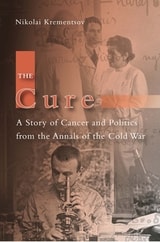
cover of The Cure: A Story of Cancer and Politics from the Annals of the Cold War

The Cure

A Story of Cancer and Politics from the Annals of the Cold War

Nikolai Krementsov

University of Chicago Press, 2002

Did America try to steal Soviet "cancer secrets"? And how could a cancer cure turn into a "biological atomic bomb"? Nikolai Krementsov's compelling tale of cancer and politics is the story of a husband-and-wife team who developed a promising anticancer treatment in Stalin's Russia, only to see their discovery entangled in Cold War rivalries, ideological conflict, and scientific turf wars.

In 1946, Nina Kliueva and Grigorii Roskin announced the discovery of a preparation able to "dissolve" tumors in mice. Preliminary clinical trials suggested that KR, named after its developers, might work in humans as well. Media hype surrounding KR prompted the U.S. ambassador to the Soviet Union to seek U.S.-Soviet cooperation in perfecting the possible cure. But the escalating Cold War gave this American interest a double edge. Though it helped Kliueva and Roskin solicit impressive research support from the Soviet leadership, including Stalin, it also thrust the couple into the center of an ideological confrontation between the superpowers. Accused of divulging "state secrets" to America, the couple were put on a show trial, and their "antipatriotic sins" were condemned in Soviet stage and film productions.

Parlaying their notoriety into increased funding, Kliueva and Roskin continued their research, but envious colleagues discredited their work and took over their institute. For years, work on KR languished and ceased entirely with the deaths of Kliueva and Roskin. But recently, the Russian press reported that work on KR has begun again, reopening this illuminating story of the intersection among Cold War politics, personal ideals, and biomedical research.
[more]
cover of Variables Related to Human Breast Cancer

Variables Related to Human Breast Cancer

V. Elving Anderson

University of Minnesota Press, 1958

Variables Related to Human Breast Cancer was first published in 1958.The question of what role, if any, heredity plays in the etiology of human cancer is of obvious importance in the continuing search for an answer to the riddle of cancer. This book describes a study which was conducted at the Dight Institute for Human Genetics of the University of Minnesota, seeking evidence on two aspects of the heredity question. The objectives were, first, to determine whether there is an increased frequency of cancer among relatives of breast cancer patients (over what would be expected by coincidence) and second, to find out whether any family tendency to cancer is general or site-specific.The families of 621 breast cancer patients treated at the Tumor Clinic of the University of Minnesota Hospitals were investigated, with special attention to the choice of original patients and to the completeness of information. For comparison the authors studied the families of husbands of the patients and also analyzed statistics on cancer cases and deaths in the general population.The methods used in the project are described in detail, the data are presented, and the results interpreted. The findings are of value not only in their scientific application but also for use in counseling relatives of breast cancer patients, since these relatives often have greater fear of developing cancer than the facts warrant.
[more]