Results by title

3 books match the query 'One Woman'
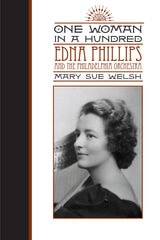
cover of One Woman in a Hundred: Edna Phillips and the Philadelphia Orchestra

One Woman in a Hundred

Edna Phillips and the Philadelphia Orchestra

Mary Sue Welsh

University of Illinois Press, 2013
Gifted harpist Edna Phillips (1907–2003) joined the Philadelphia Orchestra in 1930, becoming not only that ensemble's first female member but also the first woman to hold a principal position in a major American orchestra. Plucked from the Curtis Institute of Music in the midst of her studies, Phillips was only twenty-three years old when Leopold Stokowski, one of the twentieth century's most innovative and controversial conductors, named her principal harpist. This candid, colorful account traces Phillips's journey through the competitive realm of Philadelphia's virtuoso players, where she survived--and thrived--thanks to her undeniable talent, determination, and lively humor.
 
Drawing on extensive interviews with Phillips, her family, and colleagues as well as archival sources, One Woman in a Hundred chronicles the training, aspirations, setbacks, and successes of this pioneering woman musician. Mary Sue Welsh recounts numerous insider stories of rehearsal and performance with Stokowski and other renowned conductors of the period such as Arturo Toscanini, Fritz Reiner, Otto Klemperer, Sir Thomas Beecham, and Eugene Ormandy. She also depicts Phillips's interactions with fellow performers, the orchestra management, and her teacher, the wily and brilliant Carlos Salzedo. Blessed with a nimble wit, Phillips navigated a plethora of challenges, ranging from false conductors' cues to the advances of the debonair Stokowski and others. She remained with the orchestra through some of its most exciting years from 1930 to 1946 and was instrumental in fostering harp performance, commissioning many significant contributions to the literature.
 
This portrait of Phillips's exceptional tenure with the Philadelphia Orchestra also reveals the behind-the-scenes life of a famous orchestra during a period in which Rachmaninoff declared it "the finest orchestra the world has ever heard." Through Phillips's perceptive eyes, readers will watch as Stokowski melds his musicians into a marvelously flexible ensemble; world-class performers reach great heights and make embarrassing flubs; Greta Garbo comes to Philadelphia to observe her lover Leopold Stokowski at work; and the orchestra encounters the novel experience of recording for Walt Disney's Fantasia. A colorful glimpse into a world-class orchestra at the height of its glory, One Woman in a Hundred tells the fascinating story of one woman brave enough and strong enough to overcome historic barriers and pursue her dreams.

[more]
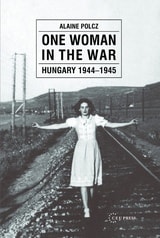
cover of One Woman in the War: Hungary 1944-1945

One Woman in the War

Hungary 1944-1945

Alaine Polcz

Central European University Press, 2002
Before the publication of this book, Alaine Polcz was widely recognized as a psychologist ministering to the needs of disturbed and incurably ill children and their families, as the author of numerous articles and several books on thanatology, and as the founder of the hospice movement in Hungary. The autobiographic account of the experiences of a woman, then 19-20, in the closing months of the Second World War. When it was first published, in 1991, the book was a revelation of past horrors in Hungary which, until then, had lingered on in the farthest reaches of the national memory as rumor and suspicion about the violent acts committed against women during a time of chaos, havoc, and savagery. The literary world quickly recognized the merits of this book: It was highly praised by Hungarian reviewers, awarded prizes, and has already been translated into French, Rumanian, Slovenian, and Serbian.
[more]
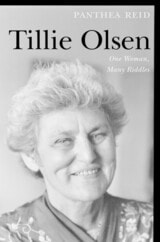
cover of Tillie Olsen: One Woman, Many Riddles

Tillie Olsen

One Woman, Many Riddles

Reid, Panthea

Rutgers University Press, 2011

In Tillie Olsen: One Woman, Many Riddles, Panthea Reid examines the complex life of this iconic feminist hero and twentieth-century literary giant.

Born in Omaha, Nebraska, Tillie Olsen spent her young adulthood there, in Kansas City, and in Faribault, Minnesota. She relocated to California in 1933 and lived most of her life in San Francisco. From 1962 on, she sojourned frequently in Massachusetts, New Hampshire, Santa Cruz, and Soquel, California. She was a 1920s "hell-cat"; a 1930s revolutionary; an early 1940s crusader for equal pay for equal work and a war-relief patriot; an ex-GI's ideal wife in the later 1940s; a victim of FBI surveillance in the 1950s;a civil rights and antiwar advocate during the 1960s and 1970s; and a life-long orator for universal human rights.

The enigma of Tillie Olsen is intertwined with that of the twentieth century. From the rebellions in Czarist Russia, through the terrors of the Depression and the hopes of the New Deal, to World War II, the Nuremberg Trials, and the United Nations' founding, to the cold war and House Un-American Activities Committee hearings, to later progressive and repressive movements, the story of Olsen's life brings remote events into focus.

In her classic short story "I Stand Here Ironing" and her groundbreaking Tell Me a Riddle, Yonnondido, and Silences, Olsen scripted powerful, moving prose about ordinary people's lives, exposing the pervasive effects of sexism, racism, and classism and elevating motherhood and women's creativity into topics of study. Popularly referred to as "Saint Tillie," Olsen was hailed by many as the mother of modern feminism.

Based on diaries, letters, manuscripts, private documents, resurrected public records, and countless interviews, Reid's artfully crafted biography untangles some of the puzzling knots of the last century's triumphs and failures and speaks truth to legend, correcting fabrications and myths about and also by Tillie Olsen.

[more]