Results by title
3 books match the query 'Opium'

Drugs in Afghanistan
Opium, Outlaws and Scorpion TalesDavid Macdonald
Pluto Press, 2007
Afghanistan is the world's largest producer of opium and heroin. This book explores the devastating impact that the drugs trade has had on the Afghan people.
Author David Macdonald has worked as a drugs advisor to the UN. Based on his extensive experience, this book breaks down the myths surrounding the cultivation and consumption of drugs, providing a detailed analysis of the history of drug use within the country. He examines the impact of over 25 years of continuous conflict, and shows how poverty and instability has led to an increase in drugs consumption. He also considers the recent rise in the use of pharmaceutical drugs, resulting in dangerous chemical cocktails and analyses the effect of Afghanistan's drug trade on neighbouring countries.
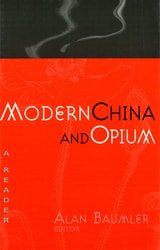
Modern China and Opium
A ReaderAlan Baumler, Editor
University of Michigan Press, 2001
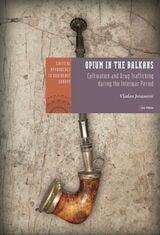
Opium in the Balkans
Cultivation, Processing, and Trade during the Interwar PeriodVladan Jovanović
Central European University Press, 2025
Macedonian raw opium was a highly sought-after pharmaceutical raw material. This book focuses on its cultivation and production, and the trafficking of opium-based narcotics. Vladan Jovanović offers fresh insight into a neglected and marginalized subject, tracing and contextualizing both the licit and the illicit processing and trade of opium alkaloids from the Western Balkans through Turkey, and on to the rest of the world between the two World Wars.
His approach is to explore the subject both from the top down, involving the League of Nations and politicians and diplomats, as well as from the bottom up, through the analysis of the activities of smugglers, police, and ordinary people who participated in the production and distribution of opium. The author describes the process of relocating the illegal processing industry from Turkey and Bulgaria to Yugoslavia. He insightfully shows the implicit continuity of relations between the former Ottoman Empire and the newly constituted Yugoslav state in the form of bilateral political agreements.
He pays special attention to the illegal activities within the legal pharmaceutical industry and also exposes the role of criminal networks, which he situates in the appropriate political and social context. The exploration of this sensitive historical subject extends to other Balkan countries, along with Turkey, Western Europe, and the United States.