Results by title
13 books match the query 'Opportunities'

Art as Research
Opportunities and ChallengesEdited by Shaun McNiff
Intellect Books, 2013
The new practice of art-based research uses art making as a primary mode of enquiry rather than continuing to borrow research methodologies from other disciplines to study artistic processes. Drawing on contributions from arts therapies, education, history, organizational studies, and philosophy, the essays critically examine unique challenges that include the personal and sometimes intimate nature of artistic enquiry and the complexities of the partnership with social science which has dominated applied arts research; how artistic discoveries are apt to emerge spontaneously, even contrary to plans and what we think we know; how truth can be examined through both fact and fiction as well as the interplay of objective and subjective experience; and ways of generating artistic evidence and communicating outcomes. Offering examples from all of the arts this volume will be welcomed by researchers and students in many fields.
[more]
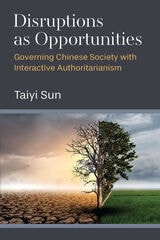
Disruptions as Opportunities
Governing Chinese Society with Interactive AuthoritarianismTaiyi Sun
University of Michigan Press, 2023
Disruptions as Opportunities: Governing Chinese Society with Interactive Authoritarianism addresses the long-standing puzzle of why China outlived other one-party authoritarian regimes with particular attention to how the state manages an emerging civil society. Drawing upon over 1,200 survey responses conducted in 126 villages in the Sichuan province, as well as 70 interviews conducted with Civil Society Organization (CSO) leaders and government officials, participant observation, and online research, the book proposes a new theory of interactive authoritarianism to explain how an adaptive authoritarian state manages nascent civil society. Sun argues that when new phenomena and forces are introduced into Chinese society, the Chinese state adopts a three-stage interactive approach toward societal actors: toleration, differentiation, and legalization without institutionalization. Sun looks to three disruptions—earthquakes, internet censorship, and social-media-based guerrilla resistance to the ride-sharing industry—to test his theory about the three-stage interactive authoritarian approach and argues that the Chinese government evolves and consolidates its power in moments of crisis.
[more]

Librarians Serving Diverse Populations
Challenges and OpportunitiesLori Mestre
Assoc of College & Research Libraries, 2011
[more]
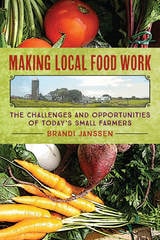
Making Local Food Work
The Challenges and Opportunities of Today's Small FarmersBrandi Janssen
University of Iowa Press, 2017
When it comes to local food, it takes more than “knowing your farmer.” Brandi Janssen takes on some of the myths about how the local food system works and what it needs to thrive. Advocates claim that small biodiverse farms will fundamentally change farming, rural communities, and the American diet. For many, simply by knowing our farmers we become champions of a new way of eating that revolutionizes our economy and society. But that argument ignores the fact that if local food is to succeed, it requires many of the trappings of conventional food production, including processors, middle men, inspectors, and regulators.
By listening to and working alongside people trying to build a local food system in Iowa, Janssen uncovers the complex realities of making it work. Although the state is better known for its vast fields of conventionally grown corn and soybeans, it has long boasted a robust network of small, diverse farms, community supported agriculture enterprises, and farmers’ markets. As she picks tomatoes, processes wheatgrass, and joins a parents’ committee trying to buy local lettuce for a school lunch, Janssen asks how small farmers and CSA owners deal with farmers’ market regulations, neighbors who spray pesticides on crops or lawns, and sanitary regulations on meat processing and milk production. How can they meet the needs of large buyers like school districts? Who does the hard work of planting, weeding, harvesting, and processing? Is local food production benefitting rural communities as much as advocates claim?
In answering these questions, Janssen displays the pragmatism and level-headedness one would expect of the heartland, much like the farmers and processors profiled here. It’s doable, she states, but we’re going to have to do more than shop at our local farmers’ market to make it happen. This book is an ideal introduction to what local food means today and what it might be tomorrow.
[more]

Medicare's Histories
Origins, Omissions, and Opportunities in CanadaEsyllt W. Jones
University of Manitoba Press, 2022
[more]

Mental Health Services for Deaf People
Treatment Advances, Opportunities, and ChallengesBenito Estrada Aranda
Gallaudet University Press, 2015
The World Congress on Mental Health and Deafness first met at Gallaudet University in October 1998, and it has convened five more times in the succeeding years. This volume collects the very best research presented at the Fifth World Congress, which took place in Monterrey, Mexico, in 2012. The eighteen international contributors represent the pioneers of mental health and deafness services in their respective countries.
Volume editors Benito Estrada Aranda and Ines Sleeboom-van Raaij have divided the book into three parts—Mental Health Issues and Treatment, Deaf Populations, and Deaf Children and Their Families. In the first part, the contributors provide in-depth analysis of specific challenges and treatment modalities ranging from the provision of mental healthcare as a basic human right to psychopharmacological treatment, the challenges in developing mental health services for deaf and hard of hearing people in countries where none exist, and new treatment therapies.
Volume editors Benito Estrada Aranda and Ines Sleeboom-van Raaij have divided the book into three parts—Mental Health Issues and Treatment, Deaf Populations, and Deaf Children and Their Families. In the first part, the contributors provide in-depth analysis of specific challenges and treatment modalities ranging from the provision of mental healthcare as a basic human right to psychopharmacological treatment, the challenges in developing mental health services for deaf and hard of hearing people in countries where none exist, and new treatment therapies.
Part two looks at issues of self-esteem and cultural identity among deaf and hard of hearing adults in Greece and Cyprus, the services for deaf people at a public health clinic in Austria, and the quality of life among Latino Deaf bilinguals in the United States. In the last part, the contributors focus on mental health issues found in deaf children and adolescents and on the relationships between deaf teenagers and their hearing mothers. The volume concludes with a case study of a prelingually deaf child diagnosed as autistic. Taken all together, these cutting-edge articles explore the important issues within the specialized area of mental health and deafness.
[more]

Michigan's economic future
challenges and opportunitiesCharles L. Ballard
Michigan State University Press, 2006
[more]
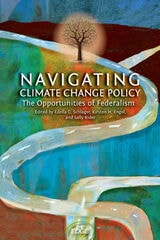
Navigating Climate Change Policy
The Opportunities of FederalismEdella C. Schlager
University of Arizona Press, 2011
This timely volume challenges the notion that because climate change is inherently a global problem, only coordinated actions on a global scale can lead to a solution. It considers the perspective that since climate change itself has both global and local causes and implications, the most effective policies for adapting to and mitigating climate change must involve governments and communities at many different levels.
Federalism—the system of government in which power is divided among a national government and state and regional governments—is well-suited to address the challenges of climate change because it permits distinctive policy responses at a variety of scales. The chapters in this book explore questions such as what are appropriate relationships between states, tribes, and the federal government as each actively pursues climate-change policies? How much leeway should states have in designing and implementing climate-change policies, and how extensively should the federal government exercise its preemption powers to constrain state activity? What climate-change strategies are states best suited to pursue, and what role, if any, will regional state-based collaborations and associations play? This book examines these questions from a variety of perspectives, blending legal and policy analyses to provide thought-provoking coverage of how governments in a federal system cooperate, coordinate, and accommodate one another to address this global problem.
Navigating Climate Change Policy is an essential resource for policymakers and judges at all levels of government who deal with questions of climate governance. It will also serve as an important addition to the curriculum on climate change and environmental policy in graduate and undergraduate courses and will be of interest to anyone concerned with how the government addresses environmental issues.
[more]

Protest and Opportunities
A Theory of Social Movements and Political ChangeFelix Kolb
Campus Verlag, 2007
Although grass-roots social movements are an important force of social and political change, they quite often fail to achieve their lofty goals. Similarly, the inability of research to systematically explain the impact of such movements stands in sharp contrast to their emotional appeal. Protest, Opportunities, and Mechanisms attempts to rejuvenate current scholarship by developing a comprehensive theory of social movements and political change.
In addition to reviewing the existing literature on the political outcomes of social movements, this volume analyzes the examples of the American civil rights movement and anti-nuclear energy efforts in eighteen countries to forge a new understanding of their momentous impact.
In addition to reviewing the existing literature on the political outcomes of social movements, this volume analyzes the examples of the American civil rights movement and anti-nuclear energy efforts in eighteen countries to forge a new understanding of their momentous impact.
[more]

Structural Contexts of Opportunities
Peter M. Blau
University of Chicago Press, 1994
The distinguished sociologist Peter Blau has opened up a variety of fields with brilliant contributions, ranging from research on social networks of small groups and quantitative studies of formal organizations to more synoptic investigations of populations and the large scale structures which hold them together. In this capstone to a prolific career, he has brought together these concerns to form a wide ranging theory of population structures and their influence on social life—from opportunities in job choice and social mobility, to organizational participation, and intergroup relations.
Blau begins by outlining the influences of population structures on intergroup relations and then examining the implications these influences have on occupational opportunities. He looks at the many groups within which an individual is likely to socialize—family, ethnic group, socioeconomic class—and the distance away from these groups an individual is likely to move. Blau demonstrates how such factors affect social mobility, which, in turn, influences membership and structures several types of organizations.
Blau then moves on to interpersonal relationships and analyzes the social exchanges in them that reveal the ultimate effects of ethnic, socioeconomic, and other aspects of population structures. He defines two types of power: influence in direct interpersonal exchange, and large-scale domination (economic or political) of groups without personal contact.
[more]

Telemedicine Systems for Unreached Communities
Context, challenges and opportunitiesMehdi Hasan
The Institution of Engineering and Technology, 2026
Telemedicine - broadly defined as the use of electronic information and communication technologies to deliver healthcare services at a distance - offers an opportunity to create more equitable healthcare provision for unreached communities. Through the integration of telecommunications technologies, remote diagnostics, electronic health systems, mobile health platforms, and virtual consultation models, telemedicine enables healthcare providers to deliver clinical services across significant geographic and socioeconomic divides.
[more]

The Digital Twin Handbook
Challenges, opportunities and future research directionsDhaval Thakker
The Institution of Engineering and Technology, 2025
A digital twin (DT) is a digital representation of a real-world physical product, system, or process. It is indistinguishable from its physical counterpart and used for simulation, integration, testing, monitoring and maintenance, often in real-time and in synchronization with the physical system. Digital twins offer the ability to gain a deep insight into the operating principles of any services, the interactions between different parts of the services and the behavioural aspects in a way that can be interactive and actionable for users and decision-makers.
[more]
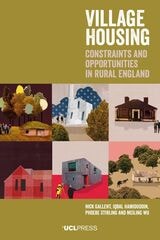
Village Housing
Constraints and Opportunities in Rural EnglandNick Gallent, Iqbal Hamiduddin, Phoebe Stirling, and Meiling Wu
University College London, 2022
An examination of housing access and affordability barriers in rural England.
Village Housing explores the housing challenges faced by England’s amenity villages, rooted in post-war counter-urbanization and a rising tide of investment demand for rural homes. It tracks solutions to date and considers what further actions might be taken to increase the equity of housing outcomes and thereby support rural economies and alternate rural futures. The authors examine first the interwar reliance on landowners to provide tied housing and post-war diversification of responses to rising housing access difficulties, including from the public and third sectors; second, recent community-led responses; and third, actions that disrupt established production processes: self-build, low impact development, and a re-emergence of council provision. These responses to the village housing challenges are set against a broader backdrop of structural constraints and opportunities to reduce those constraints through planning, land, and tax reforms that can broaden the social inclusivity and diversity of villages and support their economic well-being.
Village Housing explores the housing challenges faced by England’s amenity villages, rooted in post-war counter-urbanization and a rising tide of investment demand for rural homes. It tracks solutions to date and considers what further actions might be taken to increase the equity of housing outcomes and thereby support rural economies and alternate rural futures. The authors examine first the interwar reliance on landowners to provide tied housing and post-war diversification of responses to rising housing access difficulties, including from the public and third sectors; second, recent community-led responses; and third, actions that disrupt established production processes: self-build, low impact development, and a re-emergence of council provision. These responses to the village housing challenges are set against a broader backdrop of structural constraints and opportunities to reduce those constraints through planning, land, and tax reforms that can broaden the social inclusivity and diversity of villages and support their economic well-being.
[more]