Results by title
6 books match the query 'Oppression (Psychology)'

Aurum
PoemsSantee Frazier
University of Arizona Press, 2019
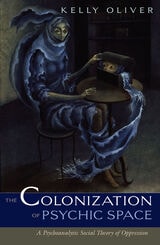
Colonization Of Psychic Space
A Psychoanalytic Social Theory Of OppressionKelly Oliver
University of Minnesota Press, 2004
Reveals the psychic and social costs of racial and sexual oppression
We are, Julia Kristeva writes, strangers to ourselves; and indeed much of contemporary theory, whether psychoanalytic, historical, social, or critical, describes the human condition as one of alienation. Eloquently arguing that we cannot explain the development of individuality or subjectivity apart from its social context, Kelly Oliver makes a powerful case for recognizing the social aspects of alienation and the psychic aspects of oppression.
Oliver’s work shows how existentialist and psychoanalytic notions of alienation cover up specific forms of racist and sexist alienation that serve as the underside of the human condition. She reveals that such notions are actually symptomatic of the subject’s anxiety and guilt over the oppression on which his privileged position rests. Not only does such alienation not embody subjectivity and humanity, it in fact undermines them.Asserting that sublimation and forgiveness—and not alienation—constitute subjectivity, Oliver explores the complex ways in which the alienation unique to oppression leads to depression, shame, anger, or violence; and how these affects, now often misread and misdiagnosed, can be transformed into agency, individuality, solidarity, and community.
First, Do No Harm
Power, Oppression, and Violence in HealthcareEdited by Nancy L. Diekelmann
University of Wisconsin Press, 2002
First, Do No Harm shows how health care professionals, with the best intentions of providing excellent, holistic health care, can nonetheless perpetuate violence against vulnerable patients. The essays investigate the need to rethink contemporary healthcare practices in ways that can bring the art and science of medicine back into sorely needed balance.
These ground-breaking studies by noted scholars question commonly held assumptions in contemporary healthcare that underlie oppressive power dynamics and even violence for patients and their families. The contributors discuss such topics as women and violence, life-support technologies, and healthcare professionals’ own experiences as patients. First, Do No Harm opens the discourse for reaching new understandings, from reassessing the meaning of "quality of life" to questioning the appropriateness of the very language used by healthcare professionals. It will be welcomed by healthcare workers and by scholars in nursing, medicine, and the allied health sciences.
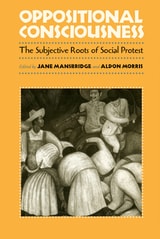
Oppositional Consciousness
The Subjective Roots of Social ProtestEdited by Jane J. Mansbridge and Aldon Morris
University of Chicago Press, 2001
Each essay employs a recent historical case to demonstrate how oppositional consciousness actually worked in the experience of a subordinate group. Based on participant observation and interviews, chapters focus on the successful social movements of groups such as African Americans, people with disabilities, sexually harassed women, Chicano workers, and AIDS activists. Ultimately, Oppositional Consciousness sheds new light on the intricate mechanisms that drive the important social movements of our time.
Contributors: Naomi Braine, Sharon Groch, Fredrick C. Harris, Jane Mansbridge, Anna-Maria Marshall, Aldon Morris, Marc Simon Rodriguez, Brett C. Stockdill, Lori G. Waite
Sideways Selves
Travesti and Jotería Struggles Across the AméricasPJ DiPietro
University of Texas Press, 2025
2026 Sylvia Rivera Award in Transgender Studies, The Center for LGBTQ Studies (CLAGS), CUNY
How trans and non-binary networks engage in decoloniality across hemispheres.
A deeply informed, theoretically rich work of inquiry and critique, Sideways Selves learns from two communities of migrants as they contest their marginalization under the colonial regime of gender—colonial because, as PJ DiPietro affirms, Indigenous and Afro-diasporic conceptions of embodiment have been displaced by the European-Christian order of gender. Following gender-nonconforming Aymara, Kolla, and mixed-race exiles in Buenos Aires and K’iche’, Nahua, and Central American migrants in the San Francisco Bay Area, DiPietro takes stock of a collective, transnational effort to reimagine ideas of personhood and kinship that gender makes unthinkable.
The communities DiPietro studies create new kinds of identities, collective and genderless in nature. Their ways of thinking and doing, though radical, are motivated by old wisdom, storytelling, healing, and religion—brujería, curanderismo, Voudoun, and other practices that colonialism, capitalism, and the nation-state have unsuccessfully tried to erase. In equal measures philosophical and ethnographic, Sideways Selves witnesses and listens as these displaced people—displaced from their homes and from the moral geography of the West—show us what a just, decolonial world could actually be.

Tormented Minds
Christine Roberts
Intellect Books, 1995
The plays are very different in style and include the use of physical theatre, naturalistic explorations of human rights abuses, and symbolic structures, puppets and poetry. The plays are supported by an analysis of their processes and themes. All have reached production and the text is supplemented by photographs of these performances.