Results by title
2 books match the query 'Optimizing Training'
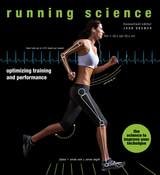
Running Science
Optimizing Training and PerformanceJohn Brewer
University of Chicago Press, 2017
Running is a deceptively simple sport. At its most basic, you need only shoes and comfortable clothes you don’t mind getting sweaty. Yet each time you lace up, all your body’s moving parts must work together to achieve a gait that will keep you injury-free. Many other factors also affect your performance, from the weather and the surface you run on to your shoes, your diet, and even your mental and emotional state. Science plays an important role in most, if not all, of these factors.
As a sports scientist and Running Fitness columnist, John Brewer has reviewed hundreds of scientific studies, and he offers runners the benefit of their findings in Running Science. Each chapter explores a different aspect of the sport through a series of questions. Many of the questions address practical matters: Do you really need to stretch? Which running shoes best suit your form and foot strike? Does carbo-loading lore stand up to scientific scrutiny—could a big bowl of spaghetti be the difference between a PR and a DNF? Other questions enhance appreciation for the incredible feats of the sport’s great athletes. (What would it take to run a two-hour marathon? Perfect weather, a straight, flat course, competition, and a lot of luck!) The answer to each question is presented in a straightforward, accessible manner, with accompanying infographics.
Whether you’re a beginner or a seasoned runner with many miles and medals behind you, Running Science is a must-have for anyone interested in the fascinating science behind the sport.
[more]
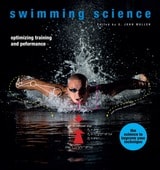
Swimming Science
Optimizing Training and PerformanceEdited by G. John Mullen
University of Chicago Press, 2018
Swimming is often touted as one of the most accessible workouts—low impact, low tech, and beneficial at any stage of life. Yet each time you suit up and dive in, your body’s moving parts must work together to propel you through dozens of pounds of water resistance, somehow emulating the movements of species that evolved specifically for the water. What are the physical forces at work when you get in a pool, and what determines whether you will sink or swim?
Writing to competitive and novice swimmers alike, contributors to this volume break down every aspect of the sport. Swimming Science covers physiology, psychology, and safety, as well as hydrodynamics, nutrition, and technique. Each chapter examines these topics through a series of practical questions. What are the forces acting on you when you swim, and how do your muscles best generate propulsion against those forces? How much protein, salt, and iron should a swimmer consume, and how does energy from carbohydrates compare to energy from fats? How important is the “swimmer’s physique” in competitive swimming, and is technique or strength more necessary for generating speed? These questions are examined with the aid of explanatory diagrams and illustrations, and the book can be used to search for particular topics, or read straight through for a comprehensive overview.
Whether you are a competitive swimmer looking to optimize your performance or just beginning to dip a toe into the sport, Swimming Science is a must-read.
[more]