Results by title
6 books match the query 'Orators'
An Imaginative Whig
Reassessing the Life and Thought of Edmund BurkeEdited & Intro by Ian Crowe
University of Missouri Press, 2005
Cicero on Oratory and Orators
Translated by J.S. Watson. Introduction by Ralph A. Micken. Foreword by David Potter. Preface by Richard Leo Enos
Southern Illinois University Press, 1986
Contains Cicero’s De Oratore and Brutus, influential sources over the centuries for ideas on rhetoric and training for public leadership.
The De Oratore, written in 55 B.C., argues that rhetoric is socially significant because states are established and maintained through the leadership of eloquent men.
The three books of dialogues in this volume feature discussions between well-known figures in Roman history, including Lucius Crassus, Marcus Antonius, Quintus Lutatius Catulus, Quintus Marcius Scaevola, Caius Aurelius Cotta, Julius Caesar Strabo Vopicus, and Publius Sulpicus Rufus.
The Brutus continues the theme of the dialogues, giving a history of eminent orators whose performances exemplify the Ciceronian theory that rhetoric finally adds up to leadership.

Fortune's Favored Child
Raouf Mama
Northwestern University Press, 2014
Raouf Mama is widely beloved by children and adults alike for his books and especially for his African and multicultural storytelling, which incorporates poetry, song, music, and dance.
In Fortune’s Favored Child, the master storyteller tells his own story, beginning in the West African country of Benin. Through a harrowing experience with sickness, an encounter with a clairvoyant traditional healer, and astonishing twists of fortune, the protagonist struggles to uncover his real identity, to get an education, and to make his own way in the world. His journey takes him to the shores of the United States to attend graduate school at the University of Michigan and begin a new chapter in his life.
.
Q. Aurelius Symmachus
A Political BiographyCristiana Sogno
University of Michigan Press, 2010
Symmachus was a brilliant orator, writer, and statesman, often flatly labeled as one of the last pagan senators. Cristiana Sogno offers a reconstruction of the political career of Symmachus through close analysis of his extensive writings, while also proposing a critical reevaluation of his historical importance. In contrast to traditional interpretation, Sogno's study demonstrates that Symmachus was primarily an influential politician, rather than a mere pagan zealot.
By portraying the individual experience of Symmachus, the book sets forth a new approach for interpreting the political aspirations, mentality, and attitudes of Roman senators. The much-studied question of the Christianization of the Western aristocracy has created the illusion of a Christian and a pagan aristocracy rigidly separated from each other. Through her study of Symmachus, Sogno demonstrates the primary importance of politics over religion in the public activity of the late Roman aristocracy. Although the book is specifically addressed to scholars and students of Late Antiquity, it will also be of interest to classicists, ancient historians, and non-specialists who wish to know more about this pivotal period in Roman history.
Cristiana Sogno received her Ph.D. in Classics and History from Yale University. Currently she is Townsend Assistant Professor of Classics at Cornell University. Visit Professor Sogno's website at: http://www.fordham.edu.
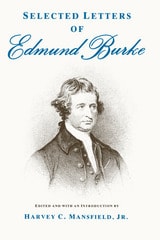
Selected Letters of Edmund Burke
Edmund Burke
University of Chicago Press, 1984
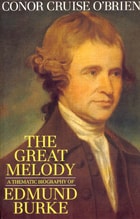
The Great Melody
A Thematic Biography of Edmund BurkeConor Cruise O'Brien
University of Chicago Press, 1992
"In bringing Burke to our attention, Mr. O'Brien has brought back a lost treasure. The Great Melody is a brilliant work of narrative sweep and analytical depth. Conor Cruise O'Brien on Edmund Burke is a literary gift to political thought."—John Patrick Diggins, New York Times Book Review
"Serious readers of history are in for a treat: a book by the greatest living Irishman on the greatest Irishman who ever lived. . . . O'Brien's study is not merely a reconstruction of a fascinating man and period. It is also a tract for the times. . . . I cannot remember another time when I finished a book of more than 600 pages wishing it were longer."—Paul Johnson, The Independent
"The Great Melody combines superb biography and fascinating history with a profound understanding of political philosophy."—Former President Richard Nixon