Results by title
2 books match the query 'Orestes, King of Argos (Mythological character)'
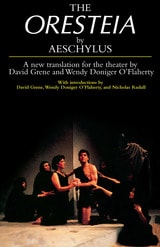
The Oresteia
Aeschylus
University of Chicago Press, 1989
Highly acclaimed as translators of Greek and Sanskrit classics, respectively, David Grene and Wendy Doniger O'Flaherty here present a complete modern translation of the three plays comprising Aeschylus' Oresteia and, with the assistance of director Nicholas Rudall, an abridged stage adaptation. This balanced and highly successful collaboration of scholars with a theater director solves the contemporary problems of translating and staging the Oresteia, which originally was written to be performed in Athens in the first half of the fifth century B.C.
While remaining faithful to the original Greek, Grene and O'Flaherty embrace a strong and adventurous English style, vivid and visceral. The language of this extraordinary translation, immediately accessible to a theater audience, speaks across the centuries. Premiered at Chicago's Court Theater in 1986 under Rudall's direction, the stage adaptation of the Oresteia proved eminently playable.
This new adaptation of the Oresteia offers a brilliant demonstration of how clearly defined goals (here, the actor's needs) can inspire translators to produce fresh, genuine, accessible dramatic texts. The resulting work provides complete and accurate texts for those who cannot read the original Greek, and it transforms the Oresteia into an effective modern stage play. With interpretive introductions written by the translators and director, this new version will be welcomed by teachers of translation courses, by students of Greek and world drama in general, and by theater professionals.
[more]
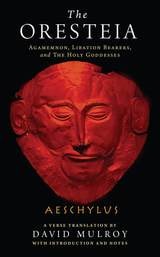
The Oresteia
Agamemnon, Libation Bearers, and The Holy GoddessesAeschylus, A verse translation by David Mulroy, with introduction and notes
University of Wisconsin Press, 2018
First presented in the spring of 458 B.C.E. at the festival of Dionysus in Athens, Aeschylus' trilogy Oresteia won the first prize. Comprised of three plays—Agamemnon, Libation Bearers, and The Furies—it is the only surviving example of the ancient trilogy form for Greek tragedies.
This drama of the House of Atreus catches everyone in a bloody net. Queen Clytaemestra of Argos murders her husband Agamemnon. Their son Orestes avenges his father by killing his mother. The Furies, hideous deities who punish the murder of blood kin, pursue Orestes. Into this horrific cycle steps Athena, goddess of wisdom, who establishes the rule of law to replace fatal vengeance. Orestes is tried in court before a jury of Athenians and found not guilty. Athena transforms the Furies into benevolent goddesses and extols the virtue of mercy.
An important historical document as well as gripping entertainment, the Oresteia conveys beliefs and values of the ancient Athenians as they established the world's first great democracy. Aeschylus (525/4–456/5 B.C.E.) was the first of the three great tragic dramatists of ancient Greece, forerunner of Sophocles and Euripides. In this trilogy he created a new dramatic form with characters and plot, infused with spellbinding emotion. David Mulroy's fluid, accessible English translation with its rhyming choral songs does full justice to the meaning and theatricality of the ancient Greek. In an introduction and appendixes, he provides cultural background for modern readers, actors, and students.
[more]