Results by title
39 books match the query 'Organized crime'
A Sense of Brutality
Philosophy after Narco-CultureCarlos Alberto Sánchez
Amherst College Press, 2020
"The study is original, bringing a wide range of voices into dialogue to present a problem that is pressing and deserving of careful analysis. The study will contribute to the field of Latin American philosophy in important ways... This is the only book by a philosopher on the topic of narco-culture, and I think it’s an important contribution to a topic that should be addressed by philosophers." —Elizabeth Millán, DePaul University
African American Organized Crime
A Social HistorySchatzberg, Rufus
Rutgers University Press, 1997
While stories of organized crime most often dwell on groups like the Mafia and Chinese Triad or Tongs, African Americans also have a long history of organized crime. Why have scholars and journalists paid so little attention to African American organized crime? What can a history of these criminal networks teach us about the social, political, and economic challenges that face African Americans today? What is specific to African American organized crime, and how do these networks differ from the criminal organizations of other racial and ethnic groups? How can a historical study of African American organized crime enrich our understanding of all criminal activity?
Rufus Schatzberg and Robert Kelly take us through almost a century of African American organized crime. Chapters focus on the numbers gambling that took place in New York City from 1920 to 1940, the criminal groups that operated in ghettos from the 1940s to the 1970s, and the gang activities that began in the 1970s and continues today. While providing a compelling analysis of African American organized crime, the authors also challenge existing stereotypes of African Americans and demonstrate the importance of studying any criminal activity within its historical and social context.
Bruno
Conversations with a Brazilian Drug DealerRobert Gay
Duke University Press, 2015
Chicago Heights
Little Joe College, the Outfit, and the Fall of Sam GiancanaCharles Hager with David T. Miller, Foreword by Louis Corsino, Afterword by Ashleigh D'Andrea
Southern Illinois University Press, 2018
In this riveting true story of coming of age in the Chicago Mob, Charles “Charley” Hager is plucked from his rural West Virginia home by an uncle in the 1960s and thrown into an underworld of money, cars, crime, and murder on the streets of Chicago Heights.
Street-smart and good with his hands, Hager is accepted into the working life of a chauffeur and “street tax” collector, earning the moniker “Little Joe College” by notorious mob boss Albert Tocco. But when his childhood friend is gunned down by a hit man, Hager finds himself a bit player in the events surrounding the mysterious, and yet unsolved, murder of mafia chief Sam Giancana.
Chicago Heights is part rags-to-riches story, part murder mystery, and part redemption tale. Hager, with author David T. Miller, juxtaposes his early years in West Virginia with his life in crime, intricately weaving his own experiences into the fabric of mob life, its many characters, and the murder of Giancana.
Fueled by vivid recollections of turf wars and chop shops, of fix-ridden harness racing and the turbulent politics of the 1960s, Chicago Heights reveals similarities between high-level organized crime in the city and the corrupt lawlessness of Appalachia. Hager candidly reveals how he got caught up in a criminal life, what it cost him, and how he rebuilt his life back in West Virginia with a prison record.
Based on interviews with Hager and supplemented by additional interviews and extensive research by Miller, the book also adds Hager’s unique voice to the volumes of speculation about Giancana’s murder, offering a plausible theory of what happened on that June night in 1975.
Counterfeited in China
The Operations of Illicit BusinessesKo-lin Chin
Temple University Press, 2025
In his illuminating study, Counterfeited in China, Ko-lin Chin investigates this lucrative industry and its emergence in China. His face-to-face interviews with counterfeiters — business owners, workers, facilitators, and key informants — in the hub of Guangzhou, China reveal how businesses that design, produce, and distribute fake and unauthorized luxury goods manage the risks inherent in their business.
Counterfeited in China examines the individual and group characteristics of counterfeiters and their relationships with organized crime; analyzes the economic aspects of counterfeiting; assesses the relationships among counterfeiting, violence, and corruption; and seeks to understand the demand for counterfeit goods. Chin also discusses the role of Chinese authorities and other parties in the war against counterfeiting.
Assessing the state of the industry and its future, Chin provides fascinating new insights into the modus operandi of counterfeiters.
Crime and Justice, Volume 40
Crime and Justice in ScandinaviaEdited by Michael Tonry and Tapio Lappi-Seppälä
University of Chicago Press Journals, 2012
Since 1979 the Crime and Justice series has presented a review of the latest international research, providing expertise to enhance the work of sociologists, psychologists, criminal lawyers, justice scholars, and political scientists. The series explores a full range of issues concerning crime, its causes, and its cure.
Volume 40, Crime and Justice in Scandinavia, offers the most comprehensive and authoritative look ever available at criminal justice policies, practices, and research in the Nordic countries. Topics range from the history of violence through juvenile delinquency, juvenile justice, and sentencing to controversial contemporary policies on prostitution, victims, and organized crime. Contributors to this volume include Jon-Gunnar Bernburg, Ville Hinkkanen, Cecilie Høigård, Hanns von Hofer, Charlotta Holmström, Janne Kivivuori, Lars Korsell, Tapio Lappi-Seppälä, Paul Larsson, Martti Lehti, Torkild Hovde Lyngstad, Sven-Axel Månsson, Anita Rönneling, Lise-Lotte Rytterbro, Torbjørn Skardhamar, May-Len Skilbrei, and Henrik Tham.
Crime and Justice, Volume 49
Organizing Crime: Mafias, Markets, and NetworksEdited by Michael Tonry and Peter Reuter
University of Chicago Press Journals, 2021
For most Americans, The Godfather, The Sopranos, and the Cosa Nostra exemplify organized crime. In Asia the term conjures up images of Japanese yakuza and Chinese triads, in Italy the Cosa Nostra and ‘Ndrangheta, in Latin America Mexican narco-gangs and Colombian drug cartels, in the Netherlands transnational drug and human trafficking, and in Scandinavia outlaw motorcycle gangs. Some but not all those organizations are “mafias” with centuries-long histories, distinctive cultures, and complicated relationships with local communities and governments. Others are new, large but transitory and with no purpose other than maximizing profits from illegal markets.
Organized crime organizations have existed for centuries. Serious scholarly, as opposed to journalistic or law enforcement, efforts to understand them, however, date back only a few decades. Authoritative overviews were, until very recently, impossible. Rigorous, analytically acute, and methodologically sophisticated literatures did not exist. They have begun to emerge. They have developed in many countries, involve work in different languages and disciplines, and deploy a wide range of methods.
Organizing Crime: Mafias, Markets, and Networks provides the most exhaustive overview ever published of knowledge about organized crime. It provides intensive accounts of American, Italian, and Dutch developments, covers both national mafias and transnational criminality, and delves in depth into gender, human capital, and money laundering issues. The writers are based in seven countries. To a person they are, or are among, the world’s most distinguished specialists in their subjects. At last, credible explanations and testable hypotheses are available concerning when, why, and under what circumstances mafias and other organized crime organizations come into being, what makes them distinctive, what they do and with what effects, and how to contain them.
Dark Governance
Illegal Organizations and State PowerJavier Auyero
University of Chicago Press, 2027
A revelatory account of the ways covert, nefarious relationships between state officials and criminal groups shape daily life for all.
Far too often, the line between legal and illegal action is crossed by actors and organizations on both sides of the law. From the old Chicago Machine getting rich off criminal activity to Mexican drug cartels placing politicians in office, these relationships between criminals and the government coordinate forms of power in ways that affect where people live, what opportunities they can pursue, how they spend money, and how they treat one another. In Dark Governance, sociologist Javier Auyero describes how this kind of governance works and what it means for civic life.
Auyero analyzes instances of dark governance, including gangs in Ecuador and paramilitaries in Colombia who exert territorial control through violent specialists and government actors. He then turns to the less-studied case of the “colectivos” in Venezuela to show the scope of political work clandestine connections can achieve by thwarting grassroots organizations. In El Salvador and Honduras, the ties between gang members on the one hand, and politicians and elected officials on the other, serve to illustrate the impact dark governance has on urban spatial arrangements and on electoral campaigns. Dark Governance also offers an in-depth study of police-trafficker collusion in Argentina, which allows Auyero to identify the ways covert connections between state actors and drug traffickers operate in marginalized communities, affecting interpersonal violence. In addition to these examples in Latin America, Auyero also shares case studies in the United States and China. Dark governance can be seen in US organizations that patrol the borders and assert their control over migrants through their illicit connections with state authorities. In China, land expropriation and development projects are sometimes delayed when some households refuse to leave their properties. Enter the thugs-for-hire frequently contracted by local governments across the country to coerce residents into complying with government orders.
Demonstrating the very real effects of dark governance, Auyero argues that though the organizations involved in these dark arrangements differ, their collaboration results in a singular effect: the ability to control populations. But when these relationships come out of the shadows, collective action can bring them down.
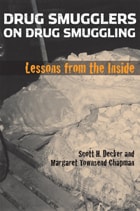
Drug Smugglers on Drug Smuggling
Lessons from the InsideScott H. Decker and Margaret Townsend Chapman
Temple University Press, 2008
Quoting frequently from their interviews, Decker and Chapman explain how individuals are recruited into smuggling, why they stay in it, and how their roles change over time. They describe the specific strategies their interviewees employed to bring drugs into the country and how they previously escaped apprehension. Over-all, the authors find that drug smuggling is organized in a series of networks which are usually unconnected.
This extraordinarily informative book will be of particular interest to law enforcement officials and policymakers, but it will appeal to anyone who wants to know how the drug business actually works.
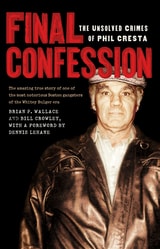
Final Confession
The Unsolved Crimes of Phil CrestaBrian P. Wallace and Bill Crowley
University Press of New England, 2013

From Fear to Fraternity
A Russian Tale of Crime, Economy and ModernityPatricia Rawlinson
Pluto Press, 2010
The end of communism marked the re-emergence of a huge rise in organised crime across Russia and Eastern Europe. High-profile efforts to combat it have met with little success.
Patricia Rawlinson argues that burgeoning crime rates result not only from the failures of communism but also from the problems of free market economies.
Drawing on interviews with members of the Russian criminal underworld, the business community, journalists and the militia, she argues that organised crime provides us with a barometer of economic well-being, not just for Russia but for any market economy.
Government of the Shadows
Parapolitics and Criminal SovereigntyEric Wilson
Pluto Press, 2009
Government of the Shadows analyses the concept of clandestine government. It explores how covert political activity and transnational organised crime are linked -- and how they ultimately work to the advantage of state and corporate power.
The book shows that legitimate government is now routinely accompanied by extra-governmental covert operations. Using a variety of case studies, from the mafia in Italy to programmes for food and reconstruction in Iraq, the contributors illustrate that para-political structures are not 'deviant', but central to the operation of global governments.
The creation of this truly parallel world-economy, the source of huge political and economic potential, entices states to undertake new forms of regulation, either through their own intelligence agencies, or through the more shadowy world of criminal cartels.
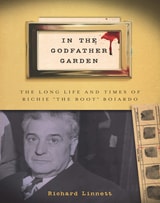
In the Godfather Garden
The Long Life and Times of Richie "the Boot" BoiardoLinnett, Richard
Rutgers University Press, 2013
To the press and the police, this secretive Don insisted he was nothing more than a simple man who enjoyed puttering about in his beloved vegetable garden on his Livingston, New Jersey, estate. In reality, the Boot was a confidante and kingmaker of politicians, a friend of such celebrities as Joe DiMaggio and George Raft, an acquaintance of Joseph Valachi—who informed on the Boot in 1963—and a sworn enemy of J. Edgar Hoover.
The Boot prospered for more than half a century, remaining an active boss until the day he died at the age of ninety-three. Although he operated in the shadow of bigger Mafia names across the Hudson River (think Charles "Lucky" Luciano and Louis “Lepke” Buchalter, a cofounder of the Mafia killer squad Murder Inc. with Jacob “Gurrah” Shapiro), the Boot was equally as brutal and efficient. In fact, there was a mysterious place in the gloomy woods behind his lovely garden—a furnace where many thought the Boot took certain people who were never seen again.
Richard Linnett provides an intimate look inside the Boot’s once-powerful Mafia crew, based on the recollections of a grandson of the Boot himself and complemented by never-before-published family photos. Chronicled here are the Prohibition gang wars in New Jersey as well as the murder of Dutch Schultz, a Mafia conspiracy to assassinate Newark mayor Kenneth Gibson, and the mob connections to several prominent state politicians.
Although the Boot never saw the 1972 release of The Godfather, he appreciated the similarities between the character of Vito Corleone and himself, so much so that he hung a sign in his beloved vegetable garden that read “The Godfather Garden.” There’s no doubt he would have relished David Chase’s admission that his muse in creating the HBO series The Sopranos was none other than “Newark’s erstwhile Boiardo crew.”

Jericho
By Charles Bowden, Foreword by Charles D'Ambrosio
University of Texas Press, 2020
When Charles Bowden died in 2014, he left behind an archive of unpublished manuscripts. Jericho marks the fifth installment in his venerable “Unnatural History of America” sextet. In it he invokes the cycles of destruction and rebirth that have defined the ancient biblical city over millennia. From the ruins of Jericho’s walls Bowden reflects on the continuum of war and violence—the many conquests of the Americas; the US-Mexican War; the Vietnam War; and the ongoing militarization of our southern border—to argue against the false promise of security that is offered when men “build that wall.” Walls—both real and imagined—will always come tumbling down.
Along the way, Bowden tells stories of loss and violence, like that of David Hartley, who mysteriously vanishes on Falcon Lake; of murdered drug runners and their cartel bosses; and of a haunted sicario, or hitman, who is running from his past and compulsively confesses his sins as he searches for an absolution that will never come. Set against these scenes of trauma and violence are Bowden’s gorgeous meditations on nature: dancing cranes, soaring eagles, winding paths that traverse mountains, lakes, and deserts. And threaded throughout are the heroic narratives of men like Martin Luther King Jr., who defied the boundaries that surrounded him and was able to reshape the arc of history. Jericho is a remarkable affirmation of our shared humanity and a timely rejection of violence and nationalism by one of our most prophetic writers working at the height of his powers.
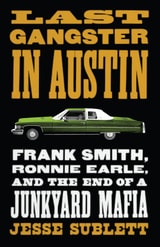
Last Gangster in Austin
Frank Smith, Ronnie Earle, and the End of a Junkyard MafiaJesse Sublett
University of Texas Press, 2021
Ronnie Earle was a Texas legend. During his three decades as the district attorney responsible for Austin and surrounding Travis County, he prosecuted corrupt corporate executives and state officials, including the notorious US congressman Tom DeLay. But Earle maintained that the biggest case of his career was the one involving Frank Hughey Smith, the ex-convict millionaire, alleged criminal mastermind, and Dixie Mafia figure.
With the help of corrupt local authorities, Smith spent the 1970s building a criminal empire in auto salvage and bail bonds. But there was one problem: a rival in the salvage business threatened his dominance. Smith hired arsonists to destroy the rival; when they botched the job, he sent three gunmen, but the robbery they planned was a bloody fiasco. Investigators were convinced that Smith was guilty, but many were skeptical that the newly elected and inexperienced Earle could get a conviction. Amid the courtroom drama and underworld plots the book describes, Willie Nelson makes a cameo. So do the private eyes, hired guns, and madams who kept Austin not only weird but also riddled with vice. An extraordinary true story, Last Gangster in Austin paints an unusual picture of the Texas capital as a place that was wild, wonderful, and as crooked as the dirt road to paradise.
Los Zetas Inc.
Criminal Corporations, Energy, and Civil War in MexicoBy Guadalupe Correa-Cabrera
University of Texas Press, 2017
The rapid growth of organized crime in Mexico and the government’s response to it have driven an unprecedented rise in violence and impelled major structural economic changes, including the recent passage of energy reform. Los Zetas Inc. asserts that these phenomena are a direct and intended result of the emergence of the brutal Zetas criminal organization in the Mexican border state of Tamaulipas. Going beyond previous studies of the group as a drug trafficking organization, Guadalupe Correa-Cabrera builds a convincing case that the Zetas and similar organizations effectively constitute transnational corporations with business practices that include the trafficking of crude oil, natural gas, and gasoline; migrant and weapons smuggling; kidnapping for ransom; and video and music piracy.
Combining vivid interview commentary with in-depth analysis of organized crime as a transnational and corporate phenomenon, Los Zetas Inc. proposes a new theoretical framework for understanding the emerging face, new structure, and economic implications of organized crime in Mexico. Correa-Cabrera delineates the Zetas establishment, structure, and forms of operation, along with the reactions to this new model of criminality by the state and other lawbreaking, foreign, and corporate actors. Since the Zetas share some characteristics with legal transnational businesses that operate in the energy and private security industries, she also compares this criminal corporation with ExxonMobil, Halliburton, and Blackwater (renamed “Academi” and now a Constellis company). Asserting that the elevated level of violence between the Zetas and the Mexican state resembles a civil war, Correa-Cabrera identifies the beneficiaries of this war, including arms-producing companies, the international banking system, the US border economy, the US border security/military-industrial complex, and corporate capital, especially international oil and gas companies.
Notorious New Jersey
100 True Tales of Murders and Mobsters, Scandals and ScoundrelsJon Blackwell
Rutgers University Press, 2007
Notorious New Jersey is the definitive guide to murder, mayhem, the mob, and corruption in the Garden State. With tabloid punch, Jon Blackwell tells riveting accounts of Alexander Hamilton falling mortally wounded on the dueling grounds of Weehawken; Dutch Schultz getting pumped full of lead in the men’s room of the Palace Chop House in Newark; and a gang of Islamic terrorists in Jersey City mixing the witch’s brew of explosives that became the first bomb to rock the World Trade Center. Along with these dramatic stories are tales of lesser-known oddities, such as the nineteenth-century murderer whose skin was turned into leather souvenirs, and the state senator from Jersey City who faked his death in a scuba accident in the 1970s in an effort to avoid prison.
Blackwell also sheds light on some historical whodunits—was Bruno Hauptmann really guilty of kidnapping the Lindbergh baby? Who was behind the anthrax attacks of 2001? Not forgotten either are notorious characters who may actually be innocent, including Rubin “Hurricane” Carter, and those who have never been convicted of wrongdoing although they left office in scandal, including Robert Torricelli and James McGreevey.
Through 100 historic true-crime tales that span over 300 years of history, Blackwell shows readers a side of New Jersey that would make even the Sopranos shudder.
Opposition by Imitation
The Economics of Italian Anti-Mafia ActivismChristina Jerne
University of Minnesota Press, 2025
Defying the mafia with everyday acts of resistance
For more than 150 years, Italy has been home to a resilient and evolving resistance against the pervasive influence of mafias. While these criminal organizations are renowned for their vast international business enterprises, the collective actions taken to oppose them are less known. In Opposition by Imitation, Christina Jerne explores anti-mafia activism, revealing how ordinary people resist, counter, and prevent criminal economies from proliferating.
Drawing on ethnographic fieldwork among anti-mafia alliances in Campania, Sicily, and other parts of Italy, Jerne details a particular aspect of mafia activities: providing cash relief and other forms of patronage to individuals and groups. Her research shows how activism has evolved to imitate this sustaining role. Activists are increasingly challenging mafia control both by creating alternative economies—from producing food that interrupts mafia labor practices to organizing tourism that supports anti-mafia hospitality—and by subversively adopting business tactics similar to the mafia’s to compete with their social influence and legitimacy. Exposing the political implications of this mimetic opposition, Jerne points to its potential impact on crime prevention and criminalization, both in Italy and globally.
Opposition by Imitation shows how these modern-day Robin Hoods are redefining collective action, taking what was controlled by the mafias and returning it to the collective. This contentious economic turn, against the backdrop of broader social movements, reveals significant political possibilities afforded by imitative opposition.
Retail e-book files for this title are screen-reader friendly with images accompanied by short alt text and/or extended descriptions.
Organized Crime in Chicago
Beyond the MafiaRobert M. Lombardo
University of Illinois Press, 2013
Post-Communist Mafia State
The Case of HungaryBálint Magyar
Central European University Press, 2016
Prohibition Gangsters
The Rise and Fall of a Bad GenerationMappen, Marc
Rutgers University Press, 2013
On January 16, 1920, the Eighteenth Amendment to the Constitution went into effect in the United States, “outlawing the manufacture, sale, or transportation of intoxicating liquors.” A group of young criminals from immigrant backgrounds in cities around the nation stepped forward to disobey the law of the land in order to provide alcohol to thirsty Americans.
Today the names of these young men—Al Capone, Lucky Luciano, Dutch Schultz, Legs Diamond, Nucky Johnson—are more familiar than ever, thanks in part to such cable programs as Boardwalk Empire. Here, Mappen strips way the many myths and legends from television and movies to describe the lives these gangsters lived and the battles they fought. Placing their criminal activities within the context of the issues facing the nation, from the Great Depression, government crackdowns, and politics to sexual morality, immigration, and ethnicity, he also recounts what befell this villainous group as the decades unwound.
Making use of FBI and other government files, trial transcripts, and the latest scholarship, the book provides a lively narrative of shootouts, car chases, courtroom clashes, wire tapping, and rub-outs in the roaring 1920s, the Depression of the 1930s, and beyond. Mappen asserts that Prohibition changed organized crime in America. Although their activities were mercenary and violent, and they often sought to kill one another, the Prohibition generation built partnerships, assigned territories, and negotiated treaties, however short lived. They were able to transform the loosely associated gangs of the pre-Prohibition era into sophisticated, complex syndicates. In doing so, they inspired an enduring icon—the gangster—in American popular culture and demonstrated the nation’s ideals of innovation and initiative.
View a three minute video of Marc Mappen speaking about Prohibition Gangsters.
Pulling off the Sheets
The Second Ku Klux Klan in Deep Southern IllinoisDarrel Dexter and John A. Beadles
Southern Illinois University Press, 2024
WINNER, Certificate of Excellence in “Scholarly Publications” from the Illinois State Historical Society’s 2025 Best of Illinois History Awards!
Unmasking old-time racism in southern Illinois
Pulling off the Sheets tells the previously obscured history of the Second Ku Klux Klan which formed in deep southern Illinois in the early 1920s. Through meticulous research into both public and private records, Darrel Dexter and John A. Beadles recount the Klan’s mythical origins, reemergence, and swift disappearance. This important historical account sets out to expose the lasting impact of the Klan on race relations today.
The ideation of the Klan as a savior of the white race and protector of white womanhood was perpetuated by books, plays, and local news sources of the time. The very real but misplaced fear of Black violence on whites created an environment in which the Second Klan thrived, and recruitment ran rampant in communities such as the Protestant church. Events like the murder of Daisy Wilson intensified the climate of racial segregation and white supremacy in the region, and despite attempts at bringing justice to the perpetrators, most failed. The Second Klan’s presence may have been short-lived, but the violence and fear it inflicted continues to linger.
This disturbing historical account challenges readers to “pull back the sheet” and confront the darkest corners of their past. Dexter and Beadles emphasize the importance of acknowledging the damage that white supremacy and racism cause and how we can move toward healing.
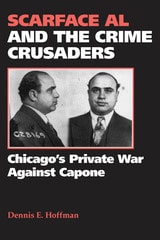
Scarface Al and the Crime Crusaders
Chicago's Private War Against CaponeDennis E. Hoffman
Southern Illinois University Press, 1993
According to the Eliot Ness myth, which has been widely disseminated through books, television shows, and movies, Ness and the Untouchables defeated Al Capone by marshaling superior firepower. In Scarface Al and the Crime Crusaders, Dennis Hoffman presents a fresh new perspective on the downfall of Al Capone. To debunk the Eliot Ness myth, he shows how a handful of private citizens brought Capone to justice by outsmarting him rather than by outgunning him.
Drawing on previously untapped sources, Hoffman dissects what he terms a “private war” against Capone. He traces the behind-the-scenes work of a few prominent Chicago businessmen from their successful lobbying of presidents Coolidge and Hoover on behalf of federal intervention to the trial, sentencing, and punishment of Al Capone. Hoffman also reconstructs in detail a number of privately sponsored citizen initiatives directed at stopping Capone. These private ventures included prosecuting the gangsters responsible for election crimes; establishing a crime lab to assist in gangbusting; underwriting the costs of the investigation of the Jake Lingle murder; stigmatizing Capone; and protecting the star witnesses for the prosecution in Al Capone’s income tax evasion case.
Hoffman suggests that as American society continues to be threatened by illegal drugs, gangs, and widespread violence, it is important to remember that the organized crime and political corruption of Prohibition-era Chicago were checked through the efforts of private citizens.
Dennis E. Hoffman is an associate professor of criminal justice at the University of Nebraska at Omaha.
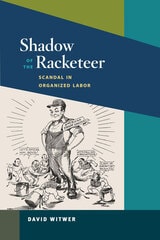
Shadow of the Racketeer
Scandal in Organized LaborDavid Witwer
University of Illinois Press, 2008
From a behind-the-scenes perspective, David Witwer describes how Pegler and his publisher, the politically powerful Roy W. Howard, shaped the news coverage of this scandal in ways that obscured the corrupt ties between employers and the mob while emphasizing the perceived menace of union leaders empowered by New Deal legislation that had legitimized organized labor. Pegler, Howard, and the rest of the mainstream press pointedly ignored evidence of the active role that business leaders took in the corruption, which badly tarnished the newly reborn labor movement.
Because he was more concerned with pursuing political gains for the conservative movement, Pegler's investigative journalism did little to reform union governance or organized crime's influence on labor unions. The union corruption scandal only undercut the labor movement. Pegler's continuing campaign against labor corruption framed the issue in ways that set the stage for postwar political defeats, culminating with the 1947 Taft-Hartley Act, which greatly limited the power of labor unions in the United States.
Demonstrating clearly and convincingly how journalism is wielded as a political weapon, Witwer studies a broad range of forces at play in the labor union scandal and its impact, including the influence of the press, organized crime, political corruption, and businessmen following their own economic imperatives.
Sovereignty and Extortion
A New State Form in MexicoClaudio Lomnitz
Duke University Press, 2024
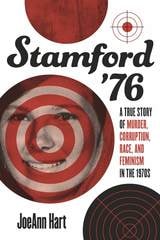
Stamford '76
A True Story of Murder, Corruption, Race, and Feminism in the 1970sJoeAnn Hart
University of Iowa Press, 2019
Looking back at what might have happened in 1976, the author discovers a Bicentennial year steeped in recession, racism, and unrelenting violence. It was also a time of flourishing second-wave feminism, when young women were encouraged to do anything, if only they knew how. Stamford was in the midst of urban renewal, destroying historically black neighborhoods to create space for corporations escaping a bankrupt and dangerous New York City, just forty miles away. Organized crime followed the money, infiltrating Stamford at all levels. The author reveals how racism, misogyny, the economy, and corruption affected the young people’s daily lives, and helped lead Margo and Howie to their deaths.
Surviving Mexico
Resistance and Resilience among Journalists in the Twenty-first CenturyBy Celeste González de Bustamante and Jeannine E. Relly
University of Texas Press, 2021
Mott KTA Journalism and Mass Communication Research Award, Kappa Tau Alpha
Tankard Book Award, Association for Education in Journalism and Mass Communication (AEJMC)
Knudson Latin America Prize, Association for Education in Journalism and Mass Communication (AEJMC)
Since 2000, more than 150 journalists have been killed in Mexico. Today the country is one of the most dangerous in the world in which to be a reporter. In Surviving Mexico, Celeste González de Bustamante and Jeannine E. Relly examine the networks of political power, business interests, and organized crime that threaten and attack Mexican journalists, who forge ahead despite the risks.
Amid the crackdown on drug cartels, overall violence in Mexico has increased, and journalists covering the conflict have grown more vulnerable. But it is not just criminal groups that want reporters out of the way. Government forces also attack journalists in order to shield corrupt authorities and the very criminals they are supposed to be fighting. Meanwhile some news organizations, enriched by their ties to corrupt government officials and criminal groups, fail to support their employees. In some cases, journalists must wait for a “green light” to publish not from their editors but from organized crime groups. Despite seemingly insurmountable constraints, journalists have turned to one another and to their communities to resist pressures and create their own networks of resilience. Drawing on a decade of rigorous research in Mexico, González de Bustamante and Relly explain how journalists have become their own activists and how they hold those in power accountable.
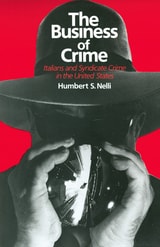
The Business of Crime
Italians and Syndicate Crime in the United StatesHumbert S. Nelli
University of Chicago Press, 1981
"A definitive history of organized crime in America."—American Historical Review
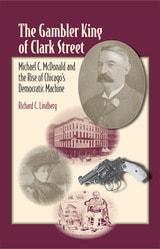
The Gambler King of Clark Street
Michael C. McDonald and the Rise of Chicago's Democratic MachineRichard C. Lindberg with a Foreword by John Miya.
Southern Illinois University Press, 2009
The Gambler King of Clark Street tells the story of a larger-than-life figure who fused Chicago’s criminal underworld with the city’s political and commercial spheres to create an urban machine built on graft, bribery, and intimidation. Lindberg vividly paints the life of the Democratic kingmaker against the wider backdrop of nineteenth-century Chicago crime and politics.
McDonald has long been cited in the published work of city historians, members of academia, and the press as the principal architect of a unified criminal enterprise that reached into the corridors of power in Chicago, Cook County, the state of Illinois, and ultimately the Oval Office. The Gambler King of Clark Street is both a major addition to Chicago’s historical literature and a revealing biography of a powerful and troubled man.
Illinois State Historical Society Scholarly Award, Certificate of Excellence, 2009
Society of Midland Authors Biography Award, 2009
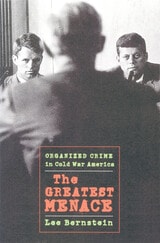
The Greatest Menace
Organized Crime in Cold War AmericaLee Bernstein
University of Massachusetts Press, 2002
The term Cold War has long been associated with the “red menace” of communism at home and abroad. Yet as Lee Bernstein shows in this illuminating study, during the 1950s the threat posed by organized crime preoccupied Americans at least as much as the fear of communist subversion. At the beginning of the decade, the televised hearings of Senator Estes Kefauver's crime committee, focusing on colorful mob figures such as Lucky Luciano and Frank Costello, attracted far more attention than the spy trial of Julius and Ethel Rosenberg. In the years that followed, public concern about gangsters and racketeering continued unabated, even after the anticommunist fever of McCarthyism had begun to subside.
Drawing on a broad range of evidence, from government records to films, television shows, and pulp novels, Bernstein explains how the campaign against organized crime, like the crusade against communism, reflected deep social and political anxieties. Just as the inquisitions of Senator McCarthy fed on popular fears of international conspiracy and alien infiltration, the anticrime investigations of the 1950s raised the specter of a foreign-based criminal cartel—the Sicilian Mafia— preying on a vulnerable American public. In both cases, the association of the foreign-born with criminal or un-American activity led to the creation of state and local citizens committees and to calls for new restrictions on immigration. Labor unions also came under attack, particularly after the McClellan Committee and its chief counsel, Robert F. Kennedy, claimed to have found a link between the International Brotherhood of Teamsters, led by Jimmy Hoffa, and the Mafia.
As Bernstein points out, despite significant changes in the way organized crime actually operated, and despite repeated protests from Italian Americans, the popular image of the sinister gangster persisted, because it served a more profound need. In an era marked by widespread uncertainty and rapid social change, the fight against a common enemy, real or imagined, helped forge a Cold War consensus across shifting lines of race, class, and ethnicity by redefining what it meant to be an American.
The Insane Chicago Way
The Daring Plan by Chicago Gangs to Create a Spanish MafiaJohn M. Hagedorn
University of Chicago Press, 2015
The book centers on the secret history of Spanish Growth & Development (SGD)—an organization of Latino gangs founded in 1989 and modeled on the Mafia’s nationwide Commission. It also tells a story within a story of the criminal exploits of the C-Note$, the “minor league” team of the Chicago’s Mafia (called the “Outfit”), which influenced the direction of SGD. Hagedorn’s tale is based on three years of interviews with an Outfit soldier as well as access to SGD’s constitution and other secret documents, which he supplements with interviews of key SGD leaders, court records, and newspaper accounts. The result is a stunning, heretofore unknown history of the grand ambitions of Chicago gang leaders that ultimately led to SGD’s shocking collapse in a pool of blood on the steps of a gang-organized peace conference.
The Insane Chicago Way is a compelling history of the lives and deaths of Chicago gang leaders. At the same time it is a sociological tour de force that warns of the dangers of organized crime while arguing that today’s relative disorganization of gangs presents opportunities for intervention and reductions in violence.
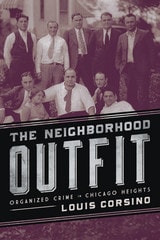
The Neighborhood Outfit
Organized Crime in Chicago HeightsLouis Corsino
University of Illinois Press, 2014
Debunking the popular idea of organized crime as a uniquely Italian enterprise, Corsino delves into the social and cultural forces that contributed to illicit activities. As he shows, discrimination blocked opportunities for Italians' social mobility and the close-knit Italian communities that arose in response to such limits produced a rich supply of social capital Italians used to pursue alternative routes to success that ranged from Italian grocery stores to union organizing to, on occasion, crime.

The New Refugees
Crime and Forced Displacement in Latin AmericaEdited by David James Cantor and Nicolás Rodríguez Serna
University of London Press, 2016
In Latin America, recent years have seen an unprecedented rise in the number of people forced to flee from their homes due to the activities of organized criminal groups. What are the reasons behind this emerging crisis of forced displacement in the Americas? Who are these criminal groups and how do they operate in Central America, Mexico and Colombia? Who are the victims and how can their needs be met in these violent and insecure contexts? Can law and policy offer a humanitarian response to this crisis? As the first book to deal with this rapidly evolving phenomenon, this innovative collection offers a range of fresh perspectives from leading experts working across Latin America.
The Politics of Corruption
Organized Crime in an American CityJohn A. Gardiner
Russell Sage Foundation, 1970
The Rule of Dons
Criminal Leaders and Political Authority in Urban JamaicaRivke Jaffe
Duke University Press, 2024
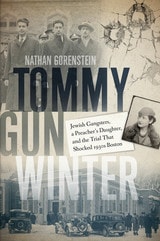
Tommy Gun Winter
Jewish Gangsters, a Preacher's Daughter, and the Trial That Shocked 1930s BostonNathan Gorenstein
University Press of New England, 2015
Traffick
The Illicit Movement of People and ThingsGargi Bhattacharyya
Pluto Press, 2005
Twenty-Five Sides of a Post-Communist Mafia State
Bálint Magyar
Central European University Press, 2017
When Good Men Do Nothing
The Assassination Of Albert PattersonAlan Grady
University of Alabama Press, 2003
A true crime classic, the definitive account of the notorious 1954 assassination of Alabama Attorney General Albert Patterson
On June 18, 1954, just a few weeks after being elected Alabama's Attorney General, Albert Patterson was assassinated outside his law office in Phenix City, Alabama. His campaign promised hope and inspired reform to law-abiding citizens of Phenix City, which was notorious for organized crime, prostitution, gambling, bootlegging, and political corruption. Patterson's stance on cleaning up Phenix City had been met with threats and intimidation. With millions of dollars in illegal income and hundreds of political and professional careers at stake, the motive for his killing seemed apparent. The primary investigation surrounding Patterson's shooting focused on who pulled the trigger.
Alan Grady has exhaustively mined the state's original murder case files; the papers of John Patterson, Albert's son; records from the Office of Alabama Attorney General (who directed the murder investigation); the case files of the Alabama Department of Toxicology and Criminal Investigation; National Guard reports; and more than 30 interviews with eyewitnesses and interested parties.
Grady takes a complex story of multiple dimensions—a large cast of judicial, criminal, and political players; a web of alliances and allegiances; and a knotted sequence of investigative revelations and dead ends—and transforms it into a readable, incisive analysis of the powers and loyalties that governed, and corrupted to the core, the body politic of the state. Readers will be enthralled and educated by this authoritative account of the most compelling crime drama in Alabama during the 20th century.