Results by title

23 books match the query 'Origen'
cover of Apology for Origen; On the Falsification of the Books of Origen

Apology for Origen; On the Falsification of the Books of Origen

Catholic University of America Press, 2010
Presented here for the first time in English translation (from Rufinus's Latin version) is the Apology for Origen, the sole surviving work of St. Pamphilus of Caesarea (d. 310 AD), who was one of the most celebrated priest-martyrs of the ancient Church
[more]
cover of Become Like the Angels

Become Like the Angels

Benjamin P. Blosser

Catholic University of America Press, 2012
Become Like the Angels explores Origen's legacy and, in particular, his teachings about the origin, nature, and destiny of the human person. By way of a historical critical approach, Benjamin P. Blosser discusses the influence of Middle Platonic philosophy on the human soul and then compares it with Origen's teaching.
[more]
cover of Commentary on the Epistle to the Romans, Books 1-5

Commentary on the Epistle to the Romans, Books 1-5

Catholic University of America Press, 2001
No description available
[more]
cover of Commentary on the Epistle to the Romans, Books 6-10

Commentary on the Epistle to the Romans, Books 6-10

Catholic University of America Press, 2002
No description available
[more]
cover of Commentary on the Gospel According to John, Books 13-32

Commentary on the Gospel According to John, Books 13-32

Catholic University of America Press, 1989
No description available
[more]
cover of Commentary on the Gospel of John, Books 1-10

Commentary on the Gospel of John, Books 1-10

Catholic University of America Press, 1989
No description available
[more]
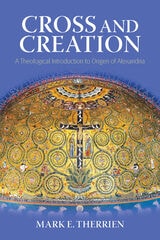
cover of Cross and Creation: A Theological Introduction to Origen of Alexandria

Cross and Creation

A Theological Introduction to Origen of Alexandria

Mark E. Therrien

Catholic University of America Press, 2022
Even though the theology of Origen of Alexandria has shaped the Christian Tradition in almost every way, the controversies over his legacy have been seemingly endless. One major interpretative trend, for example, has suggested Origen’s theology is really akin to the heterodox Gnostics against whom he wrote than the actual teaching of the Gospel, since he (supposedly) had a disdainful attitude towards Creation and ultimately saw little redemptive meaning in the Passion. In Cross and Creation: A Theological Introduction to Origen of Alexandria, Mark Therrien offers an original interpretation of Origen’s theology. Focusing on some of Origen’s most important works (especially On First Principles and the Commentary on John, but ultimately making reference to his writings more broadly), this book retrieves and examines some of the foundational pillars of Origen’s theology through close readings and re-examinations of those texts. It examines eight of these theological foundations: God, Christ, the Holy Spirit, the end, the soul, the world, the cross, and deification. Moreover, by showing the connections between Origen’s understanding of these foundational pillars, it also shows the coherence of his theology as a whole. Taken collectively, what emerges from these eight chapters is that two doctrines specially shape Origen’s theology: Cross and Creation. As Therrien shows, Origen did not hold contempt for Creation. Rather, Origen thinks that Creation emerges from the very life of God as eternally foreknown and provided for in the person of Christ, the Wisdom of God the Father. Moreover, he also holds that, though fallen, Creation will be restored according to its original, eternal intention in God precisely through the Passion of Jesus Christ on the Cross. The Cross is thus not minimalized in Origen’s theology; it is rather its very center.
[more]
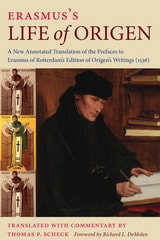
cover of Erasmus's Life of Origen

Erasmus's Life of Origen

Thomas P. Scheck

Catholic University of America Press, 2016
Erasmus of Rotterdam (1466-1536) hailed Origen of Alexandria (185-254) as a holy priest, a gifted homilist, a heroic Christian, and a celebrated exegete and theologian of the ancient Church. In this book Thomas Scheck presents one of the fruits of Erasmus's endeavors in the field of patristic studies (a particularly neglected field of scholarship within Erasmus studies) by providing the first English translation, annotated and thoroughly introduced, of Erasmus' final work, the Prefaces to his Edition of Origen's writings (1536). Originally published posthumously two months after Erasmus's death, the work surveys Origen of Alexandria's life, writings, preaching, and contribution to the Catholic Church. The staggering depth and breadth of Erasmus's learning are exhibited here, as well as the maturity of his theological reflections, which in many ways anticipate the irenicism of the Second Vatican Council with respect to Origen. Erasmus presents Origen as a marvelous doctor of the ancient Church who made a tremendous contribution to the Catholic exegetical tradition and who lived a saintly life.
[more]
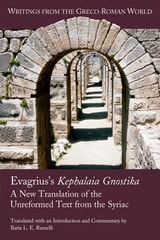
cover of Evagrius's Kephalaia Gnostika: A New Translation of the Unreformed Text from the Syriac

Evagrius's Kephalaia Gnostika

A New Translation of the Unreformed Text from the Syriac

Ilaria L.E. Ramelli

SBL Press, 2015

A new English translation for scholars and students of church history

Evagrius exerted a striking impact on the development of spirituality, of Origenism, and of the spiritual interpretation of the Bible in Greek, Syriac, and Latin Christianity. This English translation of the most complete Syriac version of Kephalaia Gnostika makes Evagrius Ponticus's thoughts concerning reality, God, protology, eschatology, anthropology, and allegorical exegesis of Scripture widely available.

Features:

  • English translation of the longer Syriac version discovered by Antoine Guillaumont
  • Commentary provides an integrated analysis of Evagrius's ascetic and philosophical writings
  • Extensive introduction on the importance of Evagrius and the context of his writings
[more]
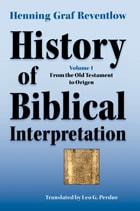
cover of History of Biblical Interpretation, Volume 1: From the Old Testament to Origen

History of Biblical Interpretation, Volume 1

From the Old Testament to Origen

Henning Graf Reventlow

SBL Press, 2009

From the very beginning, Holy Scripture has always been interpreted Scripture, and its interpretation determined the development and the history of both early Judaism and the first centuries of the Christian church. In this volume, the first of four on the History of Biblical Interpretation, readers will discover how the earliest interpreters of the Bible made the Scriptures come alive for their times—within the contexts and under the influences of Hellenism, Stoicism, and Platonism, as well as the interpretive methods developed in Alexandria. Particular attention is paid to innerbiblical interpretation (within the Hebrew Bible itself and in the New Testament’s reading of the Hebrew Bible), as well as to the interpretive practices reflected in the translation of the Septuagint and the writings of Qumran, Philo, the early rabbis, the apostolic fathers Barnabas and Clement, and early Christian leaders such as Justin Martyr, Marcion, Irenaeus, and Origen.
[more]
cover of Homilies on Genesis and Exodus

Homilies on Genesis and Exodus

Catholic University of America Press, 1982
No description available
[more]
cover of Homilies on Isaiah

Homilies on Isaiah

Elizabeth Ann Dively Origen

Catholic University of America Press, 2021
Hans Urs von Balthasar places Origen of Alexandria “in rank . . . beside Augustine and Thomas” in “importance for the history of Christian thought,” explaining that his “brilliance” has captivated theologians throughout history (Spirit and Fire, 1984, 1). This brilliance shines forth in his nine extant homilies on Isaiah, in which he employs his theology of the Trinity and Christ to exhort his audience to play their crucial role in salvation history. Origen reads Isaiah’s vision of the Lord and two seraphim in Isaiah 6 allegorically as representing the Trinity, and this theme runs throughout the nine homilies. His representation of the seraphim as the Son and Holy Spirit around the throne of the Father brought early accusations that Origen was a proto-Arian subordinationist, followed by a pointed condemnation by Emperor Justinian in 553. These homilies, originally delivered between 245 and 248, are extant only in a fourth-century Latin translation. Though St. Jerome, likely because of these controversies, does not identify himself as the Latin translator, the evidence overwhelmingly points to his pen, and his reliability in conveying Origen’s authentic meaning is well documented. If one sets aside the questionable charges of subordinationism, these homilies, expounding on passages from Judges 6-10, come alive with Origen’s legacy of presenting Christ as the central figure of the soul’s ascent to God. Reading allegorically the two seraphim to be Jesus and the Holy Spirit around the Father’s throne, Origen draws a picture of the Trinity as a tightly knit whole in which the Son and the Holy Spirit eternally sing the Trisagion (“Holy, holy, holy”) to each other and the Father about the divine truths of God’s nature, allowing the part of their song that conveys the “middle things” of salvation history to be heard by creation. The “second seraph” is the Son, or Jesus, who descends holding a hot coal, or Scripture, from the altar of the throne, with which he cleanses Isaiah’s lips, or the believer’s soul. Origen employs his signature exegetical method of allegory and typology through the lens of the threefold meaning of Scripture to emphasize to his hearers that Christ is the deliverer, the content, and the reward of the healing Word. He repeatedly assures them that those who submit to Scripture will enter into salvation history’s cycle of cleansing from sin, growth in virtue, and ever-deepening knowledge of God. As a result, they will become like Christ and thus will be prepared to join the Trinity for all eternity at the heavenly wedding feast.
[more]
cover of Homilies on Jeremiah and 1 Kings 28

Homilies on Jeremiah and 1 Kings 28

Catholic University of America Press, 1998
Presented in this volume are the remains of twenty-two homilies and a collection of fragments delivered by Origen around A.D. 240. The original texts of the homilies on Jeremiah have not come down to us completely; two of the homilies survive only in a Latin translation of St. Jerome. The homily on I Kings 28, while not a part of the homilies on Jeremiah, deals with the Witch of Endor and has been added to this volume in virtue of its own inherent interest.
[more]
cover of Homilies on Joshua

Homilies on Joshua

Catholic University of America Press, 2002
No description available
[more]
cover of Homilies on Judges

Homilies on Judges

Catholic University of America Press, 2010
No description available
[more]
cover of Homilies on Leviticus, 1-16

Homilies on Leviticus, 1-16

Catholic University of America Press, 1990
No description available
[more]
cover of Homilies on Luke

Homilies on Luke

Catholic University of America Press, 1996
No description available
[more]
cover of Homilies on Psalms, 36-38

Homilies on Psalms, 36-38

Michael Origen

Catholic University of America Press, 2023
This volume provides the first English translation of the nine extant homilies on Psalms 36[37]–38[39] preached by Origen (d. 253/4) to his congregation at Caesarea as arranged and translated for Latin readers by his admirer, Rufinus of Aquileia (d. 411). These homilies are among the earliest extant examples of patristic preaching on the Psalter. The interpretation offered throughout these homilies, which is almost wholly moral, reflects Origen’s understanding of the “soul” of the scriptural text. These homilies provide a glimpse of Origen’s account of scriptural meaning, outlined in De principiis 4, in pastoral practice. In his preaching, Origen offers a vision of the Christian life as centered on the soul’s continuing conversion, growth, and progress, with particular reference to and within the context of the Church. The life of the believer is one of combat and struggle with powers opposed to Christ. It is Christ, as the divine Physician, who offers healing to the one who is wounded and ailing from sin, and it is Christ, as Wisdom and Word of God, who instructs and educates the believer in the life of the Spirit. These homilies reveal the substantial coherence of Origen’s thought, as expressed in the more speculative De principiis and as revealed in the more elaborate, nuptial theology found in his Commentary on the Canticle. This volume includes a robust introduction and complements the work of Joseph Trigg, whose translation from the original Greek of the cache of homilies discovered in Codex Monacensis 314 has recently appeared in this series.
[more]
cover of Homilies on the Psalms: Codex Monacensis Graecus 314

Homilies on the Psalms

Codex Monacensis Graecus 314

Joseph W. Origen

Catholic University of America Press, 2021
In 2012 Dr. Marina Marin Pradel, an archivist at the Bayerische Stattsbibliotek in Munich, discovered that a thick 12th-century Byzantine manuscript, Codex Monacensis Graecus 314, contained twenty-nine of Origen’s Homilies on the Psalms, hitherto considered lost. Lorenzo Perrone of the University of Bologna, an internationally respected scholar of Origen, vouched for the identification and immediately began work on the scholarly edition that appeared in 2015 as the thirteenth volume of Origen’s works in the distinguished Griechische Christlichen Schrifsteller series. In an introductory essay Perrone provided proof that the homilies are genuine and demonstrated that they are, astonishingly, his last known work. Live transcripts, these collection homilies constitute our largest collection of actual Christian preaching from the pre-Constantinian period. In these homilies, the final expression of his mature thought, Origen displays, more fully than elsewhere, his understanding of the church and of deification as the goal of Christian life. They also give precious insights into his understanding of the incarnation and of human nature. They are the earliest example of early Christian interpretation of the Psalms, works at the heart of Christian spirituality. Historians of biblical interpretation will find in them the largest body of Old Testament interpretation surviving in his own words, not filtered through ancient translations into Latin that often failed to convey his intense philological acumen. Among other things, they give us new insights into the life of a third-century Greco-Roman metropolis, into Christian/Jewish relations, and into Christian worship. This translation, using the GCS as its basis, seeks to convey, as faithfully as possible, Origen’s own categories of thought. An introduction and notes relate the homilies to the theology and principles of interpretation in Origen’s larger work and to that work’s intellectual context and legacy.
[more]
cover of Origen: Spirit and Fire

Origen

Spirit and Fire

Hans Urs von Balthasar

Catholic University of America Press, 1984
[more]
cover of Teacher of the Logos: Essays on Origen's Rediscovered Last Work

Teacher of the Logos

Essays on Origen's Rediscovered Last Work

Joseph W. Trigg

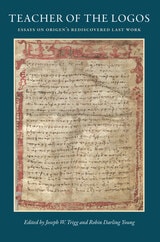
Catholic University of America Press, 2025
In 2012 Marina Molin Pradel, an archivist at the Bavarian State Library discovered that CMG 314, a long-neglected Byzantine manuscript , contained twenty-nine homilies by Origen, the most important and most talented genius of early Christianity. He delivered these homilies around 259 CE, shortly before arrest and torture during the Decian persecution would put an end to his work. Thus, along with the Contra Celsum, Origen’s lengthy defense of Christianity, written after 248, when that persecution was clearly impending, they enable readers to appreciate Origen’s fully-developed thought. Except for the four of these homilies that had been translated into Latin in the fifth century, scholars of Origen thought that all the homilies on the Psalms had been lost. In 2015 Lorenzo Perrone of the University of Bologna, an eminent Origen scholar, assisted by a team including Dr. Pradel, produced a magnificent critical edition of the text. In 2017 the editors of this volume organized a colloquium in Washington, DC, generously hosted by the program in Early Christian Studies. The authors of this volume, a group of American and Canadian scholars, invited Professor Perrone to address the discovery of the homilies and his edition, and to join their discussion of their interpretation. This volume represents the group’s energetic investigations and discussion over the two days of the conference. The essays address Origen’s use of language, his philosophical interests, his relationship with Judaism, and his scholarly patrimony in the next century.
[more]
cover of The Power of Patristic Preaching: The Word in Our Flesh

The Power of Patristic Preaching

The Word in Our Flesh

Andrew Hofer, OP

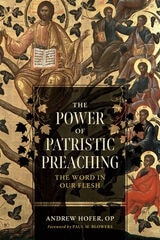
Catholic University of America Press, 2023
The Word made flesh is manifested in the lives of those dedicated to his proclamation. The Power of Patristic Preaching: The Word in Our Flesh presents seven early preachers who show, by life and speech, the divine Word’s power at work in weak human life. The book is inspired by this question preached by Origen, “For what does it profit if I should say that Jesus has come in that flesh alone which he received from Mary and I should not show also that he has come in this flesh of mine?” In seven chapters, The Power of Patristic Preaching studies the exemplars of Origen for holiness, Ephrem for the humility of repentance, Gregory of Nazianzus for purification and faith, John Chrysostom for the hope of salvation, Augustine for love, Leo the Great for love of the poor and the weak, and Gregory the Great for accepting our own weakness.  With an emphasis on the incarnation, deification through the virtues, and proclamation, The Power of Patristic Preaching serves as a resource for those dedicated to the ministry of the Word (clerical, religious, and lay), and as a text for students of early Christian theology and practices. A Catholic work for a broad ecumenical audience, the book gives a cry from the heart in a suffering Church traveling through a world that is passing away.
[more]
cover of The Unity of the Nations

The Unity of the Nations

Joseph Ratzinger

Catholic University of America Press, 2015

What did ancient Christians and pagans believe makes the unity of the nations? Just as he began serving as a major adviser at the Second Vatican Council in 1962, Joseph Ratzinger (the future Pope Benedict XVI) studied this question in lectures delivered at Austria's University of Salzburg. These lectures, originally published in German, are now made available in English in this volume.
[more]