Results by title
4 books match the query 'Orr, David'
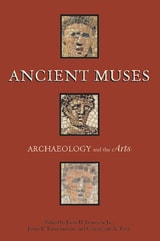
Ancient Muses
Archaeology and the ArtsEdited by John H. Jameson Jr., John E. Ehrenhard, and Christine A. Finn
University of Alabama Press, 2003
Known widely in Europe as “interpretive narrative archaeology,” the practice of using creative methods to interpret and present current knowledge of the past is gaining popularity in North America. This book is the first compilation of international case studies of the various artistic methods used in this new form of education—one that makes archaeology “come alive” for the nonprofessional. Plays, opera, visual art, stories, poetry, performance dance, music, sculpture, digital imagery—all can effectively communicate archaeological processes and cultural values to public audiences.
The contributors to this volume are a diverse group of archaeologists, educators, and artisans who have direct experience in schools, museums, and at archaeological sites. Citing specific examples, such as the film The English Patient, science fiction mysteries, and hypertext environments, they explain how creative imagination and the power of visual and audio media can personalize, contextualize, and demystify the research process. A 16-page color section illuminates their examples, and an accompanying CD includes relevant videos, music, web sites, and additional color images.
*
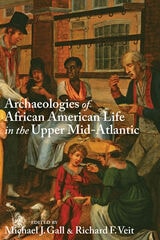
Archaeologies of African American Life in the Upper Mid-Atlantic
Edited by Michael J. Gall and Richard F. Veit
University of Alabama Press, 2017
A 2018 CHOICE OUTSTANDING ACADEMIC TITLE
New scholarship provides insights into the archaeology and cultural history of African American life from a collection of sites in the Mid-Atlantic
This groundbreaking volume explores the archaeology of African American life and cultures in the Upper Mid-Atlantic region, using sites dating from the eighteenth through the twentieth centuries. Sites in Delaware, Pennsylvania, New Jersey, and New York are all examined, highlighting the potential for historical archaeology to illuminate the often overlooked contributions and experiences of the region’s free and enslaved African American settlers.
Archaeologies of African American Life in the Upper Mid-Atlantic brings together cutting-edge scholarship from both emerging and established scholars. Analyzing the research through sophisticated theoretical lenses and employing up-to-date methodologies, the essays reveal the diverse ways in which African Americans reacted to and resisted the challenges posed by life in a borderland between the North and South through the transition from slavery to freedom. In addition to extensive archival research, contributors synthesize the material finds of archaeological work in slave quarter sites, tenant farms, communities, and graveyards.
Editors Michael J. Gall and Richard F. Veit have gathered new and nuanced perspectives on the important role free and enslaved African Americans played in the region’s cultural history. This collection provides scholars of the Mid-Atlantic and Northeast regions, African American studies, material culture studies, religious studies, slavery, the African diaspora, and historical archaeologists with a well-balanced array of rural archaeological sites that represent cultural traditions and developments among African Americans in the region. Collectively, these sites illustrate African Americans’ formation of fluid cultural and racial identities, communities, religious traditions, and modes of navigating complex cultural landscapes in the region under harsh and disenfranchising circumstances.
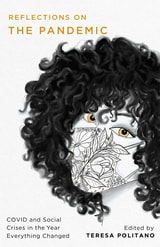
Reflections on the Pandemic
COVID and Social Crises in the Year Everything ChangedTeresa Politano
Rutgers University Press, 2024
Contributors include: Patricia Akhimie, Marc Aronson, Ulla D. Berg, Stephanie Bonne, Stephanie Boyer, Kimberly Camp, Jordan Casteel, Kelly-Jane Cotter, Mark Doty, David Dreyfus, Adrienne E. Eaton, Katherine C. Epstein, Leah Falk, Paul G. Falkowski, Rigoberto González, James Goodman, David Greenberg, Angelique Haugerud, Grace Lynne Haynes, Leslieann Hobayan, Jonathan Holloway, James W. Hughes, Naomi Jackson, Amy Jordan, Vikki Katz, Mackenzie Kean, Robert E. Kopp, Christian Lighty, Stephen Masaryk, Louis P. Masur, Revathi V. Machan, Yalidy Matos, Belinda McKeon, Susan L. Miller, Yehoshua November, Joyce Carol Oates, Mary E. O’Dowd, Katherine Ognyanova, David Orr, Gregory Pardlo, Steve Pikiell, Teresa Politano, en Purkert, Nick Romanenko, Evie Shockley, Caridad Svich, and Didier William.
The Marvels
David Orr
Four Way Books, 2026
In his second collection, The Marvels, David Orr writes from the conviction that the available world is enough: its worn shirts, coffee cups, rainbows, buses, obsolete machines, failed plans, neighborly borders, and minor acts of courtesy. These poems are clear-eyed without being cold, comic without being merely light. They attend to ordinary things not as symbols waiting to be elevated, but as the actual substance of our shared existence.
Praised by The Washington Post for his “quirky, engaging poetry,” Orr brings formal control, wry wit, whimsy, and an exacting intelligence to the relentless dailiness of life. In “Coffee Cups,” two mugs have been scoured blank by the dishwasher: “Nothing makes them special now. / What they do is all they are.” Yet the household still reaches for them first, “hoping to save the others.” In “Decency,” a nearly useless blue shirt becomes kin to the small social gestures that certify “this shared space as shared”: a held door, a blessing after a sneeze, the habitual signs by which strangers acknowledge one another. And in the title poem, marvels are planted along a property line, where two neighbors meet to prune, argue, trade tools, and admire what grows between them.
Unillusioned but not disenchanted, The Marvels finds its force in persistence, use, courtesy, memory, and care. The poems do not look past the real for consolation. They look steadily at the world we have — its comedy, damage, repetition, and thin but durable fabrics of connection — until its sufficiency comes into view.