Results by title
34 books match the query 'Osiris'

Osiris, Volume 10
Constructing Knowledge in the History of ScienceEdited by Arnold Thackray
University of Chicago Press, 1995
Osiris, Volume 11
Science in the FieldEdited by Henrika Kuklick and Robert E. Kohler
University of Chicago Press, 1996
Included are "Gender, Culture, and Astrophysical Fieldwork: Elizabeth Campbell and the Lick Observatory-Crocker Eclipse Expeditions," by Alex Soo-jung-Kim Pang; "Wallace in Other Lands," by Jane Camerini; "The Heroic Science of Glacier Motion," by Bruce Hevly; "Objectivity or Heroism: Invisibility of Women in Science," by Naomi Oreskes; "When Nature is the Zoo: Vision and Power in the Art and Science of Natural History," by Gregg Mitman; "Manly Men in Scientific Balloons: Meteorology and the Victorian Scientist as Romantic Hero," by Jennifer Tucker; "Paul du Chaillu and Construction of Authority," by Stuart McCook; "Of Sangfroid and Sphinx Moths: Cruelty, Public Relations, and Entomology, 1800-1840," by Anne Larsen Hollerbach; "The Ship as a Scientific Instrument in the 18th Century," by Richard Sorrenson; and "'A Tent with a View:' Colonial Officers, Anthropologists, and the Making of the Field in Northern Rhodesia, 1937-1960," by Lynette Schumaker.
Osiris, Volume 12
Women, Gender, and Science: New DirectionsEdited by Sally Gregory Kohlstedt and Helen Longino
University of Chicago Press, 1997
Osiris, Volume 13
Beyond Joseph Needham: Science, Technology, and Medicine in East and Southeast AsiaEdited by Morris Low
University of Chicago Press, 2000
Specialist and non-specialist readers alike will leave this volume with a strong sense of the political and economic imperatives behind knowledge systems in Eastern Asia, their cultural contexts, and how they have coexisted along with those in the West.
Osiris, Volume 14
Commemorative Practices in Science: Historical Perspectives on the Politics of Collective MemoryEdited by Pnina G. Abir-Am and Clark A. Elliot
University of Chicago Press, 2000
Contributors include Clark A. Elliott, Owen Gingerich, Dieter Hoffmann, Dominque Pestre, Robert W. Seidel, and V. Betty Smocovitis.
Osiris, Volume 15
Nature and Empire: Science and the Colonial EnterpriseEdited by Roy MacLeod
University of Chicago Press, 2001
Osiris, Volume 16
Science in Theistic Contexts: Cognitive DimensionsEdited by John Hedley Brooke, Margaret J. Osler, and Jitse M. van der Meer
University of Chicago Press, 2001
Reflecting the fecundity of contemporary scholarship, the current volume should be of extraordinary interest to historians of science, scientists, as well as anyone intrigued by the many ways in which relations between religion and science have been constructed.
Contributors include:
Peter Barker,
John Hedley Brooke,
Geoffrey Cantor,
Margaret G. Cook,
Michael J. Crowe,
Thomas Dixon,
Noah J. Efron,
Richard England,
Martin Fichman,
Maurice A. Finocchiaro,
Menachem Fish,
Bernard R. Goldstein,
Bernard Lightman,
Margaret J. Osler
F. Jamil Ragep,
Phillip R. Sloan,
Stephen Snobelen,
Jitse M. van der Meer,
Stephen J. Wykstra,
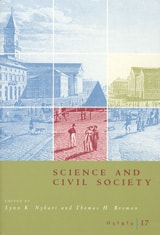
Osiris, Volume 17
Science and Civil SocietyEdited by Lynn K. Nyhart and Thomas Broman
University of Chicago Press, 2002
Osiris, Volume 18
Science and the CityEdited by Sven Dierig, Jens Lachmund, and Andrew Mendelsohn
University of Chicago Press, 2003
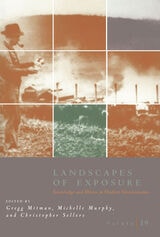
Osiris, Volume 19
Landscapes of Exposure: Knowledge and Illness in Modern EnvironmentsEdited by Gregg Mitman, Michelle Murphy, and Christopher Sellers
University of Chicago Press, 2004
Osiris, Volume 20
Politics and Science in Wartime: Comparative International Perspectives on the Kaiser Wilhelm InstituteEdited by Carola Sachse and Mark Walker
University of Chicago Press, 2005
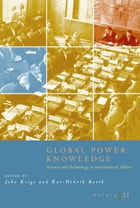
Osiris, Volume 21
Global Power Knowledge: Science and Technology in International AffairsEdited by John Krige and Kai-Henrik Barth
University of Chicago Press, 2006
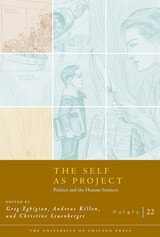
Osiris, Volume 22
The Self as Project: Politics and the Human SciencesEdited by Greg Eghigian, Andreas Killen, and Christine Leuenberger
University of Chicago Press, 2007
Osiris annually examines a particular topic in the history of science, bringing together experts in the field to consider multiple aspects of the time period, episode, or theme. Volume 22 explores the ways that twentieth-century political institutions and the human sciences in the western world attempted to understand and shape the attitudes and behaviors of individuals.
Osiris, Volume 23
Intelligentsia Science: The Russian Century, 1860-1960Edited by Michael Gordin, Karl Hall, and Alexei Kojevnikov
University of Chicago Press, 2008
The contributors argue that it was the generation of the 1860s that transformed “intelligentsia” into a central notion of Russian popular discourse, cementing its association with revolutionary politics—and with science. Science became the cornerstone of the intelligentsia’s ideological and political projects, either as an alternative to socialism, or more often as its nominal raison d’être. The Russian century may in fact be over, but the interrelation of the intelligentsia and science to form “intelligentsia science” proves enduring.
Osiris, Volume 24
National Identity: The Role of Science and TechnologyEdited by Carol E. Harrison and Ann Johnson
University of Chicago Press, 2009
Osiris, Volume 25
Expertise: Practical Knowledge and the Early Modern StateEdited by Eric H. Ash
University of Chicago Press, 2010
This newest annual edition of Osiris brings together a variety of scholars to consider a topic of increasing interest in the history of science: expertise. Focusing specifically on the role expertise has played in the support, legitimation, and growth of the state since early modern times, Expertise and the Early Modern State reveals how scientific expertise and practical knowledge were crucial to the construction of early modern empires and economies. The state, on the other hand, performed a similar function for scientists, giving them much of the status and resources they needed to further their work. A penetrating, multifaceted investigation, Osiris 25 will be required reading for historians of science and early modern political development.
Osiris, Volume 26
KlimaEdited by James Rodger Fleming and Vladimir Jankovic
University of Chicago Press, 2011
“Climate is a rather elusive entity,” wrote Helmut Landsberg in 1950 as he sorted out some twenty or so competing definitions. This volume of Osiris explores the complexities in understanding what climate means from a historical perspective. The title of this volume, Klima, evokes its Greek origins, κλίμα, meaning an extended period encompassing vast layers of different kinds of meteorological information. The volume thus seeks not only to decouple Klima from its current exclusive association with atmospheric sciences, but also to re-visit the implications of an ancient vocabulary for medical, geographical, agricultural, economic, racial, and other “endemic” concerns. If climate is not just about the weather, what is it? The essays in this volume treat climate discourse as a framing device that makes explicit all social concerns arising from the anxiety over the sensible and latent experiences of living in an atmosphere of hunger and satiation, disease and health, poverty and wealth, isolation and community, angst and hope.
James Fleming is a historian of science and technology and Professor of Science, Technology and Society at Colby College, Maine. Vladimir Jankovic is a faculty member, at the Centre for the History of Science, Technology and Medicine, University of Manchester. He is a historian of atmospheric sciences, and has published in the history of meteorology, geography of environmental knowledge, and medical climatology.
Osiris, Volume 28
Music, Sound, and the Laboratory from 1750-1980Edited by Alexandra Hui, Julia Kursell, and Myles W. Jackson
University of Chicago Press Journals, 2013

Osiris, Volume 29
Chemical Knowledge in the Early Modern WorldEdited by Matthew D. Eddy, Seymour H. Mauskopf, and William R. Newman
University of Chicago Press Journals, 2014
Osiris, Volume 30
Scientific MasculinitiesEdited by Erika Lorraine Milam and Robert A. Nye
University of Chicago Press Journals, 2015

Osiris, Volume 31
History of Science and the EmotionsEdited by Otniel E. Dror, Bettina Hitzer, Anja Laukötter, and Pilar León-Sanz
University of Chicago Press Journals, 2016
Osiris, Volume 32
Data HistoriesEdited by Elena Aronova, Christine von Oertzen, and David Sepkoski
University of Chicago Press Journals, 2017

Osiris, Volume 33
Science and Capitalism: Entangled HistoriesEdited by Lukas Rieppel, William Deringer, and Eugenia Lean
University of Chicago Press Journals, 2018
Osiris, Volume 34
Presenting Futures Past: Science Fiction and the History of ScienceEdited by Amanda Rees and Iwan Rhys Morus
University of Chicago Press Journals, 2019
The protagonists of these two enterprises have a lot in common. Both SF and the history of science are oriented towards the (re)construction of unfamiliar worlds; both are fascinated by the ways in which natural and social systems interact; both are critically aware of the different ways in which the social (class, gender, race, sex, species) has inflected the experience of the scientific. Taking a global approach, Presenting Futures Past examines the ways in which SF can be used to investigate the cultural status and authority afforded to science at different times and in different places. The essays consider the role played by SF in the history of specific scientific disciplines, topics, or cultures, as well as the ways in which it has helped to move scientific concepts, methodologies, and practices between wider cultural areas. Ultimately, Presenting Futures Past explores what SF can tell us about the histories of the future, how different communities have envisaged their futures, and how SF conveys the socioscientific claims of past presents.

Osiris, Volume 35
Food Matters: Critical Histories of Food and the SciencesEdited by E. C. Spary and Anya Zilberstein
University of Chicago Press Journals, 2020
The essays delve into a range of topics, from early modern dietetics and debates about cannibalism to modern ready-to-eat rations and Ayurvedic recipes, from analyses of hungry model organisms to the dining rituals of Silicon Valley entrepreneurs and their patrons. As Food Matters shows, the history of knowledge about food has always raised debates about the shifting definition and boundaries of expertise: between traditional recipes and experimental protocols; between domestic craft skill and laboratory procedure; between the management and redistribution of resources for the social body on the one hand, and the subjective experiences of individual bodies on the other. At a moment when the authority of science is being questioned by a variety of publics, Food Matters is a timely reminder that such tensions, always present in food-related domains, reflect broader historical developments through which science became a prevalent force in shaping all aspects of public and private life.
Osiris, Volume 36
Therapeutic Properties: Global Medical Cultures, Knowledge, and LawEdited by Helen Tilley
University of Chicago Press Journals, 2021
The contributions draw upon source material from the Americas, Africa, Western Europe, the Caribbean, and Asia to trace the influence of penal and civil codes, courts and constitutions, and patents and intellectual properties on not only health practices but also the very foundations of state-sanctioned medicine. The authors explore, too, how institutions of global governance, including those underpinning empires and trade, have historically created feedback loops that enabled laws and regulatory regimes to spread, amplifying their effects and standardizing approaches to diseases, drugs, professions, personhood, and well-being along the way. Highlighting the payoff of interdisciplinary and transnational analyses, this volume adroitly teases apart how different actors fought to write the rules of global health, rendering certain approaches to life and death irrelevant and invisible, others pathological and punishable by law, and others still, normal and natural.
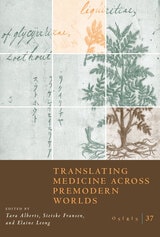
Osiris, Volume 37
Translating Medicine across Premodern WorldsEdited by Tara Alberts, Sietske Fransen, and Elaine Leong
University of Chicago Press Journals, 2022
This volume of Osiris turns the analytical lens of translation onto medical knowledge and practices across the premodern world. Understandings of the human body, and of diseases and their cures, were influenced by a range of religious, cultural, environmental, and intellectual factors. As a result, complex systems of translation emerged as people crossed linguistic and territorial boundaries to share not only theories and concepts, but also materials, such as drugs, amulets, and surgical tools. The studies here reveal how instances of translation helped to shape and, in some cases, reimagine these ideas and objects to fit within local frameworks of medical belief.
Translating Medicine across Premodern Worlds features case studies located in geographically and temporally diverse contexts, including ninth-century Baghdad, sixteenth-century Seville, seventeenth-century Cartagena, and nineteenth-century Bengal. Throughout, the contributors explore common themes and divergent experiences associated with a variety of historical endeavors to “translate” knowledge about health and the body across languages, practices, and media. By deconstructing traditional narratives and de-emphasizing well-worn dichotomies, this volume ultimately offers a fresh and innovative approach to histories of knowledge.
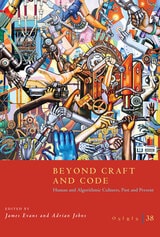
Osiris, Volume 38
Beyond Craft and Code: Human and Algorithmic Cultures, Past and PresentEdited by James Evans and Adrian Johns
University of Chicago Press Journals, 2023
Perceptively explores the shifting intersections between algorithmic systems and human practices in the modern era.
How have algorithmic systems and human practices developed in tandem since 1800? This volume of Osiris deftly addresses the question, dispelling along the way the traditional notion of algorithmic “code” and human “craft” as natural opposites. Instead, algorithms and humans have always acted in concert, depending on each other to advance new knowledge and produce social consequences. By shining light on alternative computational imaginaries, Beyond Craft and Code opens fresh space in which to understand algorithmic diversity, its governance, and even its conservation.
The volume contains essays by experts in fields extending from early modern arithmetic to contemporary robotics. Traversing a range of cases and arguments that connect politics, historical epistemology, aesthetics, and artificial intelligence, the contributors collectively propose a novel vocabulary of concepts with which to think about how the history of science can contribute to understanding today’s world. Ultimately, Beyond Craft and Code reconfigures the historiography of science and technology to suggest a new way to approach the questions posed by an algorithmic culture—not only improving our understanding of algorithmic pasts and futures but also unlocking our ability to better govern our present.
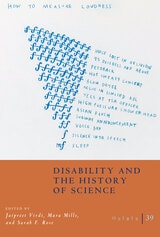
Osiris, Volume 39
Disability and the History of ScienceEdited by Jaipreet Virdi, Mara Mills, and Sarah F. Rose
University of Chicago Press Journals, 2024
Disability has been a central—if unacknowledged—force in the history of science, as in the scientific disciplines. Across historical epistemology and laboratory research, disability has been “good to think with”: an object of investigation made to yield generalizable truths. Yet disability is rarely imagined to be the source of expertise, especially the kind of expertise that produces (rational, neutral, universal) scientific knowledge.
This volume of Osiris places disability history and the history of science in conversation to foreground disability epistemologies, disabled scientists, and disability sciencing (engagement with scientific tools and processes). Looking beyond paradigms of medicalization and industrialization, the volume authors also examine knowledge production about disability from the ancient world to the present in fields ranging from mathematics to the social sciences, resulting in groundbreaking histories of taken-for-granted terms such as impairment, infirmity, epidemics, and shōgai.
Some contributors trace the disabling impacts of scientific theories and practices in the contexts of war, factory labor, insurance, and colonialism; others excavate racial and settler ableism in the history of scientific facts, protocols, and collections; still others query the boundaries between scientific, lay, and disability expertise. Contending that disability alters method, authors bring new sources and interpretation techniques to the history of science, overturn familiar narratives, apply disability analyses to established terms and archives, and discuss accessibility issues for disabled historians. The resulting volume announces a disability history of science.
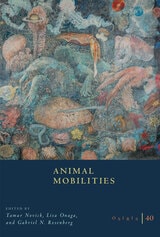
Osiris, Volume 40
Animal MobilitiesEdited by Tamar Novick, Lisa Onaga, and Gabriel N. Rosenberg
University of Chicago Press Journals, 2025
Human societies often come to know the natural world by examining animals, even as animals, frequently both willful and animate, can elude human grasp and challenge human aims. Animals and their movements have underpinned many methodological, moral, and epistemic dilemmas that generatively trouble the field. Featuring a range of geographies, species, languages, and cultures, the contributions in this volume broaden the view of the historical roles animals play in knowledge production processes. Organized according to three scales of animal movement (individuals, groups, systems), the twelve richly illustrated inquiries are situated in different time periods, from the sixteenth-century Ottoman Empire to the recent globalized past, and introduce varied forms, capacities, and politics of movement associated with animals. The analytic attention to animal mobility deepens comprehension of animal agency and human–animal interactions in unexpected spaces, including airports, entertainment venues, living rooms, dirt roads, and waterways. Taken together, the case studies in this volume reconsider how, where, and by whom science is done.
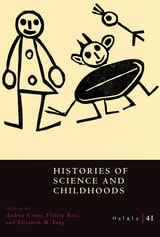
Osiris, Volume 41
Histories of Science and ChildhoodsEdited by Andrea Graus, Violeta Ruiz, and Elisabeth M. Yang
University of Chicago Press Journals, 2026
Converges the fields of childhood studies and the histories of science, medicine, and technology, foregrounding and investigating the entangled histories of the "child" and childhood and science.
Building on the premise that neither childhood nor science are natural, essential, or universalizable entities, this Osiris volume examines the interrelation of these two categories, tracing back to the Middle Ages and up until the present. Organized around three major themes—theorizing and historicizing the category of childhood and child agency, the technologies and politics of child health, and the co-constitutive relationship between the concept of the child and childhood and the realm of science—the issue traverses time, space, cultures, bodies, and disciplines. The contributions explore the role that science, technology, and medicine played in constructing how the ideology of childhood shaped ideas about scientific thinking and practices, e.g., the psy-sciences, sexology, filmology, medicine, health technology; and how the entanglement between the “child” and science influenced the formation of national identity, selfhood, colonial rule, resistance, and the notions of “progress” and the “future.” Using the “child” as an analytical category and considering children as fully-fledged historical actors allows us to retell and re-present (the history of) science through a wide range of sources, and in turn, reimagine our understandings of agency, governance, subjectivity, human nature, and what science owes the “child” and children.
Osiris, Volume 7
Science after '40Edited by Arnold Thackray
University of Chicago Press, 1992
Osiris, Volume 8
Research Schools: Historical ReappraisalsEdited by Gerald L. Geison and Frederic L. Holmes
University of Chicago Press, 1993
Osiris, Volume 9
InstrumentsEdited by Albert Van Helden and Thomas L. Hankins
University of Chicago Press, 1994
Contributors include Albert Van Helden on telescopes and authority, Jan Golinski on the demonstrative order of proof in Lavoisier's chemistry, Bruce J. Hunt on the development of electrical standards, Deborah Warner on terrestrial magnetism, Bruce Hevly on Stanford's supervoltage X-ray tube, Robert W. Smith and Jose h N. Tatarewicz on devices and black boxes, Thatcher Deane on the imperial astronomical bureau in the Ming dynasty, Thomas L. Hankins on Louis-Bertrand Castel's ocular harpsichord, Simon Schaffer on demonstration devices in Georgian mechanics, Timothy Lenoir on Helmholtz and the materialities of communication, and Robert Frank on instruments, biological techniques, and the "all-or-none" principle.