Results by title

8 books match the query 'Other Worlds'
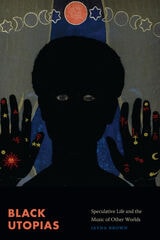
cover of Black Utopias: Speculative Life and the Music of Other Worlds

Black Utopias

Speculative Life and the Music of Other Worlds

Jayna Brown

Duke University Press, 2021

In Black Utopias Jayna Brown takes up the concept of utopia as a way of exploring alternative states of being, doing, and imagining in Black culture. Musical, literary, and mystic practices become utopian enclaves in which Black people engage in modes of creative worldmaking. Brown explores the lives and work of Black women mystics Sojourner Truth and Rebecca Cox Jackson, musicians Alice Coltrane and Sun Ra, and the work of speculative fiction writers Samuel Delany and Octavia Butler as they decenter and destabilize the human, radically refusing liberal humanist ideas of subjectivity and species. Brown demonstrates that engaging in utopian practices Black subjects imagine and manifest new genres of existence and forms of collectivity. For Brown, utopia consists of those moments in the here and now when those excluded from the category human jump into other onto-epistemological realms. Black people—untethered from the hope of rights, recognition, or redress—celebrate themselves as elements in a cosmic effluvium.
[more]
cover of Children of Other Worlds: Exploitation in the Global Market

Children of Other Worlds

Exploitation in the Global Market

Jeremy Seabrook

Pluto Press, 2001

More than 40,000 children die daily in the developing world from avoidable sickness and disease. Tens of millions of children labour in mines, mills and sweatshops, or scavenge for a living on city streets and dumps. In the so-called developed world, children's lives are similarly blighted by drugs, alcohol, sexual abuse and violence.
[more]
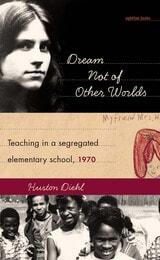
cover of Dream Not of Other Worlds: Teaching in a Segregated Elementary School, 1970

Dream Not of Other Worlds

Teaching in a Segregated Elementary School, 1970

Huston Diehl

University of Iowa Press, 2007

When Huston Diehl began teaching a fourth-grade class in a "Negro" elementary school in rural Louisa County, Virginia, the school's white superintendent assured her that he didn't expect her to teach "those children" anything. She soon discovered how these low expectations, widely shared by the white community, impeded her students' ability to learn. With its overcrowded classrooms, poorly trained teachers, empty bookshelves, and meager supplies, her segregated school was vastly inferior to the county's white elementary schools, and the message it sent her students was clear: "dream not of other worlds."

In her often lyrical memoir, Diehl reveals how, in the intimacy of the classroom, her students reached out to her, a young white northerner, and shared their fears, anxieties, and personal beliefs. Repeatedly surprised and challenged by her students, Diehl questions her long-standing middle-class assumptions and confronts her own prejudices. In doing so, she eloquently reflects on what the students taught her about the hurt of bigotry and the humiliation of poverty as well as dignity, courage, and resiliency.

Set in the waning days of the Jim Crow South, Dream Not of Other Worlds chronicles an important moment in American history. Diehl examines the history of black education in the South and narrates the dramatic struggle to integrate Virginia's public schools. Meeting with some of her former students and colleagues and visiting the school where she once taught, she considers what has—and has not—changed after more than thirty years of integrated schooling. This provocative book raises many issues that are of urgent concern today: the continuing social consequences of segregated schools, the role of public education in American society, and the challenges of educating minority and poor children.
[more]
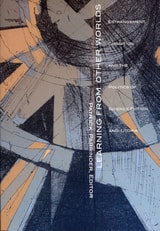
cover of Learning from Other Worlds: Estrangement, Cognition, and the Politics of Science Fiction and Utopia

Learning from Other Worlds

Estrangement, Cognition, and the Politics of Science Fiction and Utopia

Patrick Parrinder, ed.

Duke University Press, 2001

Learning from Other Worlds provides both a portrait of the development of science fiction criticism as an intellectual field and a definitive look at the state of science fiction studies today. Its title refers to the essence of “cognitive estrangement” in relation to science fiction and utopian fiction—the assertion that by imagining strange worlds we learn to see our own world in a new perspective. Acknowledging an indebtedness to the groundbreaking work of Darko Suvin and his belief that the double movement of estrangement and cognition reflects deep structures of human storytelling, the contributors assert that learning-from-otherness is as natural and inevitable a process as the instinct for imitation and representation that Aristotle described in his Poetics.
In exploring the relationship between imaginative invention and that of allegory or fable, the essays in Learning from Other Worlds comment on the field’s most abiding concerns and employ a variety of critical approaches—from intellectual history and genre studies to biographical criticism, feminist cultural studies, and political textual analysis. Among the topics discussed are the works of John Wyndham, Kim Stanley Robinson, Stanislau Lem, H.G. Wells, and Ursula Le Guin, as well as the media’s reactions to the 1997 cloning of Dolly the Sheep. Darko Suvin’s characteristically outspoken and penetrating afterword responds to the essays in the volume and offers intimations of a further stage in his long and distinguished career.
This useful compendium and companion offers a coherent view of science fiction studies as it has evolved while paying tribute to the debt it owes Suvin, one of its first champions. As such, it will appeal to critics and students of science fiction, utopia, and fantasy writing.

Contributors.
Marc Angenot, Marleen S. Barr, Peter Fitting, Carl Freedman, Edward James, Fredric Jameson, David Ketterer, Gerard Klein, Tom Moylan, Rafail Nudelman, Darko Suvin
[more]
cover of Other Worlds: The Fantasy Genre

Other Worlds

The Fantasy Genre

University of Wisconsin Press, 1983

Fantasy permits its readers a certain distance from pragmatic affairs and offers them a clearer insight into them. It offers a parallel reality, which gives us a renewed awareness of what we already know. Fantasy invites the reader to recover a belief which has been beclouded by knowledge, to renew a faith which has been shattered by fact. As the pace of modern life quickens, the fascination for fantasy literature quickens simultaneously.
[more]
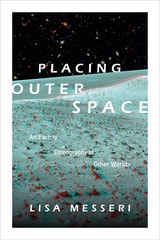
cover of Placing Outer Space: An Earthly Ethnography of Other Worlds

Placing Outer Space

An Earthly Ethnography of Other Worlds

Lisa Messeri

Duke University Press, 2016

In Placing Outer Space Lisa Messeri traces how the place-making practices of planetary scientists transform the void of space into a cosmos filled with worlds that can be known and explored. Making planets into places is central to the daily practices and professional identities of the astronomers, geologists, and computer scientists Messeri studies. She takes readers to the Mars Desert Research Station and a NASA research center to discuss ways scientists experience and map Mars. At a Chilean observatory and in MIT's labs she describes how they discover exoplanets and envision what it would be like to inhabit them. Today’s planetary science reveals the universe as densely inhabited by evocative worlds, which in turn tells us more about Earth, ourselves, and our place in the universe.
 
[more]
cover of Señora Rodríguez and Other Worlds

Señora Rodríguez and Other Worlds

Martha Cerda

Duke University Press, 1997

Señora Rodríguez dips into her purse and there’s no telling what she’ll come up with—a sticky lollipop, a phone bill, or a rosary; a reminder of daily life, a bit of family history, a personal talisman, or . . . who knows? . . . a token into another world altogether. Such are the surprises and possibilities, the unpredictability and warm familiarity of Martha Cerda’s magical novel. Señora Rodriguez and her family are placed shoulder-to-shoulder and page-to-page with strangers, acquaintances, and a host of importune, if not impertinent, stories: the profound distortions wrought in a woman’s life by the oppressive presence of her maid; the furor caused by a premenstrual pimple; the flashbacks and chaotic grief Judas Iscariot experiences at the moment of his death; the disruption surrounding the appearance of a supposed member of the Los Angeles Dodgers.
A bestselling writer widely celebrated in her native Mexico, Martha Cerda defines her own turn along the path of Latin American magical realism. In this novel the feminine, the practical, and the earthy blend with the fantastic and phantasmagoric. Tragedy and playfulness, sophistication and naiveté mingle. What is at once a comedy of manners, a delightful collection of loosely related anecdotes, stories, sketches, and epiphanies, is also an artful entree into several literary and philosophical questions—the relationship between language and reality and the power of one to create and alter the other; the link between chaos and different forms of organization that pass for order.

[more]
cover of This World, Other Worlds: Sickness, Suicide, Death, and the Afterlife among the Vaqueiros de Alzada of Spain

This World, Other Worlds

Sickness, Suicide, Death, and the Afterlife among the Vaqueiros de Alzada of Spain

María Cátedra

University of Chicago Press, 1992

The Vaqueiros de Alzada, a cattle-herding people in the Asturian mountains of Spain, have one of the highest suicide rates in Europe—and an attitude toward death that gives this statistic unusual meaning. This World, Other Worlds considers death among the Vaqueiros as a central cultural fact which reveals local ideas about the origin and destiny of humans, the relations of humans and animals, the configuration of the universe, and the nature of society. Interested chiefly in the conceptual and meaningful aspects of death, María Cátedra focuses on the cultural resources with which the Vaqueiros confront their own mortality—how they experience death and what this reveals about the way they see this world and other worlds.

Applying sensitive ethnographic insight to a rich body of oral testimony, Cátedra discloses an unsuspected symbolic universe native to the Vaqueiros. Death is seen here in close, coherent relation to pain, age, and suffering; sickness and suicide, one must understand the cultural valuation of different ways of dying and the conditions under which suicides take place. To understand what it means to be a Vaqueiro is to understand how suicide can be perceived by a people as acceptable.

A groundbreaking work in European ethnography, This World, Other Worlds takes symbolic analysis to a new level. In its illumination of local conceptions of death, grace, and sainthood, the book also makes a substantial contribution to the anthropology of religion.
[more]