Results by title

5 books match the query 'Our Lives'

cover of Cotton: Companies, Fashion and the Fabric of Our Lives

Cotton

Companies, Fashion and the Fabric of Our Lives

Edited by Joseph H. II Hancock, Nioka Wyatt, and Tasha L. Lewis

Intellect Books, 2016
This book brings together contributors from a wide range of disciplines to explore the importance of cotton as a major resource for US fashion businesses. It is rooted in a lengthy investigative research project that deployed undergraduate and graduate students and faculty researchers to US fashion businesses that rely on cotton to make their garments—with the goal of better understanding how such a key resource is sourced, priced, transported, manipulated, and, ultimately, sold on to the consumer as a stylish garment. The contributors focus in particular on the role of brands in the marketing of cotton goods, and the way that brand marketing creates distinctions, valuable in the marketplace, between various versions of what are at base similar items of clothing, like t-shirts and underclothes. The book also explores the importance of the “Made in the USA” campaign, with its appeal to consumers concerned about local manufacturing employment, reduced resource use, and social responsibility.
 
[more]
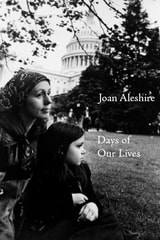
cover of Days of Our Lives

Days of Our Lives

Joan Aleshire

Four Way Books, 2019

Day of Our Lives is equal parts social history and memoir documenting the unraveling of a marriage against the backdrop of the shifting social mores of 1960s and ’70s America. Joan Aleshire’s speaker, a young wife, enters marriage gratefully, even eagerly, believing it to be “a long table / with friends crowding in, red wine / in tumblers.” Motherhood follows, but so do infidelities and reconciliation and ultimately divorce. With each hard knock, the speaker sheds a little more of her innocence as she gains awareness of her power as both a woman and a writer: “Coming home / late from a festival for women / where I’d said all the things / the audience liked, I slipped / into bed so flush with triumph / my husband recoiled from the heat.”
[more]
cover of Green Nature/Human Nature: THE MEANING OF PLANTS IN OUR LIVES

Green Nature/Human Nature

THE MEANING OF PLANTS IN OUR LIVES

Charles A. Lewis

University of Illinois Press, 1996

"Our ties to the green world are often subtle and unexpected. It is not merely that hemoglobin and chlorophyll bear a striking similarity in structure, or that plants provide the pleasure of food and flowers."--from the Preface
Why do gardeners delight in the germination and growth of a seed? Why are our spirits lifted by flowers, our feelings of tension allayed by a walk in a forest or park? What other positive influences can green nature
bring to humanity?
In Green Nature/Human Nature Charles A. Lewis describes the psychological, sociological, and physiological responses of people to vegetation in cities and forests, as well as in horticultural therapy programs in hospitals, geriatric institutions, physical rehabilitation centers, drug rehabilitation programs, and correctional institutions. He presents an evolutionary basis for the human attraction to plants. People-plant interactions are presented from two perspectives: participatory, in which the individual is involved in planting and maintaining the vegetation, and observational, in which the individual bears no responsibility for establishing or maintaining the vegetation.
In what amounts to a straightforward catalog of well-documented and tangible benefits, Lewis brings the latest and best research into plant/human interaction to bear on questions of how green nature is intertwined with the human psyche and how that interaction can lead to enhanced well-being and an appreciation of the human dimension in environmental concerns.
Lewis's work will be essential reading for anyone interested in plants
and how they affect people.
A volume in the series The Environment and the Human Condition
 
[more]
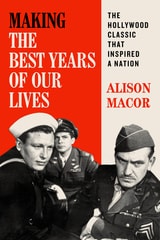
cover of Making The Best Years of Our Lives: The Hollywood Classic That Inspired a Nation

Making The Best Years of Our Lives

The Hollywood Classic That Inspired a Nation

By Alison Macor

University of Texas Press, 2022

2023 Wall Award Finalist, Theatre Library Association

How a Hollywood gem transformed the national discourse on post-traumatic stress disorder.


Released in 1946, The Best Years of Our Lives became an immediate success. Life magazine called it “the first big, good movie of the post-war era” to tackle the “veterans problem.” Today we call that problem PTSD, but in the initial aftermath of World War II, the modern language of war trauma did not exist. The film earned the producer Samuel Goldwyn his only Best Picture Academy Award. It offered the injured director, William Wyler, a triumphant postwar return to Hollywood. And for Harold Russell, a double amputee who costarred with Fredric March and Dana Andrews, the film provided a surprising second act.

Award-winning author Alison Macor illuminates the film’s journey from script to screen and describes how this authentic motion picture moved audiences worldwide. General Omar Bradley believed The Best Years of Our Lives would help “the American people to build an even better democracy” following the war, and the movie inspired broad reflection on reintegrating the walking wounded. But the film’s nuanced critique of American ideals also made it a target, and the picture and its creators were swept up in the anti-Communist witch hunts of the late 1940s. In this authoritative history, Macor chronicles the making and meaning of a film that changed America.
[more]
cover of Stories of Our Lives: Memory, History, Narrative

Stories of Our Lives

Memory, History, Narrative

Frank de Caro

Utah State University Press, 2013

In Stories of Our Lives Frank de Caro demonstrates the value of personal narratives in enlightening our lives and our world. We all live with legends, family sagas, and anecdotes that shape our selves and give meaning to our recollections. Featuring an array of colorful stories from de Caro’s personal life and years of field research as a folklorist, the book is part memoir and part exploration of how the stories we tell, listen to, and learn play an integral role in shaping our sense of self. 
 
De Caro’s narrative includes stories within the story: among them a near-mythic capture of his golden-haired grandmother by Plains Indians, a quintessential Italian rags-to-riches grandfather, and his own experiences growing up in culturally rich 1950s New York City, living in India amid the fading glories of a former princely state, conducting field research on Day of the Dead altars in Mexico, and coming home to a battered New Orleans after Hurricane Katrina.
 
Stories of Our Lives shows that our lives are interesting, and that the stories we tell—however particular to our own circumstances or trivial they may seem to others—reveal something about ourselves, our societies, our cultures, and our larger human existence.
[more]