Results by title
7 books match the query 'Ourselves'
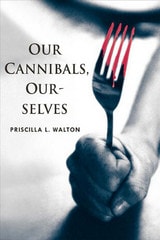
Our Cannibals, Ourselves
Priscilla L. Walton
University of Illinois Press, 2004
Our Cannibals, Ourselves is an interdisciplinary study of cannibalism in contemporary culture. It demonstrates how what we take for today's ordinary culture is imaginatively and historically rooted in very powerful processes of the encounter between our own and different, often "threatening," cultures from around the world. Walton shows that the taboo on cannibalism is heavily reinforced only partly out of fear of cannibals themselves; instead, cannibalism is evoked in order to use fear for other purposes, including the sale of fear entertainment.
Ranging from literature to popular journalism, film, television, and discourses on disease, Our Cannibals, Ourselves provides an all-encompassing, insightful meditation on what happens to popular culture when it goes global.
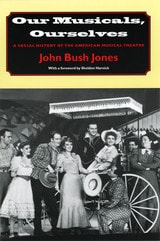
Our Musicals, Ourselves
A Social History of the American Musical TheatreJohn Bush Jones
Brandeis University Press, 2004
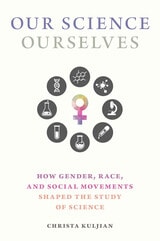
Our Science, Ourselves
How Gender, Race, and Social Movements Shaped the Study of ScienceChrista Kuljian
University of Massachusetts Press, 2024
When Christa Kuljian arrived on the Harvard College campus as a first-year student in the fall of 1980 with copies of Our Bodies, Ourselves and Ms. magazine, she was concerned that the women’s movement had peaked in the previous decade. She soon learned, however, that there was a long way to go in terms of achieving equality for women and that social movements would continue to be a critical force in society. She began researching the history of science and gender biases in science, and how they intersect with race, class, and sexuality.
In Our Science, Ourselves, Kuljian tells the origin story of feminist science studies by focusing on the life histories of six key figures—Ruth Hubbard, Rita Arditti, Evelyn Fox Keller, Evelynn Hammonds, Anne Fausto-Sterling, and Banu Subramaniam. These women were part of a trailblazing network of female scientists in the 1970s, 80s, and 90s who were drawn to the Boston area—to Harvard, MIT, and other universities—to study science, to network with other scientists, or to take a job. Inspired by the social and political activism of the women’s movement and organizations such as Science for the People, the Genes and Gender Collective, and the Combahee River Collective, they began to write and teach about women in science, gender and science, and sexist and racist bias and exclusion. They would lead the critiques of E. O. Wilson’s sociobiology in 1975 and Larry Summers’ comments about women in science thirty years later. The book also explores how these contributions differed from those of Nancy Hopkins’, author of the 1999 MIT report on women in science, and a “reluctant feminist.”
Drawing on a rich array of sources that combines published journal articles and books with archival materials and interviews with major luminaries of feminist science studies, Kuljian chronicles and celebrates the contributions that these women have made to our collective scientific knowledge and view of the world.

Our Vampires, Ourselves
Nina Auerbach
University of Chicago Press, 1995
"[Auerbach] has seen more Hammer movies than I (or the monsters) have had steaming hot diners, encountered more bloodsuckers than you could shake a stick at, even a pair of crossed sticks, such as might deter a very sophisticated ogre, a hick from the Moldavian boonies....Auerbach has dissected and deconstructed them with the tender ruthlessness of a hungry chef, with cogency and wit."—Eric Korn, Times Literary Supplement
"This seductive work offers profound insights into many of the urgent concerns of our time and forces us to confront the serious meanings that we invest, and seek, in even the shadiest manifestations of the eroticism of death."—Wendy Doniger, The Nation
"A vigorous, witty look at the undead as cultural icons."—Kirkus Review
"In case anyone should think this book is merely a boring lit-crit exposition...Auerbach sets matters straight in her very first paragraph. 'What vampires are in any given generation,' she writes, 'is a part of what I am and what my times have become. This book is a history of Anglo-American culture through its mutating vampires.'...Her book really takes off."—Maureen Duffy, New York Times Book Review

Our Vampires, Ourselves
Nina Auerbach
University of Chicago Press, 1995
Nina Auerbach shows how every age embraces the vampire it needs, and gets the vampire it deserves. Working with a wide range of texts, as well as movies and television, Auerbach locates vampires at the heart of our national experience and uses them as a lens for viewing the last two hundred years of Anglo-American cultural history.
"[Auerbach] has seen more Hammer movies than I (or the monsters) have had steaming hot diners, encountered more bloodsuckers than you could shake a stick at, even a pair of crossed sticks, such as might deter a very sophisticated ogre, a hick from the Moldavian boonies....Auerbach has dissected and deconstructed them with the tender ruthlessness of a hungry chef, with cogency and wit."—Eric Korn, Times Literary Supplement
"This seductive work offers profound insights into many of the urgent concerns of our time and forces us to confront the serious meanings that we invest, and seek, in even the shadiest manifestations of the eroticism of death."—Wendy Doniger, The Nation
"A vigorous, witty look at the undead as cultural icons."—Kirkus Review
"In case anyone should think this book is merely a boring lit-crit exposition...Auerbach sets matters straight in her very first paragraph. 'What vampires are in any given generation,' she writes, 'is a part of what I am and what my times have become. This book is a history of Anglo-American culture through its mutating vampires.'...Her book really takes off."—Maureen Duffy, New York Times Book Review
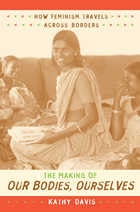
The Making of Our Bodies, Ourselves
How Feminism Travels across BordersKathy Davis
Duke University Press, 2007
Kathy Davis tells the story of this remarkable book’s global circulation. Based on interviews with members of the Boston Women’s Health Book Collective, the group of women who created Our Bodies, Ourselves, as well as responses to the book from readers, and discussions with translators from Latin America, Egypt, Thailand, China, Eastern Europe, Francophone Africa, and many other countries and regions, Davis shows why Our Bodies, Ourselves could never have been so influential if it had been just a popular manual on women’s health. It was precisely the book’s distinctive epistemology, inviting women to use their own experiences as resources for producing situated, critical knowledge about their bodies and health, that allowed the book to speak to so many women within and outside the United States. Davis provides a grounded analysis of how feminist knowledge and political practice actually travel, and she shows how the process of transforming Our Bodies, Ourselves offers a glimpse of a truly transnational feminism, one that joins the acknowledgment of difference and diversity among women in different locations with critical reflexivity and political empowerment.
To Save China, To Save Ourselves
The Chinese Hand Laundry Alliance of New YorkRenqiu Yu
Temple University Press, 1995
Combining archival research in Chinese language sources with oral history interviews, Renqiu Yu examines the Chinese Hand Laundry Alliance (CHLA), an organization that originated in 1933 to help Chinese laundry workers break their isolation in American society. Yu brings to life the men who labored in New York laundries, depicting their meager existence, their struggles against discrimination and exploitation, and their dreams of returning to China. The persistent efforts of the CHLA succeeded in changing the workers' status in American society and improving the image of the Chinese among the American public.
Yu is especially concerned with the political activities of the CHLA, which was founded in reaction to proposed New York City legislation that would have put the Chinese laundries out of business. When the conservative Chinese social organization could not help the launderers, they broke with tradition and created their own organization. Not only did the CHLA defeat the legislative requirements that would have closed them down, but their "people's diplomacy" won American support for China during its war with Japan. The CHLA staged a campaign in the 1930s and 40s which took as its slogan, "To Save China, To Save Ourselves." Focusing on this campaign, Yu also examines the complex relationship between the democratically oriented CHLA and the Chinese American left in the 1930s.