Results by title
2 books match the query 'PCBs'
PCBs
Human and Environmental Disposition and ToxicologyEdited by Larry G. Hansen and Larry W. Robertson
University of Illinois Press, 2007
Though polychlorinated biphenyls (PCBs) have been banned in the United States for more than thirty years, the toxic effects of their presence in local environments continue to be a significant public health concern. PCBs: Human and Environmental Disposition and Toxicology brings together more than fifty established specialists on PCB toxicity to discuss recent trends and specialized investigations of PCB influences on the environment and on humans. Renowned scientists including Paul S. Cooke, Takeshi Nakano, Tomas Trnovec, Deborah C. Rice, Linda S. Birnbaum, and Charles S. Wong present cutting-edge research on Hudson River PCBs, human contamination, homologue profiles, high PCB exposure in Slovakia, and PCB effects on the thyroid hormone, nutrition, and estrogen levels in humans and animals. Focusing on the detection, movement, metabolism, toxicity, remediation, and risk assessment of PCB contamination, this multi-disciplinary study is a valuable resource for regulatory agencies and scientists working with PCBs.
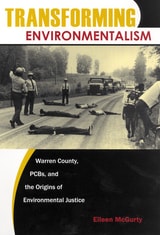
Transforming Environmentalism
Warren County, PCBs, and the Origins of Environmental JusticeMcGurty, Eileen
Rutgers University Press, 2006
In Transforming Environmentalism, Eileen McGurty explores a moment central to the emergence of the environmental justice movement. In 1978, residents of predominantly African American Warren County, North Carolina, were horrified to learn that the state planned to build a landfill in their county to hold forty thousand cubic yards of soil that was contaminated with PCBs from illegal dumping. They responded to the state's plans with a four-year resistance, ending in a month of protests with over 500 arrests from civil disobedience and disruptive actions.McGurty traces the evolving approaches that residents took to contest "environmental racism" in their community and shows how activism in Warren County spurred greater political debate and became a model for communities across the nation. Transforming Environmentalism explores how the specific circumstances of the Warren County events shaped the formation of the environmental justice movement and influenced contemporary environmentalism.