Results by title
7 books match the query 'Pain Management'
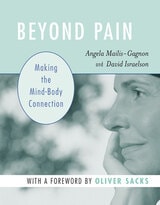
Beyond Pain
Making the Mind-Body ConnectionAngela Mailis-Gagnon and David Israelson
University of Michigan Press, 2005
"The range of topics covered in Beyond Pain is very wide, and one is likely to find almost any question about pain that one has ever puzzled over explored somewhere in its pages." - From the Foreword by Oliver Sacks With its gripping firsthand stories of patients and their ailments, Beyond Pain opens the door to our understanding of the mysteries of pain. Beyond Pain delves into the condition of chronic pain to help us better understand its complexities, showing pain to be both a sensory experience and an interaction between mind and body. Based on author Angela Mailis-Gagnon's extensive research and daily practice at a major urban hospital pain clinic, Beyond Pain uses case studies drawn from both her own practice and her personal experience. Mailis-Gagnon describes the latest treatments and options for sufferers of chronic pain; techniques used to block pain; the effects of chronic pain; and cultural, gender, and genetic differences in the perception of pain. She shares her cutting-edge findings and observations, describes current treatments and options for sufferers of chronic pain, and examines the effects of chronic pain on the individuals who live with it. Accessibly and engagingly written, the book will appeal to chronic pain sufferers and their families, as well as to health care practitioners who work with patients' pain.
[more]

Cannabis Consulting
Helping Patients, Parents, and Practitioners Understand Medical MarijuanaEzra Parzybok
University Press of New England, 2018
As the movement for legalization of marijuana spreads across the country, it is important to weigh the possible benefits and pitfalls of cannabis use. Cannabis Consulting is both a handbook and a report from the front lines of medical marijuana use. Writing from the perspective of a parent and veteran schoolteacher turned professional cannabis consultant, Ezra Parzybok tells the often-inspiring stories of his practice, where he assists victims of chronic pain, terminal disease, and even conditions such as ADHD. This timely volume was written for patients and families, law enforcement and health professionals, who are trying to make decisions about cannabis during this critical era of transition. It is an honest, clear-eyed exploration of the marijuana debate that looks beyond the hype and disinformation on both sides to chart a new path toward rational and safe use of cannabis.
[more]
Meaning in Suffering
Caring Practices in the Health ProfessionsEdited by Nancy Johnston and Alwilda Scholler-Jaquish
University of Wisconsin Press, 2007
Compelling, timely, and essential reading for healthcare providers, Meaning in Suffering addresses the multiplicity of meanings suffering brings to all it touches: patients, families, health workers, and human science professionals. Examining suffering in writing that is both methodologically rigorous and accessible, the contributors preserve first-hand experiences using narrative ethnography, existential hermeneutics, hermeneutic phenomenology, and traditional ethnography. They offer nuanced insights into suffering as a human condition experienced by persons deserving of dignity, empathy, and understanding. Collectively, these essays demonstrate that understanding the suffering of the "other" reveals something vital about the moral courage required to heal—and stay humane—in the face of suffering.
Winner, Nursing Research Category, American Journal of Nursing
[more]
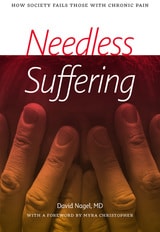
Needless Suffering
How Society Fails Those with Chronic PainDavid Nagel
University Press of New England, 2016
Needless Suffering offers a sociological examination of a complex medical problem: chronic pain and the inability of doctors and other health professionals to understand and manage it in their patients. People in pain, writes Dr. David Nagel, are the poor of the medical world. Like the poor, they are stigmatized and left at the mercy of powerful social actors who tend to work in their own self-interest, frequently at the expense of those they propose to serve. This leaves those who suffer with little control over their own destinies and creates a dysfunctional status quo that harms instead of helps. Drawing on his own experience witnessing his mother’s chronic pain and numerous clinical stories from over thirty years’ expertise as a pain management specialist, Nagel looks first at patients, their families, and their doctors (usually not trained in pain management), and then broadens his canvas to elaborate a pain power structure that includes the entire healthcare community, insurers, lawyers, government regulators, employers, politicians, law enforcement agencies, and painkilling drugs. Concluding with concrete reforms to create more effective and compassionate pain care, this book is designed for pain patients and their families, healthcare providers, legislators and other public policymakers, judges, personal injury and other attorneys, insurers, government regulators, law enforcement personnel, and health care businesspeople.
[more]
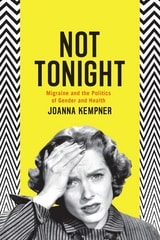
Not Tonight
Migraine and the Politics of Gender and HealthJoanna Kempner
University of Chicago Press, 2014
Pain. Vomiting. Hours and days spent lying in the dark. Migraine is an extraordinarily common, disabling, and painful disorder that affects over 36 million Americans and costs the US economy at least $32 billion per year. Nevertheless, it is frequently dismissed, ignored, and delegitimized.
In Not Tonight, Joanna Kempner argues that this general dismissal of migraine can be traced back to the gendered social values embedded in the way we talk about, understand, and make policies for people in pain. Because the symptoms that accompany headache disorders—like head pain, visual auras, and sensitivity to sound—lack an objective marker of distress that can confirm their existence, doctors rely on the perceived moral character of their patients to gauge how serious their complaints are. Kempner shows how this problem plays out in the history of migraine, from nineteenth-century formulations of migraine as a disorder of upper-class intellectual men and hysterical women to the influential concept of “migraine personality” in the 1940s, in which women with migraine were described as uptight neurotics who withheld sex, to contemporary depictions of people with highly sensitive “migraine brains.” Not Tonight casts new light on how cultural beliefs about gender, pain, and the distinction between mind and body influence not only whose suffering we legitimate, but which remedies are marketed, how medicine is practiced, and how knowledge about disease is produced.
In Not Tonight, Joanna Kempner argues that this general dismissal of migraine can be traced back to the gendered social values embedded in the way we talk about, understand, and make policies for people in pain. Because the symptoms that accompany headache disorders—like head pain, visual auras, and sensitivity to sound—lack an objective marker of distress that can confirm their existence, doctors rely on the perceived moral character of their patients to gauge how serious their complaints are. Kempner shows how this problem plays out in the history of migraine, from nineteenth-century formulations of migraine as a disorder of upper-class intellectual men and hysterical women to the influential concept of “migraine personality” in the 1940s, in which women with migraine were described as uptight neurotics who withheld sex, to contemporary depictions of people with highly sensitive “migraine brains.” Not Tonight casts new light on how cultural beliefs about gender, pain, and the distinction between mind and body influence not only whose suffering we legitimate, but which remedies are marketed, how medicine is practiced, and how knowledge about disease is produced.
[more]
The Body Alone
A Lyrical Articulation of Chronic PainNina Lohman
University of Iowa Press, 2024
The Body Alone is an inquiry into the experience, meaning, and articulation of pain. It is a personal hybrid account incorporating research, scholarship, and memoir to examine chronic pain through the multi-lens of medicine, theology, and philosophy. Broken bodies tell broken stories. Nina Lohman’s pain experience is portrayed through a cyclical narrative of primers, vocabulary lessons, prescription records, and hypothesized internal monologues—fractured not for the sake of experimentation but because the story itself demands it.
In both form and content, The Body Alone represents boundary-pressing work that subverts the traditional narrative by putting pressure on the medical, cultural, and political systems that impact women’s access to fair and equal healthcare. This is more than an illness narrative, it is a battle cry demanding change.
In both form and content, The Body Alone represents boundary-pressing work that subverts the traditional narrative by putting pressure on the medical, cultural, and political systems that impact women’s access to fair and equal healthcare. This is more than an illness narrative, it is a battle cry demanding change.
[more]
The Politics of Pain Medicine
A Rhetorical-Ontological InquiryS. Scott Graham
University of Chicago Press, 2015
Chronic pain is a medical mystery, debilitating to patients and a source of frustration for practitioners. It often eludes both cause and cure and serves as a reminder of how much further we have to go in unlocking the secrets of the body. A new field of pain medicine has evolved from this landscape, one that intersects with dozens of disciplines and subspecialties ranging from psychology and physiology to anesthesia and chiropractic medicine. Over the past three decades, researchers, policy makers, and practitioners have struggled to define this complex and often contentious field as they work to establish standards while navigating some of the most challenging philosophical issues of Western science.
In The Politics of Pain Medicine: A Rhetorical-Ontological Inquiry, S. Scott Graham offers a rich and detailed exploration of the medical rhetoric surrounding pain medicine. Graham chronicles the work of interdisciplinary pain management specialists to found a new science of pain and a new approach to pain medicine grounded in a more comprehensive biospychosocial model. His insightful analysis demonstrates how these materials ultimately shape the healthcare community’s understanding of what pain medicine is, how the medicine should be practiced and regulated, and how practitioner-patient relationships are best managed. It is a fascinating, novel examination of one of the most vexing issues in contemporary medicine.
In The Politics of Pain Medicine: A Rhetorical-Ontological Inquiry, S. Scott Graham offers a rich and detailed exploration of the medical rhetoric surrounding pain medicine. Graham chronicles the work of interdisciplinary pain management specialists to found a new science of pain and a new approach to pain medicine grounded in a more comprehensive biospychosocial model. His insightful analysis demonstrates how these materials ultimately shape the healthcare community’s understanding of what pain medicine is, how the medicine should be practiced and regulated, and how practitioner-patient relationships are best managed. It is a fascinating, novel examination of one of the most vexing issues in contemporary medicine.
[more]