Results by title
2 books match the query 'Painter'
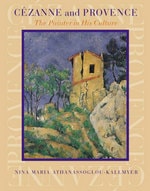
Cezanne and Provence
The Painter in His CultureNina Maria Athanassoglou-Kallmyer
University of Chicago Press, 2003
In 1886 Paul Cézanne left Paris permanently to settle in his native Aix-en-Provence. Nina M. Athanassoglou-Kallmyer argues that, far from an escapist venture like Gauguin's stay in Brittany or Monet's visits to Normandy, Cézanne's departure from Paris was a deliberate abandonment intimately connected with late-nineteenth-century French regionalist politics.
Like many of his childhood friends, Cézanne detested the homogenizing effects of modernism and bourgeois capitalism on the culture, people, and landscapes of his beloved Provence. Turning away from the mainstream modernist aesthetic of his impressionist years, Cézanne sought instead to develop a new artistic tradition more evocative of his Provençal heritage. Athanassoglou-Kallmyer shows that Provence served as a distinct and defining cultural force that shaped all aspects of Cézanne's approach to representation, including subject matter, style, and technical treatment. For instance, his self-portraits and portraits of family members reflect a specifically Provençal sense of identity. And Cézanne's Provençal landscapes express an increasingly traditionalist style firmly grounded in details of local history and even geology. These landscapes, together with images of bathers, cardplayers, and other figures, were key facets of Cézanne's imaginary reconstruction of Provence as primordial and idyllic—a modern French Arcadia.
Highly original and lavishly illustrated, Cézanne and Provence gives us an entirely new Cézanne: no longer the quintessential icon of generic, depersonalized modernism, but instead a self-consciously provincial innovator of mainstream styles deeply influenced by Provençal culture, places, and politics.
[more]
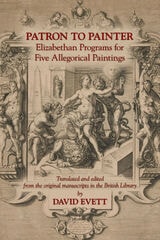
Patron to Painter
Elizabethan Programs for Five Allegorical PaintingsDavid Evett
Arizona Center for Medieval and Renaissance Studies, 2020
For more than two centuries the group of early modern English manuscripts presented in this volume sat mostly ignored on the shelves of the British Library, known only to the librarians who catalogued them. Six of them, for four different elaborate allegorical paintings, appear in the manuscript catalog of the Sloane Collection as “Instructions to painters.” A seventh, from the Harley collection in the same library, has more recently been added to the group. On art historical, iconographic, and historical grounds the manuscripts add significantly to our knowledge of Elizabethan visual allegory, and reveal a provocative new contribution to the evolution of English political thought. And the development across three of the programs of a warm personal relationship between the patron and the artist opens a unique window into early modern relationships of this kind. Unlike most other surviving artistic programs, this one reveals its author’s personality and interests in a rich and beguiling way, and although as a writer he is no Sidney or Nashe, the naïve yet widely informed enthusiasm with which he addresses his readers has considerable force and charm.
[more]