Results by title
5 books match the query 'Palace'
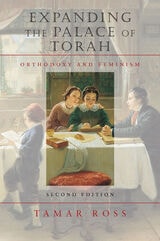
Expanding the Palace of Torah
Orthodoxy and FeminismTamar Ross
Brandeis University Press, 2004
This new edition brings this acclaimed and classic text back into print with a new essay by Tamar Ross which examines new developments in feminist thought since the book was first published in 2004.
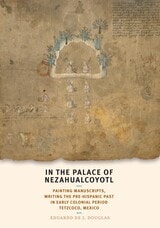
In the Palace of Nezahualcoyotl
Painting Manuscripts, Writing the Pre-Hispanic Past in Early Colonial Period Tetzcoco, MexicoBy Eduardo de J. Douglas
University of Texas Press, 2010
Around 1542, descendants of the Aztec rulers of Mexico created accounts of the pre-Hispanic history of the city of Tetzcoco, Mexico, one of the imperial capitals of the Aztec Empire. Painted in iconic script ("picture writing"), the Codex Xolotl, the Quinatzin Map, and the Tlohtzin Map appear to retain and emphasize both pre-Hispanic content and also pre-Hispanic form, despite being produced almost a generation after the Aztecs surrendered to Hernán Cortés in 1521. Yet, as this pioneering study makes plain, the reality is far more complex.
Eduardo de J. Douglas offers a detailed critical analysis and historical contextualization of the manuscripts to argue that colonial economic, political, and social concerns affected both the content of the three Tetzcocan pictorial histories and their archaizing pictorial form. As documents composed by indigenous people to assert their standing as legitimate heirs of the Aztec rulers as well as loyal subjects of the Spanish Crown and good Catholics, the Tetzcocan manuscripts qualify as subtle yet shrewd negotiations between indigenous and Spanish systems of signification and between indigenous and Spanish concepts of real property and political rights. By reading the Tetzcocan manuscripts as calculated responses to the changes and challenges posed by Spanish colonization and Christian evangelization, Douglas's study significantly contributes to and expands upon the scholarship on central Mexican manuscript painting and recent critical investigations of art and political ideology in colonial Latin America.
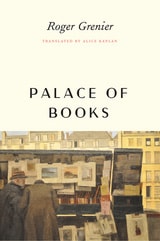
Palace of Books
Roger Grenier
University of Chicago Press, 2014
With Palace of Books, he invites us to explore the domain of literature, its sweeping vistas and hidden recesses. Engaging such fundamental questions as why people feel the need to write, or what is involved in putting one’s self on the page, or how a writer knows she’s written her last sentence, Grenier marshals apposite passages from his favorite writers: Chekhov, Baudelaire, Proust, James, Kafka, Mansfield and many others. Those writers mingle companionably with tales from Grenier’s half-century as an editor and friend to countless legendary figures, including Albert Camus, Romain Gary, Milan Kundera, and Brassai,.
Grenier offers here a series of observations and quotations that feel as spontaneous as good conversation, yet carry the lasting insights of a lifetime of reading and thinking. Palace of Books is rich with pleasures and surprises, the perfect accompaniment to old literary favorites, and the perfect introduction to new ones.
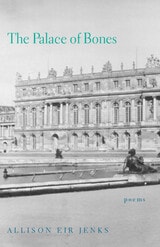
The Palace of Bones
Allison Eir Jenks
Ohio University Press, 2002
The Palace of Bones by Allison Eir Jenks is an often stark and startling vision of the way we live, the places we inhabit, and the relics we make to comfort ourselves.
Haunted by a quiet, unquenchable longing, Jenks expertly and calmly guides the reader through a vivid dreamscape in this first full-length collection of poems.
The Palace of Bones was selected by final judge and Pulitzer Prize winner Carolyn Kizer. At once dark in its vision and light in its tone, this remarkable book is its author’s self-confident invitation for us to join her in a world she knows intimately and has made almost familiar if not entirely safe.
The Palace of Bones is a stunning debut.
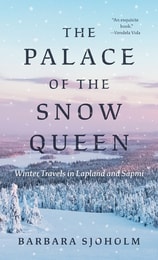
The Palace of the Snow Queen
Winter Travels in Lapland and SápmiBarbara Sjoholm
University of Minnesota Press, 2023
An exploration of the winter wonders and entangled histories of Scandinavia’s northernmost landscapes—now back in print with a new afterword by the author
After many years of travel in the Nordic countries—usually preferring to visit during the warmer months—Barbara Sjoholm found herself drawn to Lapland and Sápmi one winter just as mørketid, the dark time, set in. What ensued was a wide-ranging journey that eventually spanned three winters, captivatingly recounted in The Palace of the Snow Queen.
From observing the annual construction of the Icehotel in Jukkasjärvi, Sweden, to crossing the storied Finnmark Plateau in Norway, to attending a Sámi film festival in Finland, Sjoholm dives deep into the rich traditions and vibrant creative communities of the North. She writes of past travelers to Lapland and contemporary tourists in Sápmi, as well as of her encounters with Indigenous reindeer herders, activists, and change-makers. Her new afterword bears witness to the perseverance of the Sámi in the face of tourism, development, and climate change.
Written with keen insight and humor, The Palace of the Snow Queen is a vivid account of Sjoholm’s adventures and a timely investigation of how ice and snow shape our imaginations and create a vision that continues to draw visitors to the North.