Results by title
6 books match the query 'Palaces'
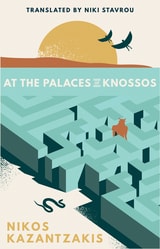
At the Palaces of Knossos
Nikos Kazantzakis
Ohio University Press, 2025
A captivating retelling—newly translated—of the rise and fall of the Minoan civilization interwoven with some of ancient Greece’s most enduring myths
At the Palaces of Knossos is a vivid reimagining of ancient Crete, blending history and mythology into an epic tale of heroism, love, and destiny. Set against the grandeur of the Minoan court, the novel brings to life the legendary stories of Theseus, the Minotaur, Ariadne, Daedalus, and Icarus.
The story follows Theseus, the prince of Athens, who arrives in Crete as part of the annual tribute of young Athenians sent to feed the monstrous Minotaur. Determined to end this brutal cycle, he infiltrates the labyrinthine palace of Knossos, where he crosses paths with Princess Ariadne. Struggling between loyalty to her people and her love for the courageous stranger, Ariadne risks everything to help Theseus in his quest.
Through the eyes of palace attendants, acrobats, and the inventor Daedalus and his son Icarus, Kazantzakis transports readers into the splendor of Minoan culture—its sacred rituals, breathtaking bull-leaping ceremonies, and vibrant city life. But as Theseus prepares to face his destiny, a tragic chain of events unfolds, leading to heartbreak, betrayal, and the downfall of a once-mighty civilization.
Rich with philosophical depth and lyrical prose, At the Palaces of Knossos is more than a mythological retelling—it is a meditation on power, freedom, and the eternal struggle between fate and human will. Perfect for fans of historical fiction and Greek mythology, this novel offers a compelling journey into one of the ancient world’s most fascinating eras.
In the Palace of Nezahualcoyotl
Painting Manuscripts, Writing the Pre-Hispanic Past in Early Colonial Period Tetzcoco, MexicoBy Eduardo de J. Douglas
University of Texas Press, 2010
Around 1542, descendants of the Aztec rulers of Mexico created accounts of the pre-Hispanic history of the city of Tetzcoco, Mexico, one of the imperial capitals of the Aztec Empire. Painted in iconic script ("picture writing"), the Codex Xolotl, the Quinatzin Map, and the Tlohtzin Map appear to retain and emphasize both pre-Hispanic content and also pre-Hispanic form, despite being produced almost a generation after the Aztecs surrendered to Hernán Cortés in 1521. Yet, as this pioneering study makes plain, the reality is far more complex.
Eduardo de J. Douglas offers a detailed critical analysis and historical contextualization of the manuscripts to argue that colonial economic, political, and social concerns affected both the content of the three Tetzcocan pictorial histories and their archaizing pictorial form. As documents composed by indigenous people to assert their standing as legitimate heirs of the Aztec rulers as well as loyal subjects of the Spanish Crown and good Catholics, the Tetzcocan manuscripts qualify as subtle yet shrewd negotiations between indigenous and Spanish systems of signification and between indigenous and Spanish concepts of real property and political rights. By reading the Tetzcocan manuscripts as calculated responses to the changes and challenges posed by Spanish colonization and Christian evangelization, Douglas's study significantly contributes to and expands upon the scholarship on central Mexican manuscript painting and recent critical investigations of art and political ideology in colonial Latin America.
Maya Palaces and Elite Residences
An Interdisciplinary ApproachEdited by Jessica Joyce Christie
University of Texas Press, 2003
Maya "palaces" have intrigued students of this ancient Mesoamerican culture since the early twentieth century, when scholars first applied the term "palace" to multi-room, gallery-like buildings set on low platforms in the centers of Maya cities. Who lived in these palaces? What types of ceremonial and residential activities took place there? How do the physical forms and spatial arrangement of the buildings embody Maya concepts of social organization and cosmology?
This book brings together state-of-the-art data and analysis regarding the occupants, ritual and residential uses, and social and cosmological meanings of Maya palaces and elite residences. A multidisciplinary team of senior researchers reports on sites in Belize (Blue Creek), Western Honduras (Copan), the Peten (Tikal, Dos Pilas, Aguateca), and the Yucatan (Uxmal, Chichen-Itza, Dzibilchaltun, Yaxuna). Archaeologist contributors discuss the form of palace buildings and associated artifacts, their location within the city, and how some palaces related to landscape features. Their approach is complemented by art historical analyses of architectural sculpture, epigraphy, and ethnography. Jessica Joyce Christie concludes the volume by identifying patterns and commonalties that apply not only to the cited examples, but also to Maya architecture in general.
Palaces and Power in the Americas
From Peru to the Northwest CoastEdited by Jessica Joyce Christie and Patricia Joan Sarro
University of Texas Press, 2006
Ancient American palaces still captivate those who stand before them. Even in their fallen and ruined condition, the palaces project such power that, according to the editors of this new collection, it must have been deliberately drawn into their formal designs, spatial layouts, and choice of locations. Such messages separated palaces from other elite architecture and reinforced the power and privilege of those residing in them. Indeed, as Christie and Sarro write, "the relation between political power and architecture is a pervasive and intriguing theme in the Americas."
Given the variety of cultures, time periods, and geographical locations examined within, the editors of this book have grouped the articles into four sections. The first looks at palaces in cultures where they have not previously been identified, including the Huaca of Moche Site, the Wari of Peru, and Chaco Canyon in the U.S. Southwest. The second section discusses palaces as "stage sets" that express power, such as those found among the Maya, among the Coast Salish of the Pacific Northwest, and at El Tajín on the Mexican Gulf Coast. The third part of the volume presents cases in which differences in elite residences imply differences in social status, with examples from Pasado de la Amada, the Valley of Oaxaca, Teotihuacan, and the Aztecs. The final section compares architectural strategies between cultures; the models here are Farfán, Peru, under both the Chimú and the Inka, and the separate states of the Maya and the Inka.
Such scope, and the quality of the scholarship, make Palaces and Power in the Americas a must-have work on the subject.
The City of Palaces
A NovelMichael Nava
University of Wisconsin Press, 2014
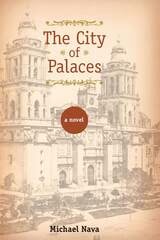
Against this backdrop, The City of Palaces opens in a Mexico City jail with the meeting of Miguel Sarmiento and Alicia Gavilán. Miguel is a principled young doctor, only recently returned from Europe but wracked by guilt for a crime he committed as a medical student ten years earlier. Alicia is the spinster daughter of an aristocratic family. Disfigured by smallpox, she has devoted herself to working with the city’s destitute. This unlikely pair—he a scientist and atheist and she a committed Christian—will marry. Through their eyes and the eyes of their young son, José, readers follow the collapse of the old order and its bloody aftermath.
The City of Palaces is a sweeping novel of interwoven lives: Miguel and Alicia; José, a boy as beautiful and lonely as a child in a fairy tale; the idealistic Francisco Madero, who overthrows Díaz but is nevertheless destroyed by the tyrant’s political system; and Miguel’s cousin Luis, shunned as a “sodomite.” A glittering mosaic of the colonial past and the wealth of the modern age, The City of Palaces is a story of faith and reason, cathedrals and hovels, barefoot street vendors and frock-coated businessmen, grand opera and silent film, presidents and peasants, the living and the dead.
Winner, International Latino Book Award for Latino Fiction, Latino Literacy Now
Second place, International Latino Book Award for Historical Fiction, Latino Literacy Now
Finalist, Gay Fiction, Lambda Literary Awards
Honorable Mention in Drama, Latino Books into Movies Award, International Latino Book Awards
Best Books for General Audiences, selected by the American Association of School Librarians
Outstanding Book, selected by the Public Library Reviewers

The Utility of Splendor
Ceremony, Social Life, and Architecture at the Court of Bavaria, 1600-1800Samuel John Klingensmith
University of Chicago Press, 1993
Drawing on a broad range of sources, including building documents, correspondence, diaries, and court regulations, Klingensmith investigates the intricacies of Bavarian court practice and shows that Versailles was only one among several influences on German palace planning. Klingensmith offers a cogent, detailed understanding of the relations between architectural spaces and the ceremonial, social, and private life that both required and used them. Handsomely illustrated with photographs and plans, The Utility of Splendor will appeal to anyone interested in how life was lived among the nobility during the last centuries of the old regime.
Samuel John Klingensmith (1949-1986) was assistant professor of art history at Tulane University.