Results by title
6 books match the query 'Palmié, Stephan'

Fernando Ortiz
Caribbean and Mediterranean CounterpointsEdited by Stephan Palmié
HAU, 2023
Fernando Ortiz (1881–1969) coined the term “transculturation” in 1940. This was an early case of theory from the South: concepts developed from an explicitly peripheral epistemological vantage point and launched as a corrective to European and North American theoretical formulations. What Ortiz proposed was a contrapuntal vision of complexly entangled processes that we, today, would conceptualize as cultural emergence.
Inspired by Ortiz, this volume engineers an unprecedented conversation between Mediterraneanists and Caribbeanists. It harnesses Ortiz’s mid-twentieth-century theoretical formulations to early twenty-first-century issues pertinent to both regions, including migration, territorial sovereignty, and cultural diversity. The contributors explore this perspective (arguably formed during Ortiz’s youth in late nineteenth-century Menorca) in a dialogue between scholars of the contemporary Caribbean and Mediterranean to enable novel analytics for both regions and to more broadly to probe the promises and limits of Ortiz’s contribution for contemporary anthropological research and theorizing.
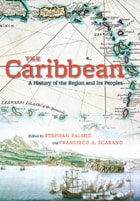
The Caribbean
A History of the Region and Its PeoplesEdited by Stephan Palmié and Francisco A. Scarano
University of Chicago Press, 2011
Combining fertile soils, vital trade routes, and a coveted strategic location, the islands and surrounding continental lowlands of the Caribbean were one of Europe’s earliest and most desirable colonial frontiers. The region was colonized over the course of five centuries by a revolving cast of Spanish, Dutch, French, and English forces, who imported first African slaves and later Asian indentured laborers to help realize the economic promise of sugar, coffee, and tobacco. The Caribbean: A History of the Region and Its Peoples offers an authoritative one-volume survey of this complex and fascinating region.
This groundbreaking work traces the Caribbean from its pre-Columbian state through European contact and colonialism to the rise of U.S. hegemony and the economic turbulence of the twenty-first century. The volume begins with a discussion of the region’s diverse geography and challenging ecology and features an in-depth look at the transatlantic slave trade, including slave culture, resistance, and ultimately emancipation. Later sections treat Caribbean nationalist movements for independence and struggles with dictatorship and socialism, along with intractable problems of poverty, economic stagnation, and migrancy.
Written by a distinguished group of contributors, The Caribbean is an accessible yet thorough introduction to the region’s tumultuous heritage which offers enough nuance to interest scholars across disciplines. In its breadth of coverage and depth of detail, it will be the definitive guide to the region for years to come.
The Cooking of History
How Not to Study Afro-Cuban ReligionStephan Palmié
University of Chicago Press, 2013
The Mythology in Our Language
Remarks on Frazer's Golden BoughLudwig Wittgenstein
HAU, 2018
In 1931 Ludwig Wittgenstein wrote his famous Remarks on Frazer’s “Golden Bough,” published posthumously in 1967. At that time, anthropology and philosophy were in close contact—continental thinkers drew heavily on anthropology’s theoretical terms, like mana, taboo, and potlatch, in order to help them explore the limits of human belief and imagination. Now the book receives its first translation by an anthropologist, in the hope that it can kick-start a new era of interdisciplinary fertilization.
Wittgenstein’s remarks on ritual, magic, religion, belief, ceremony, and Frazer’s own logical presuppositions are as lucid and thought-provoking now as they were in Wittgenstein’s day. Anthropologists find themselves asking many of the same questions as Wittgenstein—and in a reflection of that, this volume is fleshed out with a series of engagements with Wittgenstein’s ideas by some of the world’s leading anthropologists, including Veena Das, David Graeber, Wendy James, Heonik Kwon, Michael Lambek, Michael Puett, and Carlo Severi.

Thinking with Ngangas
What Afro-Cuban Ritual Can Tell Us about Scientific Practice and Vice VersaStephan Palmié
University of Chicago Press, 2023
Inspired by the exercises of Father Lafitau, an eighteenth-century Jesuit priest and protoethnographer who compared the lives of the Iroquois to those of the ancient Greeks, Stephan Palmié embarks on a series of unusual comparative investigations of Afro-Cuban ritual and Western science. What do organ transplants have to do with ngangas, a complex assemblage of mineral, animal, and vegetal materials, including human remains, that serve as the embodiment of the spirits of the dead? How do genomics and “ancestry projects” converge with divination and oracular systems? What does it mean that Black Cubans in the United States took advantage of Edisonian technology to project the disembodied voice of a mystical entity named ecué onto the streets of Philadelphia? Can we consider Afro-Cuban spirit possession as a form of historical knowledge production?
By writing about Afro-Cuban ritual in relation to Western scientific practice, and vice versa, Palmié hopes to challenge the rationality of Western expert practices, revealing the logic that brings together enchantment and experiment.
Wizards and Scientists
Explorations in Afro-Cuban Modernity and TraditionStephan Palmié
Duke University Press, 2002
Highlighting the ways that Afro-Cuban discourses serve as a means of moral analysis of social action, Palmié suggests that the supposedly irrational premises of Afro-Cuban religious traditions not only rival Western rationality in analytical acumen but are integrally linked to rationality itself. Afro-Cuban religion is as “modern” as nuclear thermodynamics, he claims, just as the Caribbean might be regarded as one of the world’s first truly “modern” locales: based on the appropriation and destruction of human bodies for profit, its plantation export economy anticipated the industrial revolution in the metropolis by more than a century. Working to prove that modernity is not just an aspect of the West, Palmié focuses on those whose physical abuse and intellectual denigration were the price paid for modernity’s achievement. All cultures influenced by the transcontinental Atlantic economy share a legacy of slave commerce. Nevertheless, local forms of moral imagination have developed distinctive yet interrelated responses to this violent past and the contradiction-ridden postcolonial present that can be analyzed as forms of historical and social analysis in their own right.