Results by title
8 books match the query 'Palms'
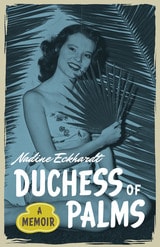
Duchess of Palms
A MemoirBy Nadine Eckhardt
University of Texas Press, 2009
A “fifties girl” tells the fascinating story of her marriages to novelist Billy Lee Brammer and Congressman Bob Eckhardt, and how these relationships propelled her into the multifaceted life she led on her own terms.
Child of the Great Depression, teenage "Duchess of Palms" beauty queen, wife of an acclaimed novelist and later of a brilliant U.S. congressman, and ultimately a successful single working woman and mother, Nadine Eckhardt has lived a fascinating life. In this unique, funny, and honest memoir, she recounts her journey from being a "fifties girl" who lived through the men in her life to becoming a woman in her own right, working toward her own goals.
Eckhardt's first marriage to writer Billy Lee Brammer gave her entrée to liberal political and literary circles in Austin and Washington, where she and Brammer both worked for Senator Lyndon B. Johnson. She describes the heady excitement of LBJ's world—a milieu that Brammer vividly captured in his novel The Gay Place. She next recalls her second marriage to Bob Eckhardt, whom she helped get elected to the U.S. House of Representatives, as well as her growing involvement with the counterculture of social protest, sexual revolution, and drug use. Eckhardt honestly recounts how the changing times changed her perception of herself, recalling that "I didn't know how to achieve for myself, only for others, and I felt ripped off and empty." This painful realization opened the door to a new life for Eckhardt. Her memoir concludes with a joyful description of her multifaceted later life as a restaurateur, assistant to Molly Ivins, writer, and center of a wide circle of friends.
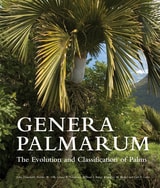
Genera Palmarum
The Evolution and Classification of PalmsJohn Dransfield, Natalie W. Uhl, Conny B. Asmussen, William J. Baker, Madeline Harley, and Carl Lewis
Royal Botanic Gardens, Kew, 2008
In this new edition, genus treatments now include complete descriptions, nomenclature, and etymology, as well as discussions of diversity, distribution, phylogeny, morphology, uses and ecology. All genera are fully illustrated with full-color photographs alongside analytic illustrations, distribution maps, and even electron micrographs of pollen. An updated introduction provides readers with essential background information via authoratative essays on the structure of palms, their chemistry, their history, and much more.
Fully revised for a new generation of researchers and gardening enthusiasts, Genera Palmarum continues to be the gold-standard reference work on palms.
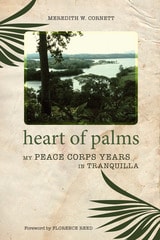
Heart of Palms
My Peace Corps Years in TranquillaMeredith W. Cornett
University of Alabama Press, 2014
A memoir of service, culture and transformation in a rural Panamanian village by a young American woman trained as a community forester for the Peace Corp.
In the storied fifty-year history of the US Peace Corps, Heart of Palms is the first Peace Corps memoir set in Panama, the slender isthmus that connects two continents and two oceans. In her memoir, Meredith Cornett transports readers to the remote village of Tranquilla, where dugout canoes are the mainstay of daily transportation, life and nature are permeated by witchcraft, and a restful night’s sleep may be disturbed by a raiding phalanx of army ants.
Cornett is sent to help counter the rapid deforestation that is destroying the ecosystem and livelihoods of the Panama Canal watershed region. Her first chapters chronicle her arrival and struggles not only with the social issues of language, loneliness, and insecurity, but also with the tragicomic basics of mastering open-fire cookery and intrusions by insects and poisonous snakes. As she grows to understand the region and its people, her keen eye discerns the overwhelming scope of her task. Unable to plant trees faster than they are lost, she writes with moving clarity about her sense of powerlessness.
Combating deforestation leads Cornett into an equally fierce battle against her own feelings of fear and isolation. Her journey to Panama becomes a parallel journey into herself. In this way, Heart of Palms is much more than a record of her Peace Corps service; it is also a moving environmental coming-of-age story and nuanced meditation on one village’s relationship to nature. When she returns home two years later, Cornett brings with her both skills and experience and a remarkable, newfound sense of confidence and mission.
Writing with rueful, self-deprecating humor, Cornett lets us ride along with her on a wave of naïve optimism, a wave that breaks not only on fear and intimidation, but also on tedium and isolation. Heart of Palms offers a bracing alternative to the romantic idealism common to Peace Corps memoirs and will be valued as a welcome addition to writing about the Peace Corps and environmental service.
In the Shadow of the Palms
More-Than-Human Becomings in West PapuaSophie Chao
Duke University Press, 2022
Life Under the Palms
The Sublime World of the Anti-colonialist Jacob HaafnerPaul van der Velde
National University of Singapore Press, 2019
With the help of generous excerpts from Haafner's own writings, including material newly translated into English, Paul van der Velde tells an affecting story of a young man who made a world for himself along the Coromandel Coast, in Ceylon and Calcutta, but who returned to Europe to live the last years of his life in Amsterdam, suffering an acute nostalgia for Asia. This will be compelling reading for anyone interested in European response to the cultures of Asia.
The Palms of New Guinea
William J. Baker, Anders S. Barfod, Rodrigo Camara-Leret, John L. Dowe, John Dransfield, Charlie D. Heatubun, Peter Petoe, Jessica H. Turner, and Scott Zona
Royal Botanic Gardens, Kew, 2024
From exquisite palmlets to graceful canopy giants, palms dominate the rainforests of New Guinea, one of the last tropical wilderness areas on the planet. New Guinea is the world’s largest tropical island and a globally significant biodiversity hotspot. Its extraordinary flora and remarkable 250 species of palm are vital for the people of New Guinea, who depend on them for their survival.
Palms of New Guinea is the first comprehensive account of these immensely important plants, covering their taxonomy, identification, distribution, habitat, conservation status, and much more. Alongside over 650 photographs and 250 detailed maps, botanical artist Lucy T. Smith has illustrated all species featured in Palms of New Guinea. Written by nine scientific experts, this is an essential companion for anyone studying or working in the region.

Weimar Under the Palms
Pacific Palisades, German Exiles, and the Invention of HollywoodThomas Blubacher
Brandeis University Press, 2025
In the early twentieth century, Pacific Palisades was home to America’s most modern film studio of the time as well as the proposed site of the world’s largest Christian center. But by the end of the 1920s, the Los Angeles neighborhood had become the refuge of the rich and beautiful as German and Austrian filmmakers, among them Salka and Berthold Viertel, settled there. They were soon followed by cultural and intellectual giants of the Weimar Republic who were fleeing Europe, such as Max Reinhardt, Hanns Eisler, or Max Horkheimer. These great minds turned Pacific Palisades into a “Weimar under the palm trees.” Though many were successful in exile—including Vicki Baum, Thomas Mann, and Lion Feuchtwanger—others felt as if they were in a “sun prison” far from home.
Recounting a story of glamor and great minds, Thomas Blubacher tells of the history of German-speaking exiles that is still alive there today, going on a foray through the film industry, taking us on a journey to this special place that was so recently devastated by fire. Many of the homes in this book have now gone, but Marta Feuchtwanger’s Villa Aurora and the Thomas Mann house still stand as a testament to luck, resilience, and history.
World Checklist of Palms
Rafaël Govaerts and John Dransfield
Royal Botanic Gardens, Kew, 2005