Results by title
6 books match the query 'Panama Canal (Panama)'
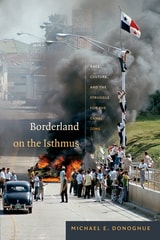
Borderland on the Isthmus
Race, Culture, and the Struggle for the Canal ZoneMichael E. Donoghue
Duke University Press, 2014
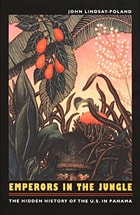
Emperors in the Jungle
The Hidden History of the U.S. in PanamaJohn Lindsay-Poland
Duke University Press, 2003
Analyzing new evidence gathered through interviews, archival research, and Freedom of Information Act requests, Lindsay-Poland discloses the hidden history of U.S.–Panama relations, including the human and environmental toll of the massive canal building project from 1904 to 1914. In stunning detail he describes secret chemical weapons tests—of toxins including nerve agent and Agent Orange—as well as plans developed in the 1960s to use nuclear blasts to create a second canal in Panama.
He chronicles sustained efforts by Panamanians and international environmental groups to hold the United States responsible for the disposal of the tens of thousands of explosives it left undetonated on the land it turned over to Panama in 1999. In the context of a relationship increasingly driven by the U.S. antidrug campaigns, Lindsay-Poland reports on the myriad issues that surrounded Panama’s takeover of the canal in accordance with the 1977 Panama Canal Treaty, and he assesses the future prospects for the Panamanian people, land, and canal area. Bringing to light historical legacies unknown to most U.S. citizens or even to many Panamanians, Emperors in the Jungle is a major contribution toward a new, more open relationship between Panama and the United States.
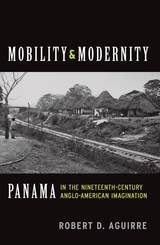
Mobility and Modernity
Panama in the Nineteenth-Century Anglo-American ImaginationRobert D. Aguirre
The Ohio State University Press, 2017
In this study, Robert D. Aguirre provides bold new interpretations of Anthony Trollope, John Lloyd Stephens, and Eadweard Muybridge and also recovers information about literary communities previously lost to history. Mobility and Modernity shows how Panama became defined as a site of incipient globalization and a crucial link of empire. Across this narrow strip of land people and things traveled, technology developed, and political forces erupted. The isthmus became a site of mobility that paradoxically produced varieties of immobility. Parting ways with histories that celebrate the canal as a mighty engineering feat, Mobility and Modernity reveals a more complex story of cultural conflict that began with the first gold rush news in the late 1840s and continued throughout the century.
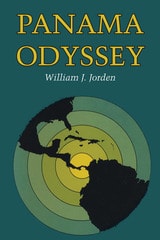
Panama Odyssey
By William J. Jorden
University of Texas Press, 1984
The Panama Canal Treaties of 1977 were the most significant foreign policy achievement of the Carter administration. Most Latin American nations had regarded the 1903 treaty and its later minor modifications as vestiges of "American colonialism" and obstacles to any long-term, stable relationship with the United States. Hence, at a time when conflicts were mushrooming in Central America, the significance of the new Panama treaties cannot be overestimated.
Former Ambassador to Panama William J. Jorden has provided the definitive account of the long and often contentious negotiations that produced those treaties. It is a vividly written reconstruction of the complicated process that began in 1964 and ended with ratification of the new pacts in 1978. Based on his personal involvement behind the scenes in the White House (1972–1974) and in the United States Embassy in Panama (1974–1978), Jorden has produced a unique living history. Access to documents and the personalities of both governments and, equally important, Jorden's personal recollections of participants on both sides make this historical study an incomparable document of U. S. foreign relations.
Beyond the singular story of the treaties themselves—and how diplomats negotiate in the modern world—is the rare description of how the United States deals with a major foreign policy problem. How does a superpower cope with a tiny nation that happens to occupy a strategically critical position? And how does the U. S. Senate face up to its constitutionally assigned power to "advise and consent"? Once treaties are approved, does the House of Representatives help or hinder? Panama Odyssey also deals with another crucial element in the shaping of policy—public opinion: how is it informed or led astray?
In sum, this is a history, a handbook on diplomacy, a course in government, and a revelation of foreign policy in action, all based on a fascinating and controversial episode in the U. S. experience.
Seaway to the Future
American Social Visions and the Construction of the Panama CanalAlexander Missal
University of Wisconsin Press, 2008
Best Books for Regional Special Interests, selected by the American Association of School Librarians, and Best Books for General Audiences, selected by the Public Library Association
“Provide[s] a useful vantage on the world bequeathed to us by the forces that set out to put America astride the globe nearly a century ago.”—Chris Rasmussen, Bookforum
Sovereign Acts
Performing Race, Space, and Belonging in Panama and the Canal ZoneZien, Katherine A.
Rutgers University Press, 2017
Winner of the 2017 Annual Book Prize from the Canadian Association of Latin American and Caribbean Studies (CALACS)
Sovereign Acts explores how artists, activists, and audiences performed and interpreted sovereignty struggles in the Panama Canal Zone, from the Canal Zone’s inception in 1903 to its dissolution in 1999. In popular entertainments and patriotic pageants, opera concerts and national theatre, white U.S. citizens, West Indian laborers, and Panamanian artists and activists used performance as a way to assert their right to the Canal Zone and challenge the Zone’s sovereignty, laying claim to the Zone’s physical space and imagined terrain.
By demonstrating the place of performance in the U.S. Empire’s legal landscape, Katherine A. Zien transforms our understanding of U.S. imperialism and its aftermath in the Panama Canal Zone and the larger U.S.-Caribbean world.