Results by title
20 books match the query 'Pandemic'
COVID Diagnosed the System
Lessons from the Pandemic in Massachusetts PrisonsBridget Conley
Rutgers University Press, 0
The American criminal justice system was in flux in 2020, a clash of possibilities for reform, retrenchment, and radical change—nowhere more so than in Massachusetts, which had just passed major criminal justice reform. The COVID-19 pandemic interrupted the moment with life-threatening force, ravaging people held in prisons and jails across the country. However, it did not so much create new deprivations and suffering as it exposed prisons as sites of physical, institutional, and psychological violence that do not make communities safer. At the same time, advocates for people in prisons—including many incarcerated and formerly incarcerated people—seized on the pandemic’s disruptions to demand change. Detailing the first year of the pandemic inside the Massachusetts state prison system, this book argues that the history of the pandemic inside prisons exposed both the cruelties of incarceration and the power of change when it is led by directly affected people.
COVID and...
How to Do Rhetoric in a PandemicEmily Winderman
Michigan State University Press, 2023
COVID-19 and Public Health
Global Responses to the PandemicCaroline Kingori
Ohio University Press, 2024
Capturing COVID
Media and the Pandemic in the Digital EraKatherine A. Foss
University of Massachusetts Press, 2025
When health authorities quarantined guests aboard the Diamond Princess on February 5, 2020, the cruise ship abruptly shifted from a dream vacation vessel to a public health nightmare. Over the next three weeks, 712 passengers tested positive for coronavirus, with fourteen deaths, and the ship outbreak quickly became the largest cluster of cases outside of China. Guests began to routinely share quarantine updates on social media, ranging from the quality of the ship’s food to their sense of imprisonment. These Facebook, Twitter, Instagram, YouTube, and TikTok accounts became a key source of information for news outlets like the Associated Press, and they helped to set the tone for how the media would cover and frame the pandemic for the next several years.
Unlike past outbreaks, epidemics, and pandemics, COVID-19 emerged in a 21st-century digital landscape of instant communication and abundant online platforms, with older models of news and entertainment media mingling with new types of citizen-produced content. In Capturing COVID, Katherine A. Foss makes sense of how this contemporary media landscape shaped the public’s knowledge and perceptions of the new pandemic. The book focuses on crucial media moments, including the initial reporting from Wuhan; news and social media content on the Diamond Princess quarantine; stories of inequality, stigma, and injustice; narratives of the vaccine rollout; and representations of pandemic life in popular culture. Drawing on press releases, interviews, websites, blogs, social media posts, and other publicly available materials, and guided by critical media analysis, Foss illuminates how this new digital era profoundly shaped the progression of the pandemic. This media landscape kept people informed and connected, but also led to the politicization of the virus, rampant mis/disinformation, and stigmatizing messaging that contributed to public distrust and division. Capturing COVID deftly helps make sense of the entire affair.
Democracy in a Pandemic
Participation in Response to CrisisGraham Smith, Tim Hughes, Lizzie Adams and Charlotte Obijiaku
University of Westminster Press, 2021
Covid-19 has highlighted limitations in our democratic politics – but also lessons for how to deepen our democracy and more effectively respond to future crises. In the face of an emergency, the working assumption all too often is that only a centralised, top-down response is possible. This book exposes the weakness of this assumption, making the case for deeper participation and deliberation in times of crises. During the pandemic, mutual aid and self-help groups have realised unmet needs. And forward-thinking organisations have shown that listening to and working with diverse social groups leads to more inclusive outcomes.
Participation and deliberation are not just possible in an emergency. They are valuable, perhaps even indispensable.
This book draws together a diverse range of voices of activists, practitioners, policy makers, researchers and writers. Together they make visible the critical role played by participation and deliberation during the pandemic and make the case for enhanced engagement during and beyond emergency contexts.
Another, more democratic world can be realised in the face of a crisis. The contributors to this book offer us meaningful insights into what this could look like.

Four Quartets
Poetry in the PandemicEdited by Jeffrey Levine and Kristina Marie Darling
Tupelo Press, 2020
Grounded
Perpetual Flight . . . and Then the PandemicChristopher Schaberg
University of Minnesota Press, 2020
As commercial flight is changing dramatically and its future remains unclear, a look at how we got here
Grounded: Perpetual Flight . . . and Then the Pandemic considers the time leading up to the COVID-19 pandemic and the ensuing global plummet in commercial flight. Mobility studies scholar Christopher Schaberg tours the newly opened airport terminal outside of New Orleans (MSY) in late 2019, and goes on to survey the broad cultural landscape of empty airports and grounded planes in the early months of the novel coronavirus’s spread in 2020. The book culminates in a reflection on the future of air travel: what may unfold, and what parts of commercial flight are almost certainly relics of the past. Grounded blends journalistic reportage with cultural theory and philosophical inquiry in order to offer graspable insights as well as a stinging critique of contemporary air travel.
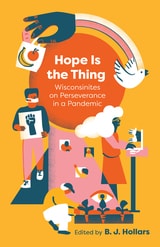
Hope is the Thing
Wisconsinites on Perseverance in a PandemicB. J. Hollars
Wisconsin Historical Society Press, 2021
As the one hundred essays and poems gathered here demonstrate, hope comes in many forms: a dad dance, a birth plan, an unblemished banana, a visit from a neighborhood dog, the revival of an old tradition, empathy. The contributors are racially, geographically, and culturally diverse, representing a rough cross section of Wisconsin voices, from truck driver to poet laureate, from middle school student to octogenarian, from small business owner to seasoned writer. The result is a book-length exploration of the depth and range of hope experienced in times of crisis, as well as an important record of what Wisconsinites were facing and feeling through these historic times.
Hot Spot
A Doctor's Diary From the PandemicDr. Alex Jahangir
Vanderbilt University Press, 2022
What followed was a year of unprecedented challenge and scrutiny. Jahangir, who immigrated to the US from Iran at age six, grew up in Nashville. He thought he knew the city well. But the pandemic laid bare ethnic, racial, and cultural tensions that daily threatened to derail what should have been a collective effort to keep residents healthy and safe.
Hot Spot is Jahangir's narrative of the first year of COVID, derived from his op notes (the journal-like entries surgeons often keep following operations) and expanded to include his personal reflections and a glimpse into the inner sanctums of city and state governance in crisis.
Lockdown Cultures
The Arts and Humanities in the Year of the Pandemic, 2020–21Edited by Stella Bruzzi and Maurice Biriotti Biriotti
University College London, 2022
Lockdown Cultures is both a cultural response to our extraordinary times and a manifesto for the arts and humanities and their role in our post-pandemic society. This book offers a unique response to the question of how the humanities have responded to the dominant crisis of our times: the Covid-19 pandemic. While the roles of engineers, epidemiologists, and, of course, medics are assumed, this volume illustrates some of how the humanities understood and analyzed 2020–21, the year of lockdown and plague. Though the impulse behind the book was topical, underpinning the richly varied and individual essays is a lasting concern with the value of the humanities in the twenty-first century. Each contributor approaches this differently but there are two dominant strands: how art and culture can help us understand the Covid crisis; and how the value of the humanities can be demonstrated by engaging with cultural products from the past. The result is a book that serves as a testament to the humanities’ reinvigorated and reforged sense of identity. It bears witness to a globally impactful event while showcasing interdisciplinary thinking and examining how the pandemic has changed how we read, watch, write and educate. More than thirty individual contributions collectively reassert the importance of the arts and humanities for contemporary society.
Pivoting during the Pandemic
Ideas for Serving Your Community Anytime, AnywhereKathleen Hughes and Jamie Santoro
American Library Association, 2020
When the pandemic suddenly forced many public libraries to close their doors or limit patron access, library staff redoubled their efforts to serve their communities in every way possible. Demonstrating their resilience by quickly pivoting to new modes of service, public libraries are continuing to offer innovative yet practical ways to connect patrons to the information and services they need and enjoy. Offering real-life examples of what it means to be a 24/7 library, this collection from the Public Library Association (PLA) and ALA Editions shares how several libraries transitioned to virtual and socially-distanced services. No matter your library’s current situation or outlook for the future, you’ll be inspired to adapt their ideas to suit the needs of your own organization. Among the initiatives and topics explored are
- homebound delivery;
- citizen science programs;
- virtual reference advice;
- services to small businesses;
- remote readers' advisory and book chats;
- early literacy storytimes;
- health services outreach;
- tech guidance for patrons;
- wifi hotspot lending; and
- tips for social media and marketing.
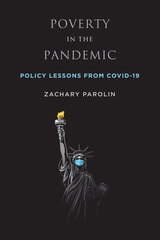
Poverty in the Pandemic
Policy Lessons from COVID-19Zachary Parolin
Russell Sage Foundation, 2023
Drawing on dozens of data sources ranging from debit and credit card spending, the first national databases of school and childcare center closures in the U.S., and bi-weekly Census-run surveys on well-being, Parolin finds that entering the pandemic in poverty substantially increased a person’s likelihood of experiencing negative health outcomes due to the pandemic, such as contracting and dying from COVID, as well as losing their job. Additionally, he found that students from poor families suffered the greatest learning losses as a result of school closures and the shift to distance learning during the pandemic.
However, unprecedented legislative action by the U.S. government, including the passage of the Families First Coronavirus Response Act (FFCRA), the Coronavirus Aid, Relief, and Economic Security (CARES) Act, and the American Rescue Plan (ARP) helped mitigate the economic consequences of the pandemic and lifted around 18 million Americans out of poverty. Based on the success of these policies, Parolin concludes with policy suggestions that the U.S. can implement in more ‘normal’ times to improve the living conditions of low-income households after the pandemic subsides, including expanding access to Unemployment Insurance, permanently expanding the Child Tax Credit, promoting greater access to affordable, high-quality healthcare coverage, and investing more resources into the Census Bureau’s data-collection capabilities. He also details a method of producing a monthly measurement of poverty, to be used in conjunction with the traditional annual measurement, in order to better understand the intra-year volatility of poverty that many Americans experience.
Poverty in the Pandemic provides the most complete account to date of the unique challenges that low-income households in the U.S. faced during the COVID-19 pandemic.
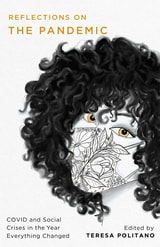
Reflections on the Pandemic
COVID and Social Crises in the Year Everything ChangedTeresa Politano
Rutgers University Press, 2024
Contributors include: Patricia Akhimie, Marc Aronson, Ulla D. Berg, Stephanie Bonne, Stephanie Boyer, Kimberly Camp, Jordan Casteel, Kelly-Jane Cotter, Mark Doty, David Dreyfus, Adrienne E. Eaton, Katherine C. Epstein, Leah Falk, Paul G. Falkowski, Rigoberto González, James Goodman, David Greenberg, Angelique Haugerud, Grace Lynne Haynes, Leslieann Hobayan, Jonathan Holloway, James W. Hughes, Naomi Jackson, Amy Jordan, Vikki Katz, Mackenzie Kean, Robert E. Kopp, Christian Lighty, Stephen Masaryk, Louis P. Masur, Revathi V. Machan, Yalidy Matos, Belinda McKeon, Susan L. Miller, Yehoshua November, Joyce Carol Oates, Mary E. O’Dowd, Katherine Ognyanova, David Orr, Gregory Pardlo, Steve Pikiell, Teresa Politano, en Purkert, Nick Romanenko, Evie Shockley, Caridad Svich, and Didier William.
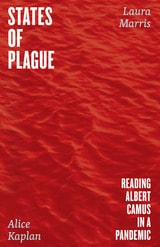
States of Plague
Reading Albert Camus in a PandemicAlice Kaplan and Laura Marris
University of Chicago Press, 2022
As one of the most discussed books of the COVID-19 crisis, Albert Camus’s classic novel The Plague has become a new kind of literary touchstone. Surrounded by terror and uncertainty, often separated from loved ones or unable to travel, readers sought answers within the pages of Camus’s 1947 tale about an Algerian city gripped by an epidemic. Many found in it a story about their own lives—a book to shed light on a global health crisis.
In thirteen linked chapters told in alternating voices, Alice Kaplan and Laura Marris hold the past and present of The Plague in conversation, discovering how the novel has reached people in their current moment. Kaplan’s chapters explore the book’s tangled and vivid history, while Marris’s are drawn to the ecology of landscape and language. Through these pages, they find that their sense of Camus evolves under the force of a new reality, alongside the pressures of illness, recovery, concern, and care in their own lives. Along the way, Kaplan and Marris examine how the novel’s original allegory might resonate with a new generation of readers who have experienced a global pandemic. They describe how they learned to contemplate the skies of a plague spring, to examine the body politic and the politics of immunity.
Both personal and eloquently written, States of Plague uncovers for us the mysterious way a novel can imagine the world during a crisis and draw back the veil on other possible futures.
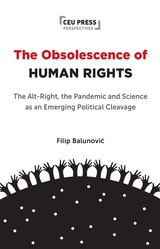
The Obsolescence of Human Rights
The Alt-Right, the Pandemic and Science as an Emerging Political CleavageFilip Balunovic
Central European University Press, 2026
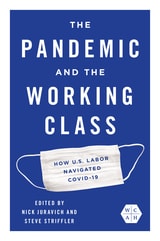
The Pandemic and the Working Class
How US Labor Navigated COVID-19Edited by Nick Juravich and Steve Striffler
University of Illinois Press, 2025
Nick Juravich and Steve Striffler edit a collection that examines the effects of the pandemic on workers. Sections of the book focus on specific impacts and government efforts to restructure the economy; the dramatic effect of the pandemic on the hospitality industry; educators’ response on behalf of themselves and their students; frontline healthcare workers; and the innovative forms of labor organizing that emerged during and after COVID.
Contributors: Carlos Aramayo, Kathleen Brown, Sandrine Etienne, Ismael García-Colón, Puya Gerami, Maura Hagan, Connor Harney, Devan Hawkins, Leigh Howard, Marian Moser Jones, Doris Joy, Nick Juravich, Eric Larson, Kathryn M. Meyer, Samir Sonti, Steve Striffler, Lia Warner, Andrew B. Wolf, and Jennifer Zelnick
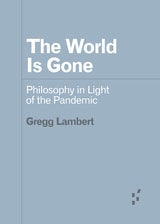
The World Is Gone
Philosophy in Light of the PandemicGregg Lambert
University of Minnesota Press, 2021
Part personal memoir, part philosophical reflection and written in the midst of the pandemic in 2021, The World Is Gone employs the Robinson Crusoe fable to launch an existential investigation of the effects of extreme isolation, profound boredom, nightly insomnia, and the fear of madness associated with the loss of a world populated by others.
Forerunners: Ideas First is a thought-in-process series of breakthrough digital publications. Written between fresh ideas and finished books, Forerunners draws on scholarly work initiated in notable blogs, social media, conference plenaries, journal articles, and the synergy of academic exchange. This is gray literature publishing: where intense thinking, change, and speculation take place in scholarship.
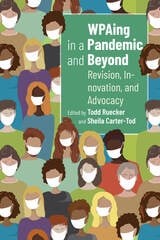
WPAing in a Pandemic and Beyond
Revision, Innovation, and AdvocacyTodd Ruecker
Utah State University Press, 2025
The chapters in this collection include a variety of voices who have been involved in writing program administration in recent years to reflect on the work done in this moment of crisis. Through both short vignettes and longer chapters, this book explores the complicated interactions between WPA work and navigating times of crisis to provide insights for moving forward. Authors explore a variety of topics including professional development, curricular change, advocating in the face of intransigent administrations and others, caring for students, and taking time for self-care. Pointing to specific actions for continued advocacy, WPAing in a Pandemic and Beyond will be of great interest to WPAs and writing studies scholars.
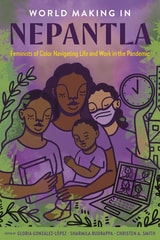
World Making in Nepantla
Feminists of Color Navigating Life and Work in the PandemicGloria González-LópezSharmila RudrappaChristen A. Smith
University of Texas Press, 2025
Writings from feminist scholars of color about their experiences during the pandemic.
Bringing uncertainty, fear, and change, the COVID-19 pandemic shook the world, altered people’s lives, and sparked a wave of introspection. Underserved communities—people of color, women, and queer people among them—were affected the most, and their experiences, in turn, reflected hope and opportunities to reinvent themselves individually and collectively. Drawing on Gloria Anzaldúa’s use of nepantla—the Náhuatl word meaning “in-between space,” the en medio and a liminal space between worlds imbued with change—World Making in Nepantla collects writings about the hurdles feminist scholars of color faced during the pandemic years.
Contributors explore how COVID affected feminist scholars of color while recognizing the ways in which inequality influences experience and also celebrating the resilience of communities all over the world. Dispatches from classrooms and quarantined homes and introspective essays on disability, mutual aid, and borders are included among the essays here. These pieces serve as a concrete record, capturing an ephemeral time already being lost to memory. Created during the heart of the pandemic, World Making in Nepantla is an honest and intimate recording of how feminist scholars of color navigated struggles and found strength during an era that forever changed the modern world.