Results by title
2 books match the query 'Panjabis (South Asian people)'
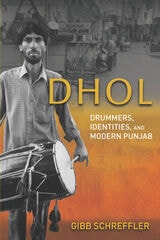
Dhol
Drummers, Identities, and Modern PunjabGibb Schreffler
University of Illinois Press, 2021
Gibb Schreffler draws on two decades of research to investigate dhol's place among the cultural formations within Punjabi communities. Analyzing the identities of musicians, Schreffler illuminates concepts of musical performance, looks at how these concepts help create or articulate Punjabi social structure, and explores identity construction at the intersections of ethnicity, class, and nationality in Punjab and the diaspora. As he shows, understanding the identities of dhol players is an ethical necessity that acknowledges their place in Punjabi cultural history and helps to repair their representation.
An engaging and rich ethnography, Dhol reveals a beloved instrumental form and the musical and social practices of its overlooked performers.
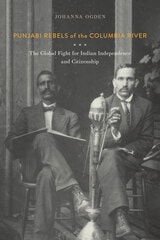
Punjabi Rebels of the Columbia River
The Global Fight for Indian Independence and CitizenshipJohanna Ogden
Oregon State University Press, 2024
Oregon is commonly perceived to have little, let alone notable, South Asian history. Yet in the early 1900s Oregon was at the center of two entwined quests for Indian independence and civic belonging that rocked the world.
Punjabi Rebels of the Columbia River traces the stories of the radical Indian independence organization known as Ghadar and Bhagat Singh Thind’s era-defining US Supreme Court citizenship case. Ghadar sought the overthrow of India’s British colonizers while Thind utilized sanctioned legal channels to do so. Despite widely differing strategies, both the movement and the man were targeted, often in coordination, by the highest levels of the US and British governments. The empires’ united message: India would not be an independent country and Indians could not be citizens. In the decades that followed, it was a verdict Indians refused to abide.
Johanna Ogden’s detailed history of migrants’ experience expands the time frame, geographic boundaries, and knowledge of the conditions and contributions of Indians in North America. It is the story of a people’s awakening amid a rich community of international workers in an age of nationalist uprisings. To understand why one of the smallest western Indian settlements became a resistance center, Punjabi Rebels mines the colonial underpinnings of labor, race, and place-making and their regional and global connections, rendering a history of whiteness and labor as much as of Indian-ness and migration. The first work to rejoin the lived experience of Thind and Ghadar activists, Punjabi Rebels complicates our understanding not just of the global fight for Indian political rights but of multi-racial democracy.