Results by title
21 books match the query 'Paradoxes'

A Plague of Paradoxes
AIDS, Culture, and Demography in Northern TanzaniaPhilip W. Setel
University of Chicago Press, 1999
The AIDS epidemic has forced Africans to reflect upon the meaning of traditional ideas and practices related to sexuality and fertility, and upon modernity and biomedicine. In A Plague of Paradoxes, anthropologist Philip Setel observes Tanzania's Chagga people and their attempts to cope with and understand AIDS—the latest in a series of crises over which they feel they have little, if any, control.
Timely and well-researched, A Plague of Paradoxes is an extended case study of the most serious epidemic of the twentieth century and the cultural circumstances out of which it emerged. It is a unique book that brings together anthropology, demography, and epidemiology to explain how a particular community in Africa experiences AIDS.
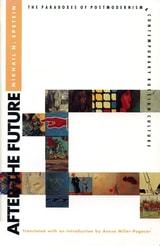
After the Future
The Paradoxes of Postmodernism & Contemporary Russian CultureMikhail N. Epstein
University of Massachusetts Press, 1995
This book brings together for the first time in English the major writings of Mikhail Epstein, one of post-Soviet Russia's most prominent theoreticians of cultural studies and postmodernism. Written from a non-Western point of view yet informed by a familiarity with Western literary theory, it offers a fresh, lucid perspective on the post-communist literary scene as well as a practical and theoretical introduction to the new discipline of Russian “culturology.”

Flowers, Guns, and Money
Joel Roberts Poinsett and the Paradoxes of American PatriotismLindsay Schakenbach Regele
University of Chicago Press, 2023
Joel Roberts Poinsett’s (1779–1851) brand of self-interested patriotism illuminates the paradoxes of the antebellum United States. He was a South Carolina investor and enslaver, a confidant of Andrew Jackson, and a secret agent in South America who fought surreptitiously in Chile’s War for Independence. He was an ambitious Congressman and Secretary of War who oversaw the ignominy of the Trail of Tears and orchestrated America’s longest and costliest war against Native Americans, yet also helped found the Smithsonian. In addition, he was a naturalist, after whom the poinsettia—which he appropriated while he was serving as the first US ambassador to Mexico—is now named.
As Lindsay Schakenbach Regele shows in Flowers, Guns, and Money, Poinsett personified a type of patriotism that emerged following the American Revolution, one in which statesmen served the nation by serving themselves, securing economic prosperity and military security while often prioritizing their own ambitions and financial interests. Whether waging war, opposing states’ rights yet supporting slavery, or pushing for agricultural and infrastructural improvements in his native South Carolina, Poinsett consistently acted in his own self-interest. By examining the man and his actions, Schakenbach Regele reveals an America defined by opportunity and violence, freedom and slavery, and nationalism and self-interest.

Flowers, Guns, and Money
Joel Roberts Poinsett and the Paradoxes of American PatriotismLindsay Schakenbach Regele
University of Chicago Press, 2023
A fascinating historical account of a largely forgotten statesman, who pioneered a form of patriotism that left an indelible mark on the early United States.
Joel Roberts Poinsett’s (1779–1851) brand of self-interested patriotism illuminates the paradoxes of the antebellum United States. He was a South Carolina investor and enslaver, a confidant of Andrew Jackson, and a secret agent in South America who fought surreptitiously in Chile’s War for Independence. He was an ambitious Congressman and Secretary of War who oversaw the ignominy of the Trail of Tears and orchestrated America’s longest and costliest war against Native Americans, yet also helped found the Smithsonian. In addition, he was a naturalist, after whom the poinsettia—which he appropriated while he was serving as the first US ambassador to Mexico—is now named.
As Lindsay Schakenbach Regele shows in Flowers, Guns, and Money, Poinsett personified a type of patriotism that emerged following the American Revolution, one in which statesmen served the nation by serving themselves, securing economic prosperity and military security while often prioritizing their own ambitions and financial interests. Whether waging war, opposing states’ rights yet supporting slavery, or pushing for agricultural and infrastructural improvements in his native South Carolina, Poinsett consistently acted in his own self-interest. By examining the man and his actions, Schakenbach Regele reveals an America defined by opportunity and violence, freedom and slavery, and nationalism and self-interest.

Love, Marriage, and Jewish Families
Paradoxes of a Social RevolutionEdited by Sylvia Barack Fishman
Brandeis University Press, 2015

Melayu
The Politics, Poetics and Paradoxes of MalaynessEdited by Maznah Mohamad and Syed Muhd Khairudin Aljunied
National University of Singapore Press, 2012
In Melayu: The Politics, Poetics and Paradoxes of Malayness, the contributors examine the checkered, wavering and changeable understanding of the word Melayu by considering hitherto unexplored case studies dealing with use of the term in connection with origins, nations, minority-majority politics, Filipino Malays, Riau Malays, Orang Asli, Straits Chinese literature, women's veiling, vernacular television, social dissent, literary women, and modern Sufism. Taken as a whole, this volume offers a creative approach to the study of Malayness while providing new perspectives to the studies of identity formation and politics of ethnicity that have wider implications beyond the Southeast Asian region.

Misconceiving Merit
Paradoxes of Excellence and Devotion in Academic Science and EngineeringMary Blair-Loy and Erin A. Cech
University of Chicago Press, 2022
In Misconceiving Merit, sociologists Mary Blair-Loy and Erin A. Cech uncover the cultural foundations of a paradox. On one hand, academic science, engineering, and math revere meritocracy, a system that recognizes and rewards those with the greatest talent and dedication. At the same time, women and some racial and sexual minorities remain underrepresented and often feel unwelcome and devalued in STEM. How can academic science, which so highly values meritocracy and objectivity, produce these unequal outcomes?
Blair-Loy and Cech studied more than five hundred STEM professors at a top research university to reveal how unequal and unfair outcomes can emerge alongside commitments to objectivity and excellence. The authors find that academic STEM harbors dominant cultural beliefs that not only perpetuate the mistreatment of scientists from underrepresented groups but hinder innovation. Underrepresented groups are often seen as less fully embodying merit compared to equally productive white and Asian heterosexual men, and the negative consequences of this misjudgment persist regardless of professors’ actual academic productivity. Misconceiving Merit is filled with insights for higher education administrators working toward greater equity as well as for scientists and engineers striving to change entrenched patterns of inequality in STEM.
Paradoxes of Digital Disengagement
In Search of the Opt-Out ButtonAdi Kuntsman and Esperanza Miyake
University of Westminster Press, 2022
Listen to authors Adi Kuntsman and Esperanza Miyake discuss collective data justice, the rights, refusals and ethics of digital (dis)engagement in this latest podcast from Lateral, the Journal of the Cultural Studies Association.
“The digital now thoroughly saturates our everyday lives to the point where it seems we are drowning. But is it possible to swim on our terms? This book thoughtfully examines this question, critically teasing apart the structures of power that permeate digital relations and charting pathways to a more just digital world. Essential reading for those who want to move beyond personal digital detoxes to challenge and transform our digital society and economy.” - Professor Rob Kitchin, author of The Data Revolution and Data Lives
“The seductions of tech have ushered in the encroachment of technological solutions into policing, law enforcement and ever-widening systems of social regulation across the UK and Europe. This book marks a critical intervention – by conceptualising our understanding of the ways in which data and digital harms are systemically expended against the powerless. It is a must read for those of us who are concerned to resist the (digital) exclusion of the marginalised, and the (digital) banishment of the vulnerable.” - Dr Patrick Williams, author of Data-Driven Policing: The Hardwiring of Discriminatory Policing Practices Across Europe
“While imaginaries of techno futures constructed by the Digital Lords of contemporary societies become self-fulfilling prophecies, we struggle to imagine a present and future free from digital coercion and exclusion. In their powerful interdisciplinary analysis, Adi Kuntsman and Esperanza Miyake delve into the personal, social, political and environmental costs of compulsory digitality. Rejecting a self-defeating naturalisation of digitality and digital inevitability Paradoxes of Digital Disengagement compellingly shows how collective digital justice is imperative in this future/present where the machine rules and people can become marginalized and excluded. A much-needed scholarly intervention that can inspire our collective thinking, research and praxis.” - Dr Benedetta Brevini, author of Is AI Good for the Planet?
“Kuntsman and Miyake have written an engaging book. It offers a readable critique of enforced digitality and broadens the scope of disconnection studies. The detailed analyses of complicated documents are elegantly structured and thought-provoking.” - https://blogs.lse.ac.uk/lsereviewofbooks/2022/11/16/book-review-paradoxes-of-digital-disengagement-in-search-of-the-opt-out-button-by-adi-kuntsman-and-esperanza-miyake/
Life is increasingly governed and mediated through digital and smart technologies, platforms, big data and algorithms. However, the reasons, practices and impact of how the digital is used by different institutions are often deeply linked to social oppression and injustice. Similarly, the ability to resist these digital impositions is based on inequality and privilege. Challenging the ways in which we are increasingly dependent on the digital, this book raises a set of provocative and urgent questions: in a world of compulsory digitality is there an opt out button? Where, when, how, why and to whom is it available? Answering these questions has become even more relevant since the COVID-19 pandemic. In response, the book puts forward the concept of ‘digital disengagement’ which is explored across six key areas of digitisation: health; citizenship; education; consumer culture; labour; and the environment.
Part I examines the difficulty of opting out of compulsory digitality in a world where most things are digital by default. From health apps, algorithmic decision-making to learning analytics, opting out comes with a set of troubling consequences. Part II turns to several examples of disconnection and disengagement. The chapters reveal how phenomena like digital detoxes, time-management apps and online ‘green’ spaces are co-opted by the very digital systems one is trying to resist.
The book critiques issues relating to digital surveillance, algorithmic discrimination and biased tech, corporatisation and monetisation of data, exploitative digital labour, digitalised self-discipline and destruction of the environment. As an interdisciplinary piece of work, the book will be useful to any scholar and activist in Digital, Internet and Social Media Studies; Digital Sociology and Social Policy; Digital Health; Media, Popular and Communication Studies; Consumer culture; and Environment Studies.
Paradoxes of Education in a Republic
Eva T. H. Brann
University of Chicago Press, 1979

Paradoxes of Hawaiian Sovereignty
Land, Sex, and the Colonial Politics of State NationalismJ. Kehaulani Kauanui
Duke University Press, 2018
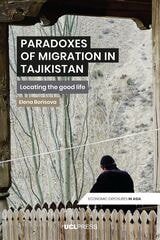
Paradoxes of Migration in Tajikistan
Locating the Good LifeElena Borisova
University College London, 2024
Tajikistan is one of the most remittance-dependent countries in the world. Moving beyond economistic push-pull narratives about post-Soviet migration, Paradoxes of Migration in Tajikistan foregrounds the experiences of those who “stay put” in the sending society and struggle to reproduce their moral communities. In this first book-length ethnography of migration in Tajikistan, Elena Borisova examines the role of mobility through historical and cultural ideas about the good life. She demonstrates how mobility becomes entwined with people’s efforts to become good, moral, and modern subjects. Addressing the complex relationship between the economic, imaginative, and moral aspects of (im)mobility, Borisova shows that mass migration from Tajikistan is as much a project of navigating ethical personhood as it is a quest for economic resources.
This book is a beautifully crafted ethnographic account that reveals how transnational regimes and structures of mobility, citizenship, and histories map out in the intimate spheres of the body, the person, and the family. It is a major contribution to contemporary migration research, which is mostly centered on Europe and North America, and to the field of Central Asian studies. Highly readable, it will be of interest to researchers of migration, (im)mobility and citizenship, and to scholars of all disciplines working on Central Asia.

Paradoxes of Nostalgia
Cold War Triumphalism and Global Disorder since 1989Penny M. Von Eschen
Duke University Press, 2022
Paradoxes of Peace
German Peace Movements Since 1945Alice Holmes Cooper
University of Michigan Press, 1996

Paradoxes of Prosperity
Wealth Seeking in Pre-Civil War AmericaLorman A. Ratner, Paula T. Kaufman and Dwight L. Teeter Jr.
University of Illinois Press, 2008
At the same time, the United States felt the influence of the rise of popular mass-circulation newspapers and magazines and the surge in American book publishing. Concern over living correctly as well as prosperously was commonly discussed by leading authors and journalists, who were now writing for ever-expanding regional and national audiences. Women became more important as authors and editors, giving advice and building huge markets for women readers, with the magazine Godey's Lady's Book and novels by Susan Warner, Maria Cummins, and Harriet Beecher Stowe expressing women's views about the troubled state of society. Best-selling male writers--including novelist George Lippard, historian George Bancroft, and travel writer Bayard Taylor--were among those adding their voices to concerns about prosperity and morality and about America's place in the world. Writers and publishers discovered that a high moral tone could be exceedingly good for business.
The authors of this book examine how popular writers and widely read newspapers, magazines, and books expressed social tensions between prosperity and morality. This study draws on that nationwide conversation through leading mass media, including circulation-leading newspapers, the New York Herald and the New York Tribune, plus prominent newspapers from the South and West, the Richmond Enquirer and the Cincinnati Enquirer. Best-selling magazines aimed at middle-class tastes, Harper's Magazine and the Southern Literary Messenger, added their voices, as did two leading business magazines.

Russian Pendulum
Paradoxes, Practices and PatternsAlena Ledeneva
University College London, 2026
An unorthodox portrait of modern-day Russia, including its paradoxes, practices, and patterns.
Russian Pendulum takes readers on a compelling journey through Russia in which tradition, modernity, power, and informality collide. Linking local knowledge and insider expertise with global trends and international perspectives, the book reveals the patterns that have defined Russia’s destiny for centuries. At its core lies an intricate system of informal networks that are held together by cooptation, control, and camouflage practices.

Self-Deception and Paradoxes of Rationality
Edited by Jean-Pierre Dupuy
CSLI, 1998

The Cambridge Cockpit and the Paradoxes of Fatigue, 1940–1977
David Bloor
University of Chicago Press, 2025
During World War II, members of the Cambridge Psychology Laboratory were commissioned to study pilot fatigue. They set up a Spitfire cockpit in the laboratory, turned it into a piece of laboratory apparatus, and carried out a series of important experiments that appeared to dramatically confirm the dangers of fatigue. Historians of psychology are aware of this episode, but the experiments, the events surrounding them, and the scientific reasoning involved have never been studied in detail. By going into the episode in depth, and by looking behind the scenes at archival material, David Bloor offers an analysis that is both original and more penetrating than anything that has been said before on the topic.
Bloor describes the Cockpit experiments themselves before turning to the theoretical interpretation of the results and the intellectual resources that informed how they were viewed. Bloor then explains a major empirical and theoretical challenge to the Cambridge Cockpit work drawn from a field study of landing accidents apparently showing that fatigue-effects were operationally negligible. Bloor delves into the consequences of this challenge, and the Cambridge reaction to it, in the post-war years. The analysis is deepened by comparison with the corresponding wartime work on fatigue carried out both in Germany and the United States. As the author demonstrates, even today the Cambridge Cockpit experiments pose a challenge to the current understanding of pilot fatigue.
The Paradoxes of Integration
Race, Neighborhood, and Civic Life in Multiethnic AmericaJ. Eric Oliver
University of Chicago Press, 2010
The United States is rapidly changing from a country monochromatically divided between black and white into a multiethnic society. The Paradoxes of Integration helps us to understand America’s racial future by revealing the complex relationships among integration, racial attitudes, and neighborhood life.
J. Eric Oliver demonstrates that the effects of integration differ tremendously, depending on which geographical level one is examining. Living among people of other races in a larger metropolitan area corresponds with greater racial intolerance, particularly for America’s white majority. But when whites, blacks, Latinos, and Asian Americans actually live in integrated neighborhoods, they feel less racial resentment. Paradoxically, this racial tolerance is usually also accompanied by feeling less connected to their community; it is no longer "theirs." Basing its findings on our most advanced means of gauging the impact of social environments on racial attitudes, The Paradoxes of Integration sensitively explores the benefits and at times, heavily borne, costs of integration.

The Paradoxes of Unintended Consequences
István Rév
Central European University Press, 2000
The United States and International Law
Paradoxes of Support across Contemporary IssuesLucrecia García Iommi and Richard W. Maass
University of Michigan Press, 2022
The United States spearheaded the creation of many international organizations and treaties after World War II and maintains a strong record of compliance across several issue areas, yet it also refuses to ratify major international conventions like the UN Convention on the Law of the Sea and the Convention on the Elimination of All Forms of Discrimination Against Women. Why does the United States often seem to support international law in one way while neglecting or even violating it in another?
The United States and International Law: Paradoxes of Support across Contemporary Issues analyzes the seemingly inconsistent U.S. relationship with international law by identifying five types of state support for international law: leadership, consent, internalization, compliance, and enforcement. Each follows different logics and entails unique costs and incentives. Accordingly, the fact that a state engages in one form of support does not presuppose that it will do so across the board. The contributors to this volume examine how and why the United States has engaged in each form of support across twelve issue areas that are central to twentieth- and twenty-first-century U.S. foreign policy: conquest, world courts, war, nuclear proliferation, trade, human rights, war crimes, torture, targeted killing, maritime law, the environment, and cybersecurity. In addition to offering rich substantive discussions of U.S. foreign policy in each of these areas, their findings reveal patterns across the U.S. relationship with international law that shed light on behavior that often seems paradoxical at best, hypocritical at worst. The results help us understand why the United States engages with international law as it does, the legacies of the Trump administration, and what we should expect from the United States under the Biden administration and beyond.

White Innocence
Paradoxes of Colonialism and RaceGloria Wekker
Duke University Press, 2016