Results by title
7 books match the query 'Paranormal'
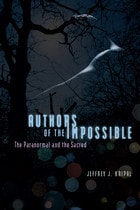
Authors of the Impossible
The Paranormal and the SacredJeffrey J. Kripal
University of Chicago Press, 2010
Most scholars dismiss research into the paranormal as pseudoscience, a frivolous pursuit for the paranoid or gullible. Even historians of religion, whose work naturally attends to events beyond the realm of empirical science, have shown scant interest in the subject. But the history of psychical phenomena, Jeffrey J. Kripal contends, is an untapped source of insight into the sacred and by tracing that history through the last two centuries of Western thought we can see its potential centrality to the critical study of religion.
Kripal grounds his study in the work of four major figures in the history of paranormal research: psychical researcher Frederic Myers; writer and humorist Charles Fort; astronomer, computer scientist, and ufologist Jacques Vallee; and philosopher and sociologist Bertrand Méheust. Through incisive analyses of these thinkers, Kripal ushers the reader into a beguiling world somewhere between fact, fiction, and fraud. The cultural history of telepathy, teleportation, and UFOs; a ghostly love story; the occult dimensions of science fiction; cold war psychic espionage; galactic colonialism; and the intimate relationship between consciousness and culture all come together in Authors of the Impossible, a dazzling and profound look at how the paranormal bridges the sacred and the scientific.
Dance of the Returned
Devon A. Mihesuah
University of Arizona Press, 2022
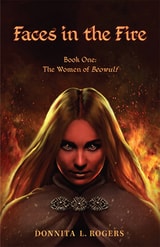
Faces in the Fire
The Women of Beowulf: Book OneDonnita L. Rogers
Arizona Center for Medieval and Renaissance Studies, 2013
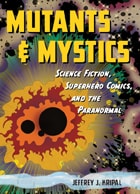
Mutants and Mystics
Science Fiction, Superhero Comics, and the ParanormalJeffrey J. Kripal
University of Chicago Press, 2011
But that's just scratching the surface, says Jeffrey Kripal. In Mutants and Mystics, Kripal offers a brilliantly insightful account of how comic book heroes have helped their creators and fans alike explore and express a wealth of paranormal experiences ignored by mainstream science. Delving deeply into the work of major figures in the field—from Jack Kirby’s cosmic superhero sagas and Philip K. Dick’s futuristic head-trips to Alan Moore’s sex magic and Whitley Strieber’s communion with visitors—Kripal shows how creators turned to science fiction to convey the reality of the inexplicable and the paranormal they experienced in their lives. Expanded consciousness found its language in the metaphors of sci-fi—incredible powers, unprecedented mutations, time-loops and vast intergalactic intelligences—and the deeper influences of mythology and religion that these in turn drew from; the wildly creative work that followed caught the imaginations of millions. Moving deftly from Cold War science and Fredric Wertham's anticomics crusade to gnostic revelation and alien abduction, Kripal spins out a hidden history of American culture, rich with mythical themes and shot through with an awareness that there are other realities far beyond our everyday understanding.
A bravura performance, beautifully illustrated in full color throughout and brimming over with incredible personal stories, Mutants and Mystics is that rarest of things: a book that is guaranteed to broaden—and maybe even blow—your mind.
Parascientific Revolutions
The Science and Culture of the ParanormalDerek Lee
University of Minnesota Press, 2025
Unraveling the hidden influence of the paranormal on science, literature, and belief
Telepathy, clairvoyance, precognition, and telekinesis: these attributes of the paranormal mind are widely dismissed as nonsense, but what can an exploration of such pseudoscientific phenomena tell us about accepted scientific and cultural thought? In Parascientific Revolutions, Derek Lee traces the evolution of psi epistemologies across the twentieth and twenty-first centuries to uncover how these ideas have migrated into scientific fields such as quantum physics and neurology, as well as diverse literary genres including science fiction, ethnic literature, and even government training manuals.
Lee introduces the groundbreaking concept of “parascience,” a dynamic cultural space where ideas rejected by the scientific establishment blend with alternative strains of literary, mythic, and philosophical thought to regenerate and return to mainstream discourse. From early modernist works by James Joyce to postwar speculative fiction by Philip K. Dick to ethnofuturist narratives by Ruth Ozeki, Parascientific Revolutions demonstrates how cultural and intellectual currents reshape paranormal ideas over time. Examining psychic surveillance programs like Project Stargate and bizarre particles of extrasensory perception such as the psitron, Lee illustrates the ways paranormal concepts persist and evolve to influence culture.
Presenting pseudoscience as an inevitable by-product of the scientific process, Parascientific Revolutions offers fresh insight into how the paranormal mind continually challenges our understanding of knowledge and belief. It invites readers to reconsider the boundaries between science and the unknown, revealing a world where speculative thought and empirical investigation are deeply intertwined.
Retail e-book files for this title are screen-reader friendly with images accompanied by short alt text and/or extended descriptions.
Science In The New Age
The Paranormal, Its Defenders & Debunkers,David J. Hess
University of Wisconsin Press, 1993
Hess begins by looking at each group’s unique version of knowledge, science, and religion and at its story about the other groups. Comparing the various discourses, texts, writers, and groups as cultures, he shows how skeptics, parapsychologists, and New Agers may disagree vehemently with each other, but end up sharing many rhetorical strategies, metaphors, models, values, and cultural categories. Furthermore, he argues, their shared “paraculture” has a great deal in common with the larger culture of the United States. The dialogue on the paranormal, Hess concludes, has as much to do with gender, power, and cultural values as it does with spirits, extrasensory perception, and crystal healing.
Supernatural America
The Paranormal in American ArtEdited by Robert Cozzolino
University of Chicago Press, 2021
Featuring artists from James McNeill Whistler and Kerry James Marshall to artist/mediums who made images with spirits during séances, this catalog covers more than two hundred years of the supernatural in American art. Here we find works that explore haunting, UFO sightings, and a broad range of experiential responses to other worldly contact.