Results by title
13 books match the query 'Parent and adult child'
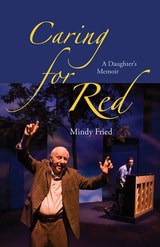
Caring for Red
A Daughter's MemoirMindy Fried
Vanderbilt University Press, 2016
Caring for Red is Mindy Fried's moving and colorful account of caring for her ninety-seven-year-old father, Manny--an actor, writer, and labor organizer--in the final year of his life. This memoir chronicles the actions of two sisters as they discover concentric circles of support for their father and attempt to provide him with an experience of "engaged aging" in an assisted living facility.
The story is also that of a daughter of a powerful and outspoken man who took risks throughout his life and whose political beliefs had an enduring impact on his family. (After Manny was called before the House Un-American Activities Committee, he was blacklisted and his family was shunned.)
As an actor, Manny was affiliated with Elia Kazan's Group Theatre and the Federal Theatre Project. He did Shakespeare, Chekhov, and Ibsen, and played everything from the tormented father in Arthur Miller's All My Sons to an infant in a baby carriage in Thornton Wilder's Infancy, from the Rabbi in Fiddler on the Roof to--poignantly for this book--the role of Morrie in Tuesdays with Morrie.
As she devotes herself to caring for her dying father, Mindy grapples anew with the complexity of their relationship. She questions whether she can be there for him and how to assert her own voice as her father's caregiver in his last days.
China’s Revolutions and Intergenerational Relations
Martin K. Whyte, Editor
University of Michigan Press, 2003

Distant Parents
Climo, Jacob
Rutgers University Press, 1992
The adult children he interviewed live at least 200 miles from their parents. In most ways they are similar to the millions of other professionals whose careers have led them to move away from their parents. We hear their voices, as they speak frankly about the advantages, pains, and challenges of separation.
Climo considers distant relationships to be different from other relationships and to be a growing social problem. Distant living complicates communications by shaping and restricting both phone calls and visits. His description of the typical phone call and typical seasonal visit, with their patterns and limitations, will sound familiar to many of us. In addition to affecting communications, distance affects memories of past parent-child relationships in ways that influence present relationships. Memories, which take on great weight, tend to determine current behavior. Most seriously, distance limits the kinds of assistance children can provide when their parents become ill, resulting in frustration, anger, guilt, and a sense of powerlessness.
Climo urges us to be more aware of distant living as a growing social problem. The percentage of children who move away from their parents will continue to increase. Once adult children acknowledge the challenges distance creates, they can learn to develop better communications and to deal with their feelings of ambivalence.
Family Ties
John R. Logan and Glenna D. Spitze
Temple University Press, 1997
The authors reveal that parents are not dependent on help from their grown children, as was previously assumed; in fact they contribute more assistance than they receive until the age of seventy-five. Also, while daughters are still the dominant caregivers, other forms of support like visiting and providing transportation are given almost equally by sons and daughters.
Logan and Spitze also report that even though the day-to-day demands on adult children have increased with the changing economy, very few seem to be torn between these responsibilities and those those of caring for their parents. This book offers reassuring news about the strength of the American family in the midst of social change. Family Ties will be a valuable resource for anyone interested in intergenerational relationships in adulthood.
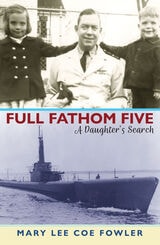
Full Fathom Five
A Daughter's SearchMary Lee Coe Fowler
University of Alabama Press, 2008
One woman’s quest for knowledge of her father lost at sea
Mary Lee Coe Fowler was a posthumous child, born after her father, a submarine skipper in the Pacific, was lost at sea in 1943. Her mother quickly remarried into a difficult and troubled relationship, and Mary Lee’s biological father was never mentioned. It was not until her mother died and Mary Lee was a middle-aged adult that she set out to learn not only who her father was, but what happened to him and his crew, and why—and also to confront why she had shied away from asking these questions until it was nearly too late.
Fowler searched through old ships’ logs, letters, and naval communiqués; visited submarine museums, the Naval Academy, and other pertinent sites; interviewed old friends and crew members who knew her dad and mom or served concurrently; and slowly reconstructed the world in which they lived. Beautifully written, Fowler’s memoir reveals what she eventually learned: of the perils and harships of submarine service in wartime, of the tragic irony of how her father’s sub was probably lost, and of the long-term damage experienced by the families of those who do not come home from war.
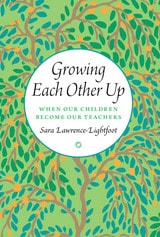
Growing Each Other Up
When Our Children Become Our TeachersSara Lawrence-Lightfoot
University of Chicago Press, 2016
With Growing Each Other Up, Macarthur Prize–winning sociologist and educator Sara Lawrence-Lightfoot offers an intimately detailed, emotionally powerful account of that experience. Building her book on a series of in-depth interviews with parents around the country, she offers a counterpoint to the usual parental development literature that mostly concerns the adjustment of parents to their babies’ rhythms and the ways parents weather the storms of their teenage progeny. The focus here is on the lessons emerging adult children, ages 15 to 35, teach their parents. How are our perspectives as parents shaped by our children? What lessons do we take from them and incorporate into our worldviews? Just how much do we learn—often despite our own emotionally fraught resistance—from what they have seen of life that we, perhaps, never experienced? From these parent portraits emerges the shape of an education composed by young adult children—an education built on witness, growing, intimacy, and acceptance.
Growing Each Other Up is rich in the voices of actual parents telling their own stories of raising children and their children raising them; watching that fundamental connection shift over time. Parents and children of all ages will recognize themselves in these evocative and moving accounts and look at their own growing up in a revelatory new light.
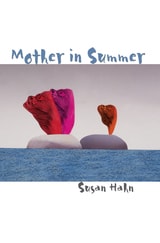
Mother in Summer
Susan Hahn
Northwestern University Press, 2002
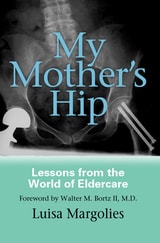
My Mother's Hip
Lessons From The World Of EldercareLuisa Margolies
Temple University Press, 2004
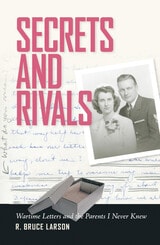
Secrets and Rivals
Wartime Letters and the Parents I Never KnewR. Bruce Larson
University of Missouri Press, 2015
Reading through the letters, he is drawn into his parents’ courtship amid the hardships of separation and war. Beyond the tumultuous romance, Larson finds that he barely recognizes his father, whom he knew only as distant and impassive. He uncovers shocking truths about his mother, Ruth, whom family lore had pigeonholed as sweetly pious.
At the time of the letters, Bob is a young Coast Guard clerk fighting off depression with thoughts of his dream girl back home. Back in Minnesota, Ruth passes the days adrift in romantic fantasies and liaisons with local admirers. Bob’s suspicions about Ruth and his obsession with her from afar threaten the young man’s fragile hold on his sanity, but he will not give her up. Decades later, their son comes to feel a tenderness for both his parents and to understand how their losses, fears, and reluctance can transform and refashion family bonds.
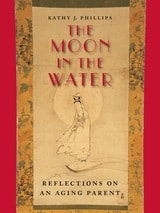
The Moon in the Water
Reflections on an Aging ParentKathy J. Phillips
Vanderbilt University Press, 2008
In a series of moving vignettes, the author begins by describing a particular representation of Water-Moon Kuan Yin, a Buddhist teacher and goddess associated with compassion, who often sits on a precarious overhang or floats on a flimsy petal. Then Kuan Yin steps out of the frame to join the author in the mundane challenges of caring for her father-transferring his health insurance, struggling with a wheelchair van, managing adult diapers, or playing in the fictions of dementia. From perplexed to poignant to funny, the vignettes record the working-class English of a fading but still wise dad, and they find other human versions of Kuan Yin in a doctor who will still make house calls or kind strangers in the street.
The book includes ten illustrations: both classical representations of Kuan Yin and also the author's own drawings, which adapt Kuan Yin in an act of practical spirituality, reading art through life and life through art. Each vignette invites the harried caregiver to take a deep breath and meditate on the trials and joys of caring for an aging parent.
The Parental Experience in Midlife
Edited by Carol D. Ryff and Marsha Mailick Seltzer
University of Chicago Press, 1996
With a strong emphasis on the diversity of midlife parenting, including sociodemographic variations and specific parent or child characteristics such as single parenting or raising a child with a disability, this volume presents for the first time the complex factors that influence the quality of the midlife parenting experience.
Welcome to Wherever We Are
A Memoir of Family, Caregiving, and RedemptionDeborah J. Cohan
Rutgers University Press, 2020
ESS Public Sociology Award
Recommended Book in Domestic Violence by DomesticShelters.org
How do you go about caregiving for an ill and elderly parent with a lifelong history of abuse and control, intertwined with expressions of intense love and adoration? How do you reconcile the resulting ambivalence, fear, and anger?
Welcome to Wherever We Are is a meditation on what we hold onto, what we let go of, how we remember others and ultimately how we’re remembered. Deborah Cohan shares her story of caring for her father, a man who was simultaneously loud, gentle, loving and cruel and whose brilliant career as an advertising executive included creating slogans like “Hey, how ‘bout a nice Hawaiian punch?” Wrestling with emotional extremes that characterize abusive relationships, Cohan shows how she navigated life with a man who was at once generous and affectionate, creating magical coat pockets filled with chocolate kisses when she was a little girl, yet who was also prone to searing, vicious remarks like “You’d make my life easier if you’d commit suicide.”
In this gripping memoir, Cohan tells her unique personal story while also weaving in her expertise as a sociologist and domestic abuse counselor to address broader questions related to marriage, violence, divorce, only children, intimacy and loss. A story most of us can relate to as we reckon with past and future choices against the backdrop of complicated family dynamics, Welcome to Wherever We Are is about how we might come to live our own lives better amidst unpredictable changes through grief and healing.
Questions for Discussion (https://d3tto5i5w9ogdd.cloudfront.net/wp-content/uploads/2020/05/11140346/Cohan_Discussion.docx)
What Happens Next?
Matters of Life and DeathDouglas Bauer
University of Iowa Press, 2013