Results by title

4 books match the query 'Partisans'
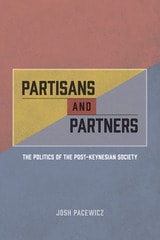
cover of Partisans and Partners: The Politics of the Post-Keynesian Society

Partisans and Partners

The Politics of the Post-Keynesian Society

Josh Pacewicz

University of Chicago Press, 2016

There’s no question that Americans are bitterly divided by politics. But in Partisans and Partners, Josh Pacewicz finds that our traditional understanding of red/blue, right/left, urban/rural division is too simplistic.

Wheels-down in Iowa—that most important of primary states—Pacewicz looks to two cities, one traditionally Democratic, the other traditionally Republican, and finds that younger voters are rejecting older-timers’ strict political affiliations. A paradox is emerging—as the dividing lines between America’s political parties have sharpened, Americans are at the same time growing distrustful of traditional party politics in favor of becoming apolitical or embracing outside-the-beltway candidates. Pacewicz sees this change coming not from politicians and voters, but from the fundamental reorganization of the community institutions in which political parties have traditionally been rooted. Weaving together major themes in American political history—including globalization, the decline of organized labor, loss of locally owned industries, uneven economic development, and the emergence of grassroots populist movements—Partisans and Partners is a timely and comprehensive analysis of American politics as it happens on the ground.
[more]
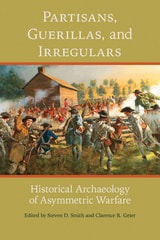
cover of Partisans, Guerillas, and Irregulars: Historical Archaeology of Asymmetric Warfare

Partisans, Guerillas, and Irregulars

Historical Archaeology of Asymmetric Warfare

Edited by Steven D. Smith and Clarence R. Geier

University of Alabama Press, 2019

Essays that explore the growing field of conflict archaeology

Within the last twenty years, the archaeology of conflict has emerged as a valuable subdiscipline within anthropology, contributing greatly to our knowledge and understanding of human conflict on a global scale. Although archaeologists have clearly demonstrated their utility in the study of large-scale battles and sites of conventional warfare, such as camps and forts, conflicts involving asymmetric, guerilla, or irregular warfare are largely missing from the historical record.

Partisans, Guerillas, and Irregulars: Historical Archaeology of Asymmetric Warfare presents recent examples of how historical archaeology can contribute to a better understanding of asymmetric warfare. The volume introduces readers to this growing study and to its historic importance. Contributors illustrate how the wide range of traditional and new methods and techniques of historiography and archaeology can be applied to expose critical actions, sacrifices, and accomplishments of competing groups representing opposing philosophies and ways of life, which are otherwise lost in time.

The case studies offered cover significant events in American and world history, including the French and Indian War, the American Revolution, Indian wars in the Southeast and Southwest, the Civil War, Reconstruction, Prohibition, and World War II. All such examples used here took place at a local or regional level, and several were singular events within a much larger and more complex historic movement. While retained in local memory or tradition, and despite their potential importance, they are poorly, and incompletely addressed in the historic record. Furthermore, these conflicts took place between groups of significantly different cultural and military traditions and capabilities, most taking on a “David vs. Goliath” character, further shaping the definition of asymmetric warfare.

 

[more]
cover of Partisans: Marriage, Politics, and Betrayal Among the New York Intellectuals

Partisans

Marriage, Politics, and Betrayal Among the New York Intellectuals

David Laskin

University of Chicago Press, 2001
Combining literary biography with astute reporting and moral insight, David Laskin shows how sex, politics, and art affected relationships among the Partisan Review writers: Mary McCarthy, Edmund Wilson, Philip Rahv, Robert Lowell, Jean Stafford, Elizabeth Hardwick, Hannah Arendt, Allen Tate, Caroline Gordon, and Diana Trilling. It is the women who steal the show with their their groundbreaking work, their harrowing experiences of marriage, abuse, and betrayal, their passion for writing and disdain for feminism, their struggles and achievements.
[more]
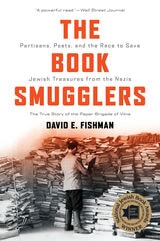
cover of The Book Smugglers: Partisans, Poets, and the Race to Save Jewish Treasures from the Nazis

The Book Smugglers

Partisans, Poets, and the Race to Save Jewish Treasures from the Nazis

David E. Fishman

University Press of New England, 2018

The Book Smugglers is the nearly unbelievable story of ghetto residents who rescued thousands of rare books and manuscripts—first from the Nazis and then from the Soviets—by hiding them on their bodies, burying them in bunkers, and smuggling them across borders. It is a tale of heroism and resistance, of friendship and romance, and of unwavering devotion—including the readiness to risk one’s life—to literature and art. And it is entirely true. Based on Jewish, German, and Soviet documents, including diaries, letters, memoirs, and the author’s interviews with several of the story’s participants, The Book Smugglers chronicles the daring activities of a group of poets turned partisans and scholars turned smugglers in Vilna, “The Jerusalem of Lithuania.” The rescuers were pitted against Johannes Pohl, a Nazi “expert” on the Jews, who had been dispatched to Vilna by the Nazi looting agency, Einsatzstab Reichsleiter Rosenberg, to organize the seizure of the city’s great collections of Jewish books. Pohl and his Einsatzstab staff planned to ship the most valuable materials to Germany and incinerate the rest. The Germans used forty ghetto inmates as slave-laborers to sort, select, pack, and transport the materials, either to Germany or to nearby paper mills. This group, nicknamed “the Paper Brigade,” and informally led by poet Shmerke Kaczerginski, a garrulous, street-smart adventurer and master of deception, smuggled thousands of books and manuscripts past German guards. If caught, the men would have faced death by firing squad at Ponar, the mass-murder site outside of Vilna. To store the rescued manuscripts, poet Abraham Sutzkever helped build an underground book-bunker sixty feet beneath the Vilna ghetto. Kaczerginski smuggled weapons as well, using the group’s worksite, the former building of the Yiddish Scientific Institute, to purchase arms for the ghetto’s secret partisan organization. All the while, both men wrote poetry that was recited and sung by the fast-dwindling population of ghetto inhabitants. With the Soviet “liberation” of Vilna (now known as Vilnius), the Paper Brigade thought themselves and their precious cultural treasures saved—only to learn that their new masters were no more welcoming toward Jewish culture than the old, and the books must now be smuggled out of the USSR. Thoroughly researched by the foremost scholar of the Vilna Ghetto—a writer of exceptional daring, style, and reach—The Book Smugglers is an epic story of human heroism, a little-known tale from the blackest days of the war.
[more]