Results by title
3 books match the query 'Partiya Karkerên Kurdistanê'
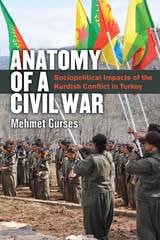
Anatomy of a Civil War
Sociopolitical Impacts of the Kurdish Conflict in TurkeyMehmet Gurses
University of Michigan Press, 2018
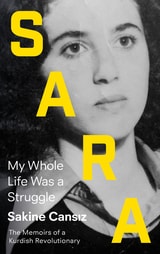
Sara
My Whole Life Was a StruggleSakine Cansiz
Pluto Press, 2018
This is the first chapter of her iconic life, leading up to her arrest in 1979, penned as dramatic events unfolded against the backdrop of the Turkish revolutionary left. She writes about the excitement of entering the movement as a young woman, discovering she would have to challenge traditional gender roles as she rose amongst its ranks. She was one of the first to demand the recruitment and education of female revolutionaries, and demanded total gender equality within the PKK, which is now one of its central tenets.
Today, 'Sara' is an inspiration to women fighting for liberation across the world. This is her story in her own words, and is in turns shocking, violent and path-breaking.
Translated by Janet Biehl.

Turkey and the Kurdish Peace Process
Actors, Issues, and ContextArin Y. Savran
University of Michigan Press, 2022
After the fall of the Ottoman Empire following World War I, the Kurds in the Middle East became the largest ethnic group in the region without a state of their own. Divided between Turkey, Syria, Iran, and Iraq, the Kurds have fought for their right to exist as a distinct national group, as well as for governing themselves. Turkey and the Kurdish Peace Process provides a historical and conceptual account of events in order to detail the key conditions, factors, and events that gave rise to the PKK (Kurdistan Workers’ Party) conflict in Turkey, as well as the conditions influencing the emergence, management, and collapse of the peace talks. Drawing from conflict resolution theories, this book investigates the transformation of key conflict actors and changes, over time, in their approach to the main conflict issues.
Moreover, Arin Y. Savran expands the concept of conflict transformation to encompass the ideological transformation of a movement as a result of a rigorous and deep intellectual epiphany on the part of the political leaders—a phenomenon that is unusual and little is known about, making it all the more relevant to include in future theoretical approaches in peace process studies. Methodologically, she rethinks conflict transformation/resolution approaches to focus on shifts in beliefs and relationships that occur prior to a peace process or the start of peace negotiations, when often much focus on peace processes is on the post-agreement phase. This book is among the first comprehensive, scholarly accounts to date (in the English language) that analyzes the Kurdish peace process.