Results by title
6 books match the query 'Passages'

Fields of Wheat, Hills of Blood
Passages to Nationhood in Greek Macedonia, 1870-1990Anastasia N. Karakasidou
University of Chicago Press, 1997
"Combining the thoughtful use of theory with a vivid historical ethnography, this is an important, courageous, and pioneering work which opens up the whole issue of nation-building in northern Greece."—Mark Mazower, University of Sussex
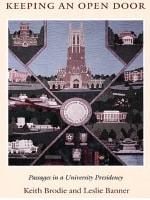
Keeping An Open Door
Passages in a University PresidencyKeith Brodie and Leslie Banner
Duke University Press, 1996
In Keeping an Open Door, Duke chancellor (1982-1985) and president (1985-1993) Keith Brodie and coauthor Leslie Banner recount what it was like to lead Duke during an era of change for research universities across the country: how Brodie reached some of his most controversial decisions, including the “Black Faculty Initiative”; his strategy for precluding abuse in Division I athletics at Duke; how his training as a psychiatrist shaped his leadership style and influenced how he dealt with trustees, deans, faculty, and students; and the avenues of power still open to today’s university presidents. The history and feeling of life on the Duke campus during the Brodie era are vividly evoked in photographs and key speeches introduced by the former president’s personal recollections.
Keeping an Open Door provides an insider’s view of issues critical to modern research universities and will interest anyone concerned with the history and future of higher education.
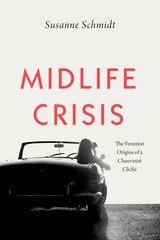
Midlife Crisis
The Feminist Origins of a Chauvinist ClichéSusanne Schmidt
University of Chicago Press, 2020
The first book-length history of this controversial concept, Susanne Schmidt’s Midlife Crisis recounts the surprising origin story of the midlife debate and traces its movement from popular culture into academia. Schmidt’s engaging narrative telling of the feminist construction—and ensuing antifeminist backlash—of the midlife crisis illuminates a lost legacy of feminist thought, shedding important new light on the history of gender and American social science in the 1970s and beyond.
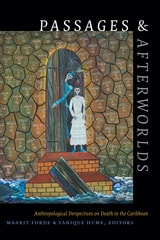
Passages and Afterworlds
Anthropological Perspectives on Death in the CaribbeanMaarit Forde and Yanique Hume, editors
Duke University Press, 2018
Contributors. Donald Cosentino, Maarit Forde, Yanique Hume, Paul Christopher Johnson, Aisha Khan, Keith E. McNeal, George Mentore, Richard Price, Karen Richman, Ineke (Wilhelmina) van Wetering, Bonno (H.U.E.) Thoden van Velzen
Passages
Moving beyond Liminality in the Study of Literature and CultureEdited by Elizabeth Kovach, Jens Kugele, and Ansgar Nünning
University College London, 2022
The study of literature and culture is marked by various distinct understandings of passages—as both phenomena and critical concepts. These include the anthropological notion of rites of passage, the shopping arcades (Passagen) theorized by Walter Benjamin, the Middle Passage of the Atlantic slave trade, present-day forms of migration and resettlement, and understandings of translation and adaptation. This book explores passages as contexts and processes within which liminal experiences and encounters are situated. Based on the premise that concepts travel through times, contexts, and discursive settings, the volume enables a meaningful exchange regarding passages across disciplinary, national, and linguistic boundaries. Contributions from senior scholars and early-career researchers whose work focuses on areas such as cultural memory, performativity, space, media, (cultural) translation, ecocriticism, gender, and race utilize specific understandings of passages and liminality, reflecting on their value and limits for their research.
Toward a Grammar of Passages
Richard M. Coe
Southern Illinois University Press, 1988
Richard M. Coe has developed such a “grammar,” one which uses a simple graphic instrument to analyze the meaningful relationships between sentences in a passage and to clarify the function of structure in discourse. Working in the tradition of Christensen’s generative rhetoric, Coe presents a two-dimensional graphic matrix that effectively analyzes the logical relations between statements by mapping coordinate, subordinate, and superordinate relationships.
Coe demonstrates the power of his discourse matrix by applying it to a variety of significant problems, such as how to demonstrate discourse differences between cultures (especially between Chinese and English), how to explain precisely what is “bad” about the structure of passages that do not work, and how best to teach structure. This new view of the structure of passages helps to articulate crucial questions about the relations between form and function, language, thought and culture, cognitive and social processes.