Results by title
16 books match the query 'Passing'
Disability and Passing
Blurring the Lines of IdentityJeffrey A Brune
Temple University Press, 2013
Passing—an act usually associated with disguising race—also relates to disability. Whether a person classified as mentally ill struggles to suppress aberrant behavior to appear "normal" or a person falsely claims a disability to gain some advantage, passing is a pervasive and much discussed phenomenon. Nevertheless, Disability and Passing is the first anthology to examine this issue.
The editors and contributors to this volume explore the intersections of disability, race, gender, and sexuality as these various aspects of identity influence each other and make identity fluid. They argue that the line between disability and normality is blurred, discussing disability as an individual identity and as a social category. And they discuss the role of stigma in decisions about whether or not to pass.
Focusing on the United States from the nineteenth century to the present, the essays in Disability and Passing speak to the complexity of individual decisions about passing and open the conversation for broader discussion.
Contributors include: Dea Boster, Allison Carey, Peta Cox, Kristen Harmon, David Linton, Michael Rembis, and the editors.

Flamboyant Fictions
The Failed Art of PassingIan Fleishman
Northwestern University Press, 2025
Exposes a stylistic tradition of flamboyantly failed passing in queer literature and film
This book posits formal experimentation as an index for evolving expressions of male homosexuality from literary modernism to the German New Wave and the present day. Ian Fleishman exposes a tradition of flamingly failed passing that is itself a surreptitious mode of passing: the flaunting of queer style as an intentionally unconvincing cover for queer content. Exploring a corpus of films and novels by André Gide, Jean Genet, Rainer Werner Fassbinder, Werner Schroeter, François Ozon, and Xavier Dolan, among others, Flamboyant Fictions: The Failed Art of Passing intervenes in trenchant debates about queer agency, visibility, negativity, and disidentification. Mapping queer strategies of storytelling onto queer practices of self-invention, Flamboyant Fictions wagers that it is precisely in instances of conflict between these auteurs and their inventions that narrative becomes a laboratory for testing the sovereignty and self-determination of queer identity.

Near Black
White-to-Black Passing in American CultureBaz Dreisinger
University of Massachusetts Press, 2008
In the United States, the notion of racial “passing” is usually associated with blacks and other minorities who seek to present themselves as part of the white majority. Yet as Baz Dreisinger demonstrates in this fascinating study, another form of this phenomenon also occurs, if less frequently, in American culture: cases in which legally white individuals are imagined, by themselves or by others, as passing for black.
In Near Black, Dreisinger explores the oft-ignored history of what she calls “reverse racial passing” by looking at a broad spectrum of short stories, novels, films, autobiographies, and pop-culture discourse that depict whites passing for black. The protagonists of these narratives, she shows, span centuries and cross contexts, from slavery to civil rights, jazz to rock to hip-hop. Tracing their role from the 1830s to the present day, Dreisinger argues that central to the enterprise of reverse passing are ideas about proximity. Because “blackness,” so to speak, is imagined as transmittable, proximity to blackness is invested with the power to turn whites black: those who are literally “near black” become metaphorically “near black.”
While this concept first arose during Reconstruction in the context of white anxieties about miscegenation, it was revised by later white passers for whom proximity to blackness became an authenticating badge. As Dreisinger shows, some white-to-black passers pass via self-identification. Jazz musician Mezz Mezzrow, for example, claimed that living among blacks and playing jazz had literally darkened his skin. Others are taken for black by a given community for a period of time. This was the experience of Jewish critic Waldo Frank during his travels with Jean Toomer, as well as that of disc jockey Hoss Allen, master of R&B slang at Nashville's famed WLAC radio. For journalists John Howard Griffin and Grace Halsell, passing was a deliberate and fleeting experiment, while for Mark Twain's fictional white slave in Pudd'nhead Wilson, it is a near-permanent and accidental occurrence.
Whether understood as a function of proximity or behavior, skin color or cultural heritage, self-definition or the perception of others, what all these variants of “reverse passing” demonstrate, according to Dreisinger, is that the lines defining racial identity in American culture are not only blurred but subject to change.

Passing and Pedagogy
THE DYNAMICS OF RESPONSIBILITYPamela L. Caughie
University of Illinois Press, 1999
Caughie's discussion of passing illuminates a recent phenomenon in academic writing and popular culture that revolves around identities and the ways in which they are deployed, both in the arts and in lived experience. Through a wide variety of texts—novels, memoirs, film, drama, theory, museum exhibits, legal cases—she demonstrates the dynamics of passing, presenting it not as the assumption of a fraudulent identity but as the recognition that the assumption of any identity, including for the purposes of teaching, is a form of passing.
Astutely addressing the relevance of passing for pedagogy, Caughie presents the possibility of a dynamic ethics responsive to the often polarizing difficulties inherent in today's culture. Challenging and thought-provoking, Passing and Pedagogy offers insight and inspiration for teachers and scholars as they seek to be responsible and effective in a complex, rapidly changing intellectual and cultural environment.
Passing and the Fictions of Identity
Elaine K. Ginsberg
Duke University Press, 1996
These essays consider a wide range of texts and moments from colonial times to the present that raise significant questions about the political motivations inherent in the origins and maintenance of identity categories and boundaries. Through discussions of such literary works as Running a Thousand Miles for Freedom, The Autobiography of an Ex–Coloured Man, Uncle Tom’s Cabin, The Hidden Hand, Black Like Me, and Giovanni’s Room, the authors examine issues of power and privilege and ways in which passing might challenge the often rigid structures of identity politics. Their interrogation of the semiotics of behavior, dress, language, and the body itself contributes significantly to an understanding of national, racial, gender, and sexual identity in American literature and culture.
Contextualizing and building on the theoretical work of such scholars as Judith Butler, Diana Fuss, Marjorie Garber, and Henry Louis Gates Jr., Passing and the Fictions of Identity will be of value to students and scholars working in the areas of race, gender, and identity theory, as well as U.S. history and literature.
Contributors. Martha Cutter, Katharine Nicholson Ings, Samira Kawash, Adrian Piper, Valerie Rohy, Marion Rust, Julia Stern, Gayle Wald, Ellen M. Weinauer, Elizabeth Young
Passing and the Rise of the African American Novel
M. Giulia Fabi
University of Illinois Press, 2001
Focusing on the trope of passing--black characters lightskinned enough to pass for white--M. Giulia Fabi shows how early African American authors such as William Wells Brown, Frank J. Webb, Charles W. Chesnutt, Sutton E. Griggs, Frances E. W. Harper, Edward A. Johnson, and James Weldon Johnson transformed traditional representations of blackness and moved beyond the tragic mulatto motif. Challenging the myths of racial purity and the color line, these authors used passing to celebrate a distinctive, African American history, culture, and worldview.
Fabi examines how early black writers adapted existing literary forms, including the sentimental romance, the domestic novel, and the utopian novel, to express their convictions and concerns about slavery, segregation, and racism. Chesnutt used passing as both a structural and a thematic element, while James Weldon Johnson innovated by parodying the earlier novels of passing and presenting the decision to pass as the result, rather than the cause, of cultural alienation. Fabi also gives a historical overview of the canon-making enterprises of African American critics from the 1850s to the 1990s and considers how their concerns about promoting the canonization of African American literature affected their perceptions of nineteenth-century black fiction.
Passing the Baton
Black Women Track Stars and American IdentityCat M. Ariail
University of Illinois Press, 2020
A rare exploration of African American women athletes and national identity, Passing the Baton reveals young Black women as active agents in the remaking of what it means to be American.
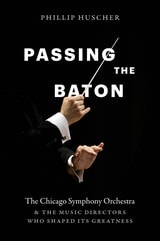
Passing the Baton
The Chicago Symphony Orchestra and the Music Directors Who Shaped Its GreatnessPhillip Huscher
University of Chicago Press, 2026
The untold story of how the Chicago Symphony Orchestra forged its place among the world’s foremost performing arts institutions through 135 years of change.
The Chicago Symphony Orchestra boasts a tradition and staying power that few cultural institutions can rival—a legacy that is tested each time one music director passes the conductor’s baton to another. In this first narrative account of the orchestra’s 135-year history, music critic and historian Phillip Huscher delivers a passionate description of how an upstart ensemble rose to international prominence and established itself as the premier symphony orchestra in the United States.
With a scholar’s care for detail and a novelist’s attention to drama, Huscher invites us into the tangled machinations behind the success or failure of each chapter in the orchestra’s storied past. We see how legendary directors such as Fritz Reiner, Sir Georg Solti, and Riccardo Muti carried the orchestra to new heights of technical perfection and sonic brilliance, but also how others provoked public outcry, caved to insider hostility, or fell to cruel press. The result is a vivid portrait of an orchestra fighting to sustain its identity amid the constant contest between past and present, supporters and critics, and artistic and financial vision.
Woven into this saga are personal stories drawn from newly uncovered documents and interviews with players, conductors, and policymakers about the burden of inheritance, the price of ambition, and the yearning to forge a legacy. Taken together, this is a tale about the power of music—how it can help us navigate our lives and leave a lasting impact on the world around us.
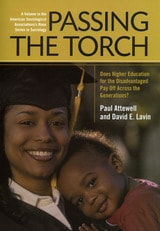
Passing the Torch
Does Higher Education for the Disadvantaged Pay Off Across the Generations?Paul Attewell
Russell Sage Foundation, 2007
The steady expansion of college enrollment rates over the last generation has been heralded as a major step toward reducing chronic economic disparities. But many of the policies that broadened access to higher education—including affirmative action, open admissions, and need-based financial aid—have come under attack in recent years by critics alleging that schools are admitting unqualified students who are unlikely to benefit from a college education. In Passing the Torch, Paul Attewell, David Lavin, Thurston Domina, and Tania Levey follow students admitted under the City University of New York’s “open admissions” policy, tracking its effects on them and their children, to find out whether widening college access can accelerate social mobility across generations.
Unlike previous research into the benefits of higher education, Passing the Torch follows the educational achievements of three generations over thirty years. The book focuses on a cohort of women who entered CUNY between 1970 and 1972, when the university began accepting all graduates of New York City high schools and increasing its representation of poor and minority students. The authors survey these women in order to identify how the opportunity to pursue higher education affected not only their long-term educational attainments and family well-being, but also how it affected their children’s educational achievements. Comparing the record of the CUNY alumnae to peers nationwide, the authors find that when women from underprivileged backgrounds go to college, their children are more likely to succeed in school and earn college degrees themselves. Mothers with a college degree are more likely to expect their children to go to college, to have extensive discussions with their children, and to be involved in their children’s schools. All of these parenting behaviors appear to foster higher test scores and college enrollment rates among their children. In addition, college-educated women are more likely to raise their children in stable two-parent households and to earn higher incomes; both factors have been demonstrated to increase children’s educational success.
The evidence marshaled in this important book reaffirms the American ideal of upward mobility through education. As the first study to indicate that increasing access to college among today’s disadvantaged students can reduce educational gaps in the next generation, Passing the Torch makes a powerful argument in favor of college for all.
Passing the Torch
Planning for the Next Generation of Leaders in Public ServiceKarl Besel
University of Arkansas Press, 2016
Public-service executives, both elected and appointed within the public and nonprofit sectors, are retiring at record levels, and the number of Americans reaching age sixty-five annually will continue to rise over the next decade and is expected to surpass four million in 2020. Finding qualified, motivated leaders to fill vital public-service positions will challenge the public and nonprofit sectors.
Unfortunately, recent studies show that few proactive steps are being taken by public-service organizations to plan for the next generation. Passing the Torch: Planning for the Next Generation of Public-Service Leaders provides an outline for those who will be facing and managing these looming changes.
In this valuable guide, the factors that influence selection of a career in public service are explored through the authors’ years of experience as leaders in public-service organizations and through interviews with other public-service professionals. Passing the Torch will be essential for leaders of nonprofit organizations, university faculty, researchers in the field of nonprofit management, and students in nonprofit management courses.
Passing
Two Publics in a Mexican Border CityRihan Yeh
University of Chicago Press, 2017
Out of the nitty-gritty of quotidian talk and interaction in Tijuana, Yeh captures the dynamics of desire and denial that permeate public spheres in our age of transnational crossings and fortified borders. Original and accessible, Passing is a timely work in light of current fierce debates over immigration, Latin American citizenship, and the US-Mexico border.
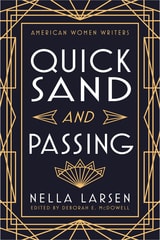
Quicksand and Passing
Larsen, Nella
Rutgers University Press, 1986
"Quicksand and Passing are novels I will never forget. They open up a whole world of experience and struggle that seemed to me, when I first read them years ago, absolutely absorbing, fascinating, and indispensable." —Alice Walker
"A tantalizing mix of moral fable and sensuous colorful narrative, exploring female sexuality and racial solidarity."—Women's Studies International Forum
Rutgers' all-time bestselling book, Nella Larsen's novels Quicksand (1928) and Passing (1929) document the historical realities of Harlem in the 1920s and shed a bright light on the social world of the black bourgeoisie. The novels' greatest appeal and achievement, however, is not sociological, but psychological. As noted in the editor's comprehensive introduction, Larsen takes the theme of psychic dualism, so popular in Harlem Renaissance fiction, to a higher and more complex level, displaying a sophisticated understanding and penetrating analysis of black female psychology.
Passing is now a major motion picture written, produced, and directed by Rebecca Hall. It premiered at Sundance in 2021 and is available on Netflix.
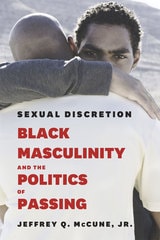
Sexual Discretion
Black Masculinity and the Politics of PassingJeffrey Q. McCune, Jr.
University of Chicago Press, 2014
In Sexual Discretion, Jeffrey Q. McCune Jr. provides the first in-depth examination of how the social expectations of black masculinity intersect and complicate expressions of same-sex affection and desire. Within these underground DL communities, men aren’t as highly policed—and thus are able to maintain their public roles as “properly masculine.” McCune draws from sources that range from R&B singer R. Kelly’s epic hip-hopera series Trapped in the Closet to Oprah's high-profile exposé on DL subculture; and from E. Lynn Harris’s contemporary sexual passing novels to McCune’s own interviews and ethnography in nightclubs and online chat rooms. Sexual Discretion details the causes, pressures, and negotiations driving men who rarely disclose their intimate secrets.
The Passing of an Illusion
The Idea of Communism in the Twentieth CenturyFrançois Furet
University of Chicago Press, 1999
"This may well be the most illuminating study ever devoted to the question of appeal exerted not only by Communism but also by the Nazi and other fascist varieties of totalitarianism in this century."—Hilton Kramer, New Criterion
"A subtle, nuanced but gripping study of the most pervasive and destructive illusion in the 20th century." —Kirkus Reviews, starred review
"The Passing of an Illusion . . . is both a profound work of intellectual history that takes its place alongside other great studies of the leftist heresy . . . and a relentless diagnosis of the self-subversive risks that are inherent in democratic regimes. "—Roger Kaplan, Washington Times
" A remarkable book. . . . Stimulating and challenging. . . . A man widely read in several languages, Furet clearly knew his way around 20th-century Europe, even unto the dark alleys that figure on no existing map. "—Mark Falcoff, Commentary
"A history of ideas, this work is not for the faint of heart, yet those who challenge it will discover a signal contribution to the literature of Communism."—Booklist
"Imperious and stunningly confident, grand in conception and expansive in manner, packed with fascinating detail and often incisive judgements."—John Dunn, Times Higher Education Supplement
"The Passing of an Illusion is brilliant, and one would be hard pressed to find better writing of history than the first chapter, which traces the roots of modern political thinking back to the nineteenth century."—J. Arch Getty, Atlantic Monthly
"A brilliant and important book. . . . The publication of the American edition makes accessible to the general reader the most thought-provoking historical assessment of communism in Europe to appear since its collapse."—Jeffrey Herf, Wall Street Journal
François Furet (1927-1997), educator and author, was a Chevalier of the Legion of Honor and was elected, in 1997, to become one of the "Forty Immortals" of the Académie Française, the highest intellectual honor in France. His many books include Interpreting the French Revolution, Marx and the French Revolution, and Revolutionary France. Deborah Furet, his widow, collaborated with him on many projects.
The Problem of Passing
Sandra Harvey
Duke University Press, 2026

Theatre in Passing
A Moscow Photo-Diary(E)lena K. Siemens
Intellect Books, 2011
Theatre in Passing explores spaces of performance in contemporary Moscow. Inspired by French philosopher Michel de Certeau’s model of a "second, poetic geography" in which the walker—the everyday practitioner—invents the space observed by the voyeur, this book takes the reader on a tour of spaces of performance in contemporary Moscow. Through text and photography, the city’s "theatrical geography" is uncovered, from the Bolshoi Theater in Theater Square to hidden gems like the recently restored Kuskovo estate. With additional sections on street theater and other public gatherings, Theatre in Passing is a must-read book for anyone curious about the theatrical architecture and geography of Russia’s capital.