Results by title
179 books match the query 'Past' and 16 start with a
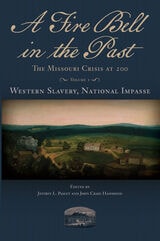
A Fire Bell in the Past
The Missouri Crisis at 200, Volume I, Western Slavery, National ImpasseJeffrey L. Pasley
University of Missouri Press, 2021
Drawing on the participants in two landmark conferences held at the University of Missouri and the City University of New York, this first of two volumes finds myriad new perspectives on the Missouri Crisis. Celebrating Missouri’s bicentennial the scholarly way, with fresh research and unsparing analysis, this eloquent collection of essays from distinguished historians gives the epochal struggle over Missouri statehood its due as a major turning point in American history.
Contributors include the editors, Christa Dierksheide, David N. Gellman, Sarah L. H. Gronningsater, Robert Lee, Donald Ratcliffe, Andrew Shankman, Anne Twitty, John R. Van Atta, and David Waldstreicher.
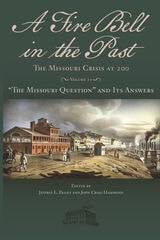
A Fire Bell in the Past
The Missouri Crisis at 200, Volume II: “The Missouri Question” and Its AnswersJeffrey L. Pasley
University of Missouri Press, 2021
Drawn from the of participants in two landmark conferences held at the University of Missouri and the City University of New York, those who contributed original essays to this second of two volumes—a group that includes young scholars and foremost authorities in the field—answer the Missouri “Question,” in bold fashion, challenging assumptions both old and new in the long historiography by approaching the event on its own terms, rather than as the inevitable sequel of the flawed founding of the republic or a prequel to its near destruction.
This second volume of A Fire Bell in the Past features a foreword by Daive Dunkley. Contributors include Dianne Mutti Burke, Christopher Childers, Edward P. Green, Zachary Dowdle, David J. Gary, Peter Kastor, Miriam Liebman, Matthew Mason, Kate Masur, Mike McManus, Richard Newman, and Nicholas Wood.
A Guilted Age
Apologies for the PastAshraf A. H. Rushdy
Temple University Press, 2015
Public apologies have become increasingly common scenes and representative moments in what appears to be a global process of forgiveness. The apology-forgiveness dynamic is familiar to all of us, but what do these rituals of atonement mean when they are applied to political and historical events?
In his timely, topical, and incisive book A Guilted Age, Ashraf Rushdy argues that the proliferation of apologies by politicians, nations, and churches for past events—such as American slavery or the Holocaust—can be understood as a historical phenomenon. In our post–World War II world, Rushdy claims that we live in a “guilted age.”
A Guilted Age identifies the two major forms of apologies—political and historical—and Rushdy defines the dynamics and strategies of each, showing how the evolution of one led to the other. In doing so, he reveals what apology and forgiveness do to the past events they respectively apologize for and forgive—and what happens when they fail.
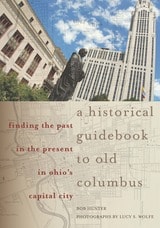
A Historical Guidebook to Old Columbus
Finding the Past in the Present in Ohio’s Capital CityBob Hunter
Ohio University Press, 2012
Ever look at a modern skyscraper or a vacant lot and wonder what was there before? Or maybe you have passed an old house and been curious about who lived there long ago. This richly illustrated new book celebrates Columbus, Ohio’s, two-hundred-year history and supplies intriguing stories about the city’s buildings and celebrated citizens, stopping at individual addresses, street corners, parks, and riverbanks where history was made. As Columbus celebrates its bicentennial in 2012, a guide to local history is very relevant.
Like Columbus itself, the city’s history is underrated. Some events are of national importance; no one would deny that Abraham Lincoln’s funeral procession down High Street was a historical highlight. But the authors have also included a wealth of social and entertainment history from Columbus’s colorful history as state capital and destination for musicians, artists, and sports teams.
The book is divided into seventeen chapters, each representing a section of the city, including Statehouse Square, German Village, and Franklinton, the city’s original settlement in 1797. Each chapter opens with an entertaining story that precedes the site listings. Sites are clearly numbered on maps in each section to make it easy for readers to visit the places that pique their interest. Many rare and historic photos are reproduced along with stunning contemporary images that offer insight into the ways Columbus has changed over the years.
A Historical Guidebook to Old Columbus invites Columbus’s families to rediscover their city with a treasure trove of stories from its past and suggests to visitors and new residents many interesting places that they might not otherwise find. This new book is certain to amuse and inform for years to come.
Adapting the Past to Reimagine Possible Futures
Celebrating and Critiquing WAC at 50Megan J. Kelly
University Press of Colorado, 2024
After the Program Era
The Past, Present, and Future of Creative Writing in the UniversityLoren Glass
University of Iowa Press, 2016
After the Program Era explores the consequences and implications, as well as the lacunae and liabilities, of McGurl’s foundational intervention. Glass focuses only on American fiction and the traditional MFA program, and this collection aims to expand and examine its insights in terms of other genres and sites. Postwar poetry, in particular, has until now been neglected as a product of the Program Era, even though it is, arguably, a “purer” example, since poets now depend almost entirely on the patronage of the university. Similarly, this collection looks beyond the traditional MFA writing program to explore the pre-history of writing programs in American universities, as well as alternatives to the traditionally structured program that have emerged along the way.
Taken together, the essays in After the Program Era seek to answer and explore many of these questions and continue the conversations McGurl only began.
CONTRIBUTORS
Seth Abramson, Greg Barnhisel, Eric Bennett, Matthew Blackwell, Kelly Budruweit, Mike Chasar, Simon During, Donal Harris, Michael Hill, Benjamin Kirbach, Sean McCann, Mark McGurl, Marija Rieff, Juliana Spahr, Stephen Voyce, Stephanie Young
Alaska at 50
The Past, Present, and Future of Alaska StatehoodEdited by Gregory W. Kimura
University of Alaska Press, 2009
In 2009 Alaska celebrates its fiftieth anniversary of U.S. statehood. To commemorate that milestone, Alaska at 50 brings together some of today’s most noteworthy and recognizable writers and researchers to address the past, present, and future of Alaska. Divided into three overarching sections—art, culture, and humanities; law, economy, and politics; and environment, people, and place—Alaska at 50 is written in highly accessible prose. Illustrations and photographs of significant artefacts of Alaska history enliven the text. Each contributor brings a strong voice and prescription for the next fifty years, and the resulting work presents Alaskans and the nation with an overview of Alaska statehood and ideas for future development.
Amending the Past
Europe's Holocaust Commissions and the Right to HistoryAlexander Karn
University of Wisconsin Press, 2017
Alexander Karn analyzes more than a dozen Holocaust commissions—in Germany, Switzerland, France, Poland, Austria, Latvia, Lithuania, and elsewhere—in a comparative framework, situating each in the context of past and present politics, to evaluate their potential for promoting justice and their capacity for bringing the perspectives of rival groups more closely together. Karn also evaluates the media coverage these commissions received and probes their public reception from multiple angles.
Arguing that historical commissions have been underused as a tool for conflict management, Karn develops a program for historical mediation and moral reparation that can deepen democratic commitment and strengthen human rights in both transitional regimes and existing liberal states.
American Denominational History
Perspectives on the Past, Prospects for the FutureEdited by Keith Harper
University of Alabama Press, 2008
Fruitful questions that are posed by the positions and experiences of the various groups are carefully examined. American Denominational History points the way for the next decade of scholarly effort.
American Public Administration
Past, Present, FutureFrederick C. Mosher
University of Alabama Press, 1975
The essays raise such issues as the education of civil servants, the changes necessitated by crises, the growth of social sciences in governmental concerns, and primarily, the role of public administrators in America. Each author is a distinguished expert in his own right, and each essay can stand alone as a remarkable insight into the changing world of public administration within American society. Frederick Mosher’s expertise and supervision shapes this work into a remarkable and holistic perspective on public administration over time.
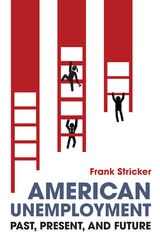
American Unemployment
Past, Present, and FutureFrank Stricker
University of Illinois Press, 2020
- Workers do not normally choose to be unemployed.
- In our current system, persistent unemployment is not an aberration. It is much more common than full employment, and the outcome of elite policy choices.
- Labor surpluses propped up by flawed unemployment numbers have helped to keep real wages stagnant for more than forty years.
- Prior to the New Deal and the era of big government, laissez-faire policies repeatedly led to depressions with heavy, even catastrophic, job losses.
- Undercounting the unemployed sabotages the creation of government job programs that can lead to more high-paying jobs and full employment.
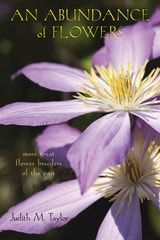
An Abundance of Flowers
More Great Flower Breeders of the PastJudith M. Taylor
Ohio University Press, 2018
Walk into any nursery, florist, or supermarket, and you’ll encounter displays of dozens of gorgeous flowers, from chrysanthemums to orchids. At one time these fanciful blooms were the rare trophies of the rich and influential—even the carnation, today thought of as one of the humblest cut flowers. Every blossom we take for granted now is the product of painstaking and imaginative planning, breeding, horticultural ingenuity, and sometimes chance. The personalities of the breeders, from an Indiana farmer to Admiral Lord Gambier’s gardener, were as various and compelling as the beauty they conjured from skilled hybridization.
In Visions of Loveliness: Great Flower Breeders of the Past, Judith Taylor wrote engagingly about the vivid history and characters behind eighteen types of popular flowers. In this companion volume she uncovers information about another eight familiar flowers: poinsettias, chrysanthemums, gladioli, pansies, carnations, water lilies, clematis, and penstemons.
Taylor has tapped into an enormous trove of stories about extraordinary people with vision and skill who added to our enjoyment piece by piece, starting about 150 years ago. This beautifully illustrated book will please flower enthusiasts, gardeners, and history buffs alike.
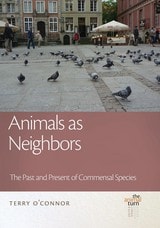
Animals as Neighbors
The Past and Present of Commensal AnimalsTerry O'Connor
Michigan State University Press, 2013
In this fascinating book, Terry O’Connor explores a distinction that is deeply ingrained in much of the language that we use in zoology, human-animal studies, and archaeology—the difference between wild and domestic. For thousands of years, humans have categorized animals in simple terms, often according to the degree of control that we have over them, and have tended to see the long story of human-animal relations as one of increasing control and management for human benefit. And yet, around the world, species have adapted to our homes, our towns, and our artificial landscapes, finding ways to gain benefit from our activities and so becoming an important part of our everyday lives. These commensal animals remind us that other species are not passive elements in the world around us but intelligent and adaptable creatures. Animals as Neighbors shows how a blend of adaptation and opportunism has enabled many species to benefit from our often destructive footprint on the world. O’Connor investigates the history of this relationship, working back through archaeological records. By requiring us to take a multifaceted view of human-animal relations, commensal animals encourage a more nuanced understanding of those relations, both today and throughout the prehistory of our species.
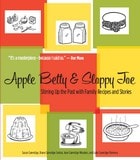
Apple Betty and Sloppy Joe
Stirring Up the Past with Family Recipes and StoriesSusan Sanvidge
Wisconsin Historical Society Press, 2007
Compiled by four sisters and based on their recollections of their childhood in Oshkosh, Wisconsin, Apple Betty & Sloppy Joe captures the glow of memories formed while growing up in a midwestern kitchen. From Lemon Meringue Pie to Tomato Soup Cake, from Mom's Chicken Pie to Grandma Noffke's Sliced Cucumber Pickles, this charming book features hundreds of recipes (some classic, some quirky), plus dozens of food and cooking-related anecdotes, memories, humorous asides, and period photos that transport readers back to Mom's or Grandma's kitchen, circa 1950.
The Sanvidges share a legacy of beloved dishes and food memories that resonate not just for their family, but for readers everywhere who grew up in a small midwestern town - or wish they had. Nostalgic, funny, and warmhearted, Apple Betty & Sloppy Joe celebrates the ways food and food memories link us to our past, and to each other. A delightful gift for food lovers of any generation.
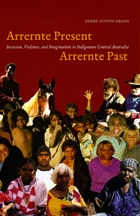
Arrernte Present, Arrernte Past
Invasion, Violence, and Imagination in Indigenous Central AustraliaDiane J. Austin-Broos
University of Chicago Press, 2008
Employing ethnographic and archival research, Diane Austin-Broos traces the history of the Arrernte as they have transitioned from a society of hunter-gatherers to members of the Hermannsburg Mission community to their present, marginalized position in the modern Australian economy. While she concludes that these wrenching structural shifts led to the violence that now marks Arrernte communities, she also brings to light the powerful acts of imagination that have sustained a continuing sense of Arrernte identity.
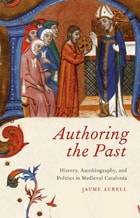
Authoring the Past
History, Autobiography, and Politics in Medieval CataloniaJaume Aurell
University of Chicago Press, 2012
Authoring the Past surveys medieval Catalan historiography, shedding light on the emergence and evolution of historical writing and autobiography in the Middle Ages, on questions of authority and authorship, and on the links between history and politics during the period. Jaume Aurell examines texts from the late twelfth to the late fourteenth century—including the Latin Gesta comitum Barcinonensium and four texts in medieval Catalan: James I’s Llibre dels fets, the Crònica of Bernat Desclot, the Crònica of Ramon Muntaner, and the Crònica of Peter the Ceremonious—and outlines the different motivations for the writing of each.
For Aurell, these chronicles are not mere archaeological artifacts but rather documents that speak to their writers’ specific contemporary social and political purposes. He argues that these Catalonian counts and Aragonese kings were attempting to use their role as authors to legitimize their monarchical status, their growing political and economic power, and their aggressive expansionist policies in the Mediterranean. By analyzing these texts alongside one another, Aurell demonstrates the shifting contexts in which chronicles were conceived, written, and read throughout the Middle Ages.
The first study of its kind to make medieval Catalonian writings available to English-speaking audiences, Authoring the Past will be of interest to scholars of history and comparative literature, students of Hispanic and Romance medieval studies, and medievalists who study the chronicle tradition in other languages.