Results by title

9 books match the query 'Pastoral Resources'
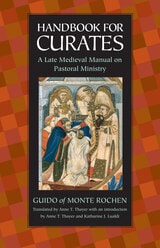
cover of Handbook for Curates: A Late Medieval Manual on Pastoral Ministry

Handbook for Curates

A Late Medieval Manual on Pastoral Ministry

Catholic University of America Press, 2011
Guido of Monte Rochen's Handbook for Curates became the most popular pastoral manual at the close of the Middle Ages as thousands of copies were printed in Europe.
[more]
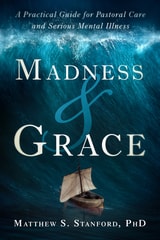
cover of Madness and Grace: A Practical Guide for Pastoral Care and Serious Mental Illness

Madness and Grace

A Practical Guide for Pastoral Care and Serious Mental Illness

Matthew Stanford

Templeton Press, 2021

Research tells us that when most people suffer from a mental health crisis, the first person they turn to for help is not a physician, a psychiatrist, or a social worker, but a pastor, a priest, or a minister. In other words, a leader in their church. Unfortunately, many church leaders are not trained to recognize mental illness and don’t know when to refer someone to a mental health professional. The consequence—unintended yet tragic—is continued and unnecessary suffering.

Madness and Grace is a comprehensive guide for church ministry to alleviate this situation. Written by Dr. Matthew Stanford, the book is carefully constructed to help build competency in detecting a wide spectrum of mental disorders, such as knowing when a person is contemplating suicide based on telltale patterns of speech. It also explodes common discriminatory myths that stigmatize people with mental illness, such as the myth that they are more prone to violence than others.

Dr. Stanford has treated clients throughout his career who were afflicted with all manner of mental disorders. In Madness and Grace, he takes the full extent of his experience and makes it accessible and actionable for the lay reader. He begins by explaining what constitutes a mental illness and how these disorders are classified according to science. He next teaches how to notice the presence of a mental illness by listening carefully to phraseology, observing behavior, and asking discerning questions. He goes on to discuss methods of treatment, common religious concerns about mental health, and ways church communities can support people on the road to recovery.

As a Christian, Dr. Stanford wants his fellow believers to know that acknowledging and seeking help for a mental illness is not a sign of weak faith. That’s why, in addition to sharing his medical expertise with church leaders, he commends pertinent biblical passages that underscore God’s concern for our mental wellbeing. These passages provide strength and comfort as complements to clinically-derived treatment and are essential to Dr. Stanford’s approach. “When working with those in severe psychological distress,” he writes, “compassion and grace are always the first line of pastoral care.”

[more]
cover of Piercing the Clouds: Lectio Divina and the Preparation for Ministry

Piercing the Clouds

Lectio Divina and the Preparation for Ministry

Kevin Zilverberg

Saint Paul Seminary Press, 2021
This book’s six essays pertain to the “piercing of the clouds,” or the experience of heavenly mysteries, which characterizes lectio divina practiced well. Moreover, these peer-reviewed essays give special attention to the practice of lectio divina during preparation for ministry, especially the ministry of Catholic priests. That being said, any current or prospective Bible-reader may profit from this book; most of its content applies to Catholic seminarians and literate Christians alike. Here follow brief descriptions of each chapter. Laurence Kriegshauser, OSB, begins the book with a chapter on the Western monastic tradition of lectio divina and seminary formation, including an historical survey of lectio divina, a description of its characteristics, and reflections on its practice in seminaries. Michael Magee reflects upon the implications of exegetical method for lectio divina, with a comparison and critique of three commentaries’ treatments of John 6. Konrad Schaefer, OSB, advocates for fostering growth and formation through lectio divina, beginning his chapter with a description of its theological underpinnings and then taking up some practical considerations for students. Marcin Kowalski focuses on meditatio of lectio divina following upon exegesis-informed lectio, with an examination of Romans 7:7–25 as a test case. Daniel Keating examines oratio and contemplatio (and actio) of lectio divina, giving attention to theologians from twelfth-century Carthusian Prior Guigo II to Pope Benedict XVI. Anthony Giambrone, OP, contributes the final essay, on searching the Scriptures and the mystery of preaching. For him, exquisitio (intellectual engagement) leads to supplicatio (prayerful supplication), which culminates in praedicatio (preaching).
[more]
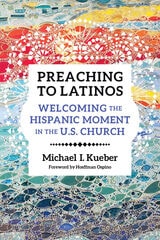
cover of Preaching to Latinos: Welcoming the Hispanic Moment in the U.S. Church

Preaching to Latinos

Welcoming the Hispanic Moment in the U.S. Church

Michael Kueber

Catholic University of America Press, 2022
There is a wide and growing gap in the Catholic Church in the United States between the clergy, who are mostly of European descent, and the large percentages of Catholics who identify as Latinos. While the US Church has made a concerted effort to build Hispanic ministries, many clergy and lay ministers are still ill-equipped to understand the cultural background of their parishioners, especially the large numbers who are foreign born. Because of this disconnect, the Church risks missing "the Hispanic Moment" in the US Church, in which the faith and traditions of these newest waves of US immigration could not just exist in parallel to English-language congregations, but enrich and enliven the faith of the whole community while passing on the faith to subsequent generations. Learning Spanish--while helpful--is not enough. There are intercultural competencies that can only be developed through practice, but it also helps already-busy clergy to have a concise guide. In addition to knowing the scholarly literature on cross-cultural preaching and Hispanic culture, Father Michael Kueber has twenty years of experience serving first generation Hispanic immigrants and their second generation children. In Preaching to Latinos, Kueber provides the readers with best practices for preaching to and leading their churches. As a member of an ecumenical community, he is able to speak to members of all Christian denominations.
[more]
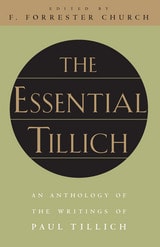
cover of The Essential Tillich

The Essential Tillich

Paul Tillich

University of Chicago Press, 1999

An essential collection of the best work by renowned Christian theologian Paul Tillich
 
In his lifetime, Paul Tillich became that rarest of things: a famous theologian. Known for marrying an approachable personal and intellectual manner with rigorous religious thought and analysis, Tillich was as influential as any writer on religion at mid-century, listened to not just by parishioners and students but by political leaders, intellectuals, artists, and scientists as well. 

This volume collects Tillich's best and most important work. Editor F. Forrester Church has structured the book around eight key areas of Tillich's thought, titled: Ultimate Concern; Symbols of Faith; The Protestant Principle; Addressing the Situation; Love, Power, and Justice; The Courage to Be; The Future of Religions; and Living on the Boundary. Through them we get a clear picture of the work of a man whom Church describes as “a man of rare genius and perspecuity, a modern man whose heart was in Jerusalem, whose spirit was with the ancient Greeks, and whose soul was committed to a better future.”
[more]
cover of The Pastoral Theology of the Early Church

The Pastoral Theology of the Early Church

Andrew J. Summerson

Catholic University of America Press, 2026
The experience of the pastoral leaders of the Early Church is wide and deep. In loving obedience to Christ’s command to make disciples, they expand into geographical locations both urban and rural, across linguistic and social boundaries. Their views are refined by the fires of martyrdom, purified by asceticism, and perfected by the pressures that the care of souls lays upon them. Their preaching, teaching, and witness is hard won by these experiences. To fail to engage with them impoverishes the Christian imagination that aims to answer the “how” and “why” of pastoral care. The Pastoral Theology of the Early Church proposes a selection of these early guides in pastoral theology for Christian leaders, both present and future. The selection of Greek, Latin, and Syriac authors from the first millennium treats themes as broad as Christian Initiation, the Church’s relationship to public officials, and the care owed to the families of infants who have died. The Pastoral Theology of the Early Church will aid students preparing for ministry and as well as seasoned pastors and pastoral ministers by offering a close look at the early Church’s perennial wisdom in action across differing pastoral contexts. Scholars and interested readers of the early Church will benefit from the surprising, varied situations and themes these leaders tackled head on for the sake of the Gospel.
[more]
cover of The Revelation of Your Words: The New Evangelization and the Role of the Seminary Professor of Sacred Scripture

The Revelation of Your Words

The New Evangelization and the Role of the Seminary Professor of Sacred Scripture

Kevin Zilverberg

Saint Paul Seminary Press, 2021
The Revelation of Your Words, a collection of essays, treats the role of the seminary professor of sacred Scripture within the context of the New Evangelization. Some of the essays concern principally the imparting of knowledge and best practices to accomplish this; others concern the fostering of delight in the sacred page and spiritual encounter with God. Although these essays are Catholic, written within a Catholic theological framework and with Catholic seminaries in mind, many of their conclusions can be applied to non-Catholic environments. This book provides insights that, even beyond the seminary, will benefit teachers of the Bible, regardless of their denomination and level of instruction. Readers will encounter the following authors and topics. Peter S. Williamson writes on the implications of the New Evangelization for priestly ministry and for teaching Scripture. Steven C. Smith makes a contribution concerning the role of the seminary professor of sacred Scripture in forming priests. Michael Magee treats the relevance of Johannine irony to the New Evangelization. Stephen Ryan’s chapter takes up the topic of Old Testament Wisdom literature and formation for a New Evangelization. Juana L. Manzo seeks a path to integrate modern and ancient interpretations into the seminary classroom. Kelly Anderson takes up the father of Proverbs 1–9 as a model of spiritual fatherhood for seminary professors. Scott Carl proposes a spiritual reading of sacred Scripture in the twenty-first century. Michael Magee, in his second contribution, writes on the joy of discovery in the Fourth Gospel. James Keating reflects upon the exegete as seminary formator. Finally, André Villeneuve advocates for the teaching of Biblical Hebrew in Catholic seminaries and academic institutions.
[more]
cover of The Spiritual Formation of Seminarians: Learning to Live in Intimate and Unceasing Union with God

The Spiritual Formation of Seminarians

Learning to Live in Intimate and Unceasing Union with God

James Keating

Catholic University of America Press, 2025
In this book, Deacon James Keating provides an opportunity for one spiritual director to introduce his mind to the minds of other directors with the hope that his ideas may season their own already developed method of direction. The book does not attend to all the possible realities a director may encounter within his or her training or within the daily execution of this ministry. The author wishes to share his approach to directing seminarians by reflecting upon themes and experiences which regularly appear within direction sessions. Spiritual direction certainly has some universal components to it. All directors want their directees to internalize a habit of prayer, to choose a life of remaining with God, to suffer the vulnerability necessary to know divine love and to then embody that love as heralds of the Gospel. But each director approaches his or her directees from within their own skin, from within a personality that is unique, and by way of a formation that reflects the unique attractions of each director and his or her own sufferings, failures, and fidelities. These unique embodiments no one writer can know or capture in a book. And so, this book simply begins a conversation that the author invites other directors to enter and add to according to their own insights. The spiritual life of those in seminary occupies the integrating center of a projected life of priestly ministry. Time needed to secure an interior life of prayer is one of the key reasons the Church demands years of formation before the celibate state is entered. Such a state in life is entered as a testimony to the reality that God lives and loves. In light of such love a man enters seminary to discern if he desires to surrender his whole life in response to God sharing His own. To live as a cleric without a vital interior life leaves a man in a state of meaninglessness. Instilling the virtue of prayer during priestly formation can help assure that celibate priesthood retains its inspiration and meaning throughout the life of a priest. Spiritual directors minister to assist a future priest to secure a lifetime habit of prayer so as to secure his commitment to communicate with the living God.
[more]
cover of Understanding the Religious Priesthood: History, Controversy, Theology

Understanding the Religious Priesthood

History, Controversy, Theology

Christian, OSB Raab

Catholic University of America Press, 2020

Most contemporary theologies of Holy Orders consider priesthood mainly in its diocesan context and most contemporary theologies of religious life do not consider how ordained ministry functions when it is internal rather than external to religious life. Understanding the Religious Priesthood provides a history and theology of religious priesthood that contributes to our understanding of this vocation’s identity and mission. It uncovers what religious priesthood shares with diocesan priesthood and non-ordained religious life and what makes it different from both those other vocations. Christian Raab begins by tracing the history of religious priesthood from its origins in the early Church to the eve of the Second Vatican Council. He demonstrates that religious priests often faced questions about how to reconcile their two callings, but that they also provided answers in their theologies and spiritualities of priesthood and religious life. Meanwhile, they made key contributions to the Church’s life and mission. Raab then investigates the teachings of the Second Vatican Council on priesthood and religious life. Observing that the Council presented priesthood according to a diocesan typology and presented religious life without sacerdotal associations, he argues that the lack of imagery of religious priesthood contributed to a post-conciliar vocational identity crisis among religious priests. He then seeks to remedy this lacuna by appealing to the biblical images for religious priesthood Hans Urs von Balthasar offered in his theology of vocations. Raab argues that Balthasar’s imagery is a promising way forward for understanding the identity and mission of religious priesthood. In a final part, Raab provides a substantial theological articulation of religious priesthood which illuminates its liturgical signification, ecclesial mediation and mission, and ministerial identity. Here he draws not only from Balthasar but also from Pope John Paul II, Yves Congar, Jean-Marie Tillard, Brian Daley, and Guy Mansini to construct his profile.
[more]