Results by title
9 books match the query 'Patents'
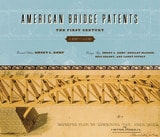
AMERICAN BRIDGE PATENTS
"THE FIRST CENTURY, 1790-1890"EMORY L. KEMP
West Virginia University Press, 2005
American Bridge Patents: The First Century (1790-1890), thoroughly illustrated with dozens of photographs and reproductions, presents the findings of a two-decade long study of several thousand pages of patent documents collected from the U.S. Patent Office. The essays in this volume offer readers tremendous insight into the creativity that characterized the evolution of bridge patents during this important and formative period of American engineering history. Of particular interest to the authors is the great variety of innovative and unusual designs that were accommodated by the then ambiguous patent law. Alongside these case studies, authors also address the Patent Office itself, whose processes regarding permissions were reformed in 1836, linking the evolution of patent law to the technology it managed.

Expanding Intellectual Property
Copyrights and Patents in 20th Century Europe and beyondAugusta Dimou
Central European University Press, 2017
Intellectual Property
Trade, Competition, and Sustainable Development The World Trade Forum, Volume 3Thomas Cottier and Petros C. Mavroidis, Editors
University of Michigan Press, 2003
Largely a victory for OECD countries, the present state of intellectual property rights has important implications for developing countries. The incorporation of intellectual property rights into the WTO system will eventually change the relationship of trade, competition, and intellectual property. It will equally have to assist in providing equitable sharing of benefits in the use of plant genetic resources. All of these issues are essential for the revision of exclusions from patenting in TRIPs. This volume offers insights into how this difficult task could and should be approached in a balanced manner and will be essential reading for economists and trade and intellectual property lawyers interested in the subject. Moreover, the volume will be relevant to agricultural economists as it addresses complex problems in the interstices of trade, intellectual property, plant genetic resources, and sustainable development.
Thomas Cottier is Professor of European and International Economic Law, University of Bern, and Managing Director, World Trade Institute, University of Bern.
Petros C. Mavroidis is Professor of Law, University of Neuchâtel. He formerly worked in the Legal Affairs Division of the World Trade Organization.
Marion Panizzon is Research Fellow, University of Bern.
Simon Lacey is Research Fellow, University of Bern.
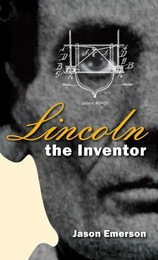
Lincoln the Inventor
Jason Emerson
Southern Illinois University Press, 2009
In Lincoln the Inventor, Jason Emerson offers the first treatment of Abraham Lincoln’s invention of a device to buoy vessels over shoals and its subsequent patent as more than mere historical footnote.
In this book, Emerson shows how, when, where, and why Lincoln created his invention; how his penchant for inventions and inventiveness was part of his larger political belief in internal improvements and free labor principles; how his interest in the topic led him to try his hand at scholarly lecturing; and how Lincoln, as president, encouraged and even contributed to the creation of new weapons for the Union during the Civil War.
During his extensive research, Emerson also uncovered previously unknown correspondence between Lincoln’s son, Robert, and his presidential secretary, John Nicolay, which revealed the existence of a previously unknown draft of Abraham Lincoln’s lecture “Discoveries and Inventions.” Emerson not only examines the creation, delivery, and legacy of this lecture, but also reveals for the first time how Robert Lincoln owned this unknown version, how he lost and later tried to find it, the indifference with which Robert and Nicolay both held the lecture, and their decision to give it as little attention as possible when publishing President Lincoln’s collected works.
The story of Lincoln’s invention extends beyond a boat journey, the whittling of some wood, and a trip to the Patent Office; the invention had ramifications for Lincoln’s life from the day his flatboat got stuck in 1831 until the day he died in 1865. Besides giving a complete examination of this important—and little known—aspect of Lincoln’s life, Lincoln the Inventor delves into the ramifications of Lincoln’s intellectual curiosity and inventiveness, both as a civilian and as president, and considers how it allows a fresh insight into his overall character and contributed in no small way to his greatness. Lincoln the Inventor is a fresh contribution to the field of Lincoln studies about a topic long neglected. By understanding Lincoln the inventor, we better understand Lincoln the man.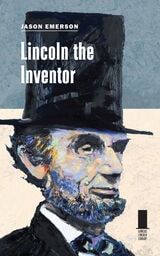
Lincoln the Inventor
Jason Emerson
Southern Illinois University Press, 2009
The book that inspired the popular Concise Lincoln Library series
In April 1831, on a flatboat grounded on the Rutledge milldam below the town of New Salem, Abraham Lincoln worked to pry the boat loose, directed the crew, and ran into the village to borrow an augur to bore a hole in the end hanging over the dam, causing the water to drain and the boat to float free. Seventeen years later, while traveling home from a round of political speeches, Lincoln witnessed another similar occurrence. For the rest of his journey, he considered how to construct a device to free stranded boats from shallow waters.
In this first thorough examination of Abraham Lincoln’s mechanical mind, Jason Emerson brings forth the complete story of Lincoln’s invention and patent as more than mere historical footnote. Emerson shows how, when, where, and why Lincoln developed his invention; how his penchant for inventions and innovation was part of his larger political belief in internal improvements and free labor principles; how his interest in the topic led him to try his hand at scholarly lecturing; and how Lincoln, as president, encouraged and even contributed to the creation of new weapons for the Union during the Civil War.
Lincoln the Inventor delves into the ramifications of Lincoln’s intellectual curiosity and inventiveness, both as a civilian and as president, and considers how they allow a fresh insight into his overall character and contributed in no small way to his greatness. By understanding Lincoln the inventor, we better understand Lincoln the man.
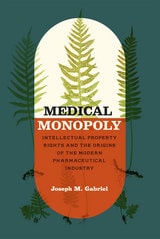
Medical Monopoly
Intellectual Property Rights and the Origins of the Modern Pharmaceutical IndustryJoseph M. Gabriel
University of Chicago Press, 2014
Drawing on a wealth of previously unused archival material, Medical Monopoly combines legal, medical, and business history to offer a sweeping new interpretation of the origins of the complex and often troubling relationship between the pharmaceutical industry and medical practice today. Joseph M. Gabriel provides the first detailed history of patent and trademark law as it relates to the nineteenth-century pharmaceutical industry as well as a unique interpretation of medical ethics, therapeutic reform, and the efforts to regulate the market in pharmaceuticals before World War I. His book will be of interest not only to historians of medicine and science and intellectual property scholars but also to anyone following contemporary debates about the pharmaceutical industry, the patenting of scientific discoveries, and the role of advertising in the marketplace.

Patent Politics
Life Forms, Markets, and the Public Interest in the United States and EuropeShobita Parthasarathy
University of Chicago Press, 2017
To demonstrate this, Parthasarathy takes readers through a particularly fierce and prolonged set of controversies over patents on life forms linked to important advances in biology and agriculture and potentially life-saving medicines. Comparing battles over patents on animals, human embryonic stem cells, human genes, and plants in the United States and Europe, she shows how political culture, ideology, and history shape patent system politics. Clashes over whose voices and which values matter in the patent system, as well as what counts as knowledge and whose expertise is important, look quite different in these two places. And through these debates, the United States and Europe are developing very different approaches to patent and innovation governance. Not just the first comprehensive look at the controversies swirling around biotechnology patents, Patent Politics is also the first in-depth analysis of the political underpinnings and implications of modern patent systems, and provides a timely analysis of how we can reform these systems around the world to maximize the public interest.
R&D, Patents and Productivity
Edited by Zvi Griliches
University of Chicago Press, 1984
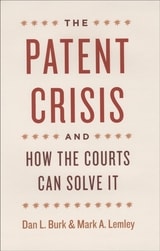
The Patent Crisis and How the Courts Can Solve It
Dan L. Burk and Mark A. Lemley
University of Chicago Press, 2009
Patent law is crucial to encourage technological innovation. But as the patent system currently stands, diverse industries from pharmaceuticals to software to semiconductors are all governed by the same rules even though they innovate very differently. The result is a crisis in the patent system, where patents calibrated to the needs of prescription drugs wreak havoc on information technologies and vice versa. According to Dan L. Burk and Mark A. Lemley in The Patent Crisis and How the Courts Can Solve It, courts should use the tools the patent system already gives them to treat patents in different industries differently. Industry tailoring is the only way to provide an appropriate level of incentive for each industry.
Burk and Lemley illustrate the barriers to innovation created by the catch-all standards in the current system. Legal tools already present in the patent statute, they contend, offer a solution—courts can tailor patent law, through interpretations and applications, to suit the needs of various types of businesses. The Patent Crisis and How the Courts Can Solve It will be essential reading for those seeking to understand the nexus of economics, business, and law in the twenty-first century.