Results by title
11 books match the query 'Paths'

Green, Fair, and Prosperous
Paths to Sustainable IowaCharles Connerly
University of Iowa Press, 2020
At the center of what was once the tallgrass prairie, Iowa has stood out for clearing the land and becoming one of the most productive agricultural states in the nation. But its success is challenged by multiple issues including but not limited to a decline in union representation of meatpacking workers; lack of demographic diversity; the advent of job-replacing mechanization; growing income inequality; negative contributions to and effects of climate change and environmental hazards.
To become green, fair, and prosperous, Connerly argues that Iowa must reckon with its past and the fact that its farm economy continues to pollute waterways, while remaining utterly unprepared for climate change. Iowa must recognize ways in which it can bolster its residents’ standard of living and move away from its demographic tradition of whiteness. For development to be sustainable, society must balance it with environmental protection and social justice. Connerly provides a crucial roadmap for how Iowans can move forward and achieve this balance.
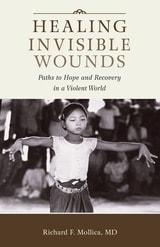
Healing Invisible Wounds
Paths to Hope and Recovery in a Violent WorldRichard F. Mollica
Vanderbilt University Press, 2006
Here is how Neil Boothby, Director of the Program on Forced Migration and Health at the Mailman School of Public Health, Columbia University, describes the book:
"Mollica provides a wealth of ethnographic and clinical evidence that suggests the human capacity to heal is innate--that the 'survival instinct' extends beyond the physical to include the psychological as well. He enables us to see how recovery from 'traumatic life events' needs to be viewed primarily as a 'mystery' to be listened to and explored, rather than solely as a 'problem' to be identified and solved. Healing involves a quest for meaning--with all of its emotional, cultural, religious, spiritual and existential attendants--even when bio-chemical reactions are also operative."
Healing Invisible Wounds reveals how trauma survivors, through the telling of their stories, teach all of us how to deal with the tragic events of everyday life. Mollica's important discovery that humiliation--an instrument of violence that also leads to anger and despair--can be transformed through his therapeutic project into solace and redemption is a remarkable new contribution to survivors and clinicians.
This book reveals how in every society we have to move away from viewing trauma survivors as "broken people" and "outcasts" to seeing them as courageous people actively contributing to larger social goals. When violence occurs, there is damage not only to individuals but to entire societies, and to the world. Through the journey of self-healing that survivors make, they enable the rest of us not only as individuals but as entire communities to recover from injury in a violent world.

Hip-Hop Japan
Rap and the Paths of Cultural GlobalizationIan Condry
Duke University Press, 2006
Condry attended more than 120 hip-hop performances in clubs in and around Tokyo, sat in on dozens of studio recording sessions, and interviewed rappers, music company executives, music store owners, and journalists. Situating the voices of Japanese artists in the specific nightclubs where hip-hop is performed—what musicians and fans call the genba (actual site) of the scene—he draws attention to the collaborative, improvisatory character of cultural globalization. He contends that it was the pull of grassroots connections and individual performers rather than the push of big media corporations that initially energized and popularized hip-hop in Japan. Zeebra, DJ Krush, Crazy-A, Rhymester, and a host of other artists created Japanese rap, one performance at a time.

Living Ethnomusicology
Paths and PracticesMargaret Sarkissian and Ted Solís
University of Illinois Press, 2019
A bountiful resource on history and practice, Living Ethnomusicology is an enlightening intellectual exploration of an exotic academic culture.
Paths in the Rainforests
Toward a History of Political Tradition in Equatorial AfricaJan M. Vansina
University of Wisconsin Press, 1990
Vansina’s scope is breathtaking: he reconstructs the history of the forest lands that cover all or part of southern Cameroon, Gabon, Equatorial Guinea, the Congo, Zaire, the Central African Republic, and Cabinda in Angola, discussing the original settlement of the forest by the western Bantu; the periods of expansion and innovation in agriculture; the development of metallurgy; the rise and fall of political forms and of power; the coming of Atlantic trade and colonialism; and the conquest of the rainforests by colonial powers and the destruction of a way of life.
“In 400 elegantly brilliant pages Vansina lays out five millennia of history for nearly 200 distinguishable regions of the forest of equatorial Africa around a new, subtly paradoxical interpretation of ‘tradition.’” —Joseph Miller, University of Virginia
“Vansina gives extended coverage . . . to the broad features of culture and the major lines of historical development across the region between 3000 B.C. and A.D. 1000. It is truly an outstanding effort, readable, subtle, and integrative in its interpretations, and comprehensive in scope. . . . It is a seminal study . . . but it is also a substantive history that will long retain its usefulness.”—Christopher Ehret, American Historical Review
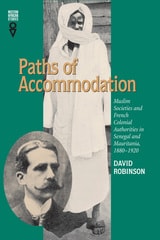
Paths of Accommodation
Muslim Societies and French Colonial Authorities in Senegal and Mauritania, 1880–1920David Robinson
Ohio University Press, 2000
Between 1880 and 1920, Muslim Sufi orders became pillars of the colonial regimes and economies of Senegal and Mauritania. In Paths of Accommodation, David Robinson examines the ways in which the leaders of the orders negotiated relations with the Federation of French West Africa in order to preserve autonomy within the religious, social, and economic realms while abandoning the political sphere to their non-Muslim rulers.
This was a striking development because the local inhabitants had a strong sense of belonging to the Dar al-Islam, the “world of Islam” in which Muslims ruled themselves.
Drawing from a wide variety of archival, oral, and Arabic sources, Robinson describes the important roles played by Muslim merchants and the mulatto community of St. Louis, Senegal. He also examines the impact of the electoral institutions established by the Third Republic, and the French effort to develop a reputation as a “Muslim power”—a European imperial nation with a capacity for ruling over Islamic subjects.
By charting the similarities and differences of the trajectories followed by leading groups within the region as they responded to the colonial regimes, Robinson provides an understanding of the relationship between knowledge and power, the concepts of civil society and hegemony, and the transferability of symbolic, economic, and social capital.
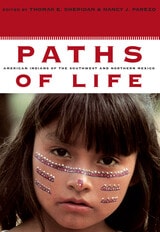
Paths of Life
American Indians of the Southwest and Northern MexicoEdited by Thomas E. Sheridan and Nancy J. Parezo
University of Arizona Press, 1996
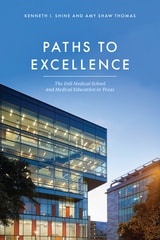
Paths to Excellence
The Dell Medical School and Medical Education in TexasKenneth I. Shine and Amy Shaw Thomas
University of Texas Press, 2021
This book tells in detail and for the first time the story of how this change came about: how dedicated administrators, alumni, business leaders, community organizers, doctors, legislators, professors, and researchers joined forces, overcame considerable resistance, and raised the funds to build a new medical school without any direct state monies. Funding was secured in large part by the unique willingness of the local community to tax itself to pay for the financial operations of the school. Kenneth I. Shine and Amy Shaw Thomas, who witnessed this process from their unique vantages as past and present vice chancellors for health affairs in the University of Texas System, offer a working model that will enable other leaders to more effectively seek solutions, avoid pitfalls, and build for the future.

Paths to Power
Elite Mobility in Contemporary ChinaBy David M. Lampton with the assistance of Yeung Sai-cheung
University of Michigan Press, 2000

Paths to Salvation
The National Socialist ReligionKlaus Vondung
St. Augustine's Press, 2017
In order to understand National Socialism one must recognize its religious nature. Many Germans were attracted to the party by its pledge to re-establish a true community of the people, a goal that was celebrated as “holy”.
Not only did Hitler promise to solve political, social, and economic problems, he also responded to a widely felt need for salvation. The prospect of salvation elevated politics into the realm of religion and lent meaning to the lives of those who embraced it.
In this work Klaus Vondung explores the various forms in which the elevation of politics into the sphere of religion was expressed in the Third Reich: in the faith of committed National Socialists, in the party’s cult events which celebrated the “community of the people” as a “community of faith” and the Fuhrer as “savior”, and in the persecution of the Jews that was ‘justified’ in religious terms by demonizing Jews as the “evil enemies of humanity” responsible for the world’s ills. This apocalyptic worldview was the extreme manifestation of the religious nature of National Socialism and, in the final analysis, the only plausible explanation for the intention of exterminating the Jews that led to the holocaust.
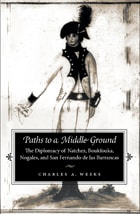
Paths to a Middle Ground
The Diplomacy of Natchez, Boukfouka, Nogales, and San Fernando de las Barrancas, 1791-1795Charles A. Weeks
University of Alabama Press, 2005
Weeks shows how diplomatic relations were established and maintained in the Gulf South between Choctaw, Chickasaw, Creek, and Cherokee chiefs and their Spanish counterparts aided by traders who had become integrated into Indian societies. He explains that despite the absence of a European state system, Indian groups had diplomatic skills that Europeans could understand: full-scale councils or congresses accompanied by elaborate protocol, interpreters, and eloquent metaphorical language.
Paths to a Middle Ground is both a narrative and primary documents. Key documents from Spanish archival sources serve as a basis for the examination of the political culture and imperial rivalry playing out in North America in the waning years of the 18th century.