Results by title
16 books match the query 'Patriotism'
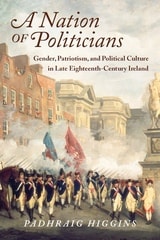
A Nation of Politicians
Gender, Patriotism, and Political Culture in Late Eighteenth-Century IrelandPadhraig Higgins
University of Wisconsin Press, 2009
In A Nation of Politicians, Padhraig Higgins argues that the development of Volunteer-initiated activities—associating, petitioning, subscribing, shopping, and attending celebrations—expanded the scope of political participation. Using a wide range of literary, archival, and visual sources, Higgins examines how ubiquitous forms of communication—sermons, songs and ballads, handbills, toasts, graffiti, theater, rumors, and gossip—encouraged ordinary Irish citizens to engage in the politics of a more inclusive society and consider the broader questions of civil liberties and the British Empire. A Nation of Politicians presents a fascinating tale of the beginnings of Ireland’s richly vocal political tradition at this important intersection of cultural, intellectual, social, and public history.
Building the East German Myth
Historical Mythology and Youth Propaganda in the German Democratic Republic, 1945-1989Alan L. Nothnagle
University of Michigan Press, 1999
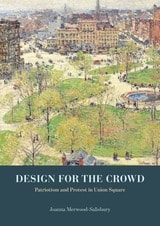
Design for the Crowd
Patriotism and Protest in Union SquareJoanna Merwood-Salisbury
University of Chicago Press, 2019
In this sweeping history of an iconic urban square, Merwood-Salisbury gives us a review of American political activism, philosophies of urban design, and the many ways in which a seemingly stable landmark can change through public engagement and design.
Published with the support of Furthermore: a program of the J. M. Kaplan Fund.
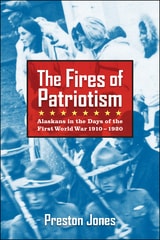
Fires of Patriotism
Alaskans in the Days of the First World War 1910-1920Preston Jones
University of Alaska Press, 2013
The Fires of Patriotism explores Alaska’s wartime experience, bringing to light new stories and new characters from a decade that shook the world. This multifaceted book explores the era through engaging stories and rare photos, offering a fresh perspective on World War I from a marginal land that forged its place in the greater unity of the country.
Hegel on Political Identity
Patriotism, Nationality, CosmopolitanismLydia L. Moland
Northwestern University Press, 2012
Making Patriots
Walter Berns
University of Chicago Press, 2001
Although Samuel Johnson once remarked that "patriotism is the last refuge of scoundrels," over the course of the history of the United States we have seen our share of heroes: patriots who have willingly put their lives at risk for this country and, especially, its principles. And this is even more remarkable given that the United States is a country founded on the principles of equality and democracy that encourage individuality and autonomy far more readily than public spiritedness and self-sacrifice.
Walter Berns's Making Patriots is a pithy and provocative essay on precisely this paradox. How is patriotism inculcated in a system that, some argue, is founded on self-interest? Expertly and intelligibly guiding the reader through the history and philosophy of patriotism in a republic, from the ancient Greeks through contemporary life, Berns considers the unique nature of patriotism in the United States and its precarious state. And he argues that while both public education and the influence of religion once helped to foster a public-minded citizenry, the very idea of patriotism is currently under attack.
Berns finds the best answers to his questions in the thought and words of Abraham Lincoln, who understood perhaps better than anyone what the principles of democracy meant and what price adhering to them may exact. The graves at Arlington and Gettysburg and Omaha Beach in Normandy bear witness to the fact that self-interested individuals can become patriots, and Making Patriots is a compelling exploration of how this was done and how it might be again.
On The Man Question
Gender and Civic Virtue in AmericaMark E. Kann
Temple University Press, 1991
Focusing on Seventeenth-Century English political philosophy and Nineteenth-Century American culture, Mark Kann challenges the widely-held view that American political institutions are grounded in the primacy of individualism. Liberal thinkers have long been concerned that men are too passionate and selfish to exercise individual rights without causing social chaos. Kann demonstrates how a desperate search to answer the man question began to revolutionize gender relations He examines "the other liberal tradition in America" which downplays the value of individualism, elevates the ongoing significance of an "engendered civic virtue," and incorporates classical republicanism into the fabric of modern political discourse.
The author traces the cultural conditioning of the white middle class that produced the ideal of self-sacrificing wives whose lives were devoted to creating a haven for their husbands and a school of virtue for their sons. Upon leaving home, these young men were to be schooled in manliness in the military in order to be capable of assuming positions of power as they were vacated by their fathers’ generation. Thus, in the norms of fatherhood, fraternity, womanhood, and militarism, the male’s individualism was conditioned with a strong dose of civic virtue.
Patriotic Education in a Global Age
Randall Curren and Charles Dorn
University of Chicago Press, 2018
In Patriotic Education in a Global Age, philosopher Randall Curren and historian Charles Dorn address these questions as they seek to understand what role patriotism might legitimately play in schools as an aspect of civic education. They trace the aims and rationales that have guided the inculcation of patriotism in American schools over the years, the methods by which schools have sought to cultivate patriotism, and the conceptions of patriotism at work in those aims, rationales, and methods. They then examine what those conceptions mean for justice, education, and human flourishing. Though the history of attempts to cultivate patriotism in schools offers both positive and cautionary lessons, Curren and Dorn ultimately argue that a civic education organized around three components of civic virtue—intelligence, friendship, and competence—and an inclusive and enabling school community can contribute to the development of a virtuous form of patriotism that is compatible with equal citizenship, reasoned dissent, global justice, and devotion to the health of democratic institutions and the natural environment. Patriotic Education in a Global Age mounts a spirited defense of democratic institutions as it situates an understanding of patriotism in the context of nationalist, populist, and authoritarian movements in the United States and Europe, and will be of interest to anyone concerned about polarization in public life and the future of democracy.
Public Philosophy and Patriotism
Essays on the Declaration and UsPaul Seaton
St. Augustine's Press, 2024
Paul Seaton’s Public Philosophy and Patriotism: The Declaration and Us is a very countercultural book. It advances the provocative thesis that not only is the Declaration worthy of our study today, but its principles and way of thinking about politics can and should be used to judge us and our politics today. That’s countercultural. While conservatives still have a warm place for the document in their hearts, one rarely hears them apply it to today’s debates. Progressives tend to take two contradictory tacks toward the founding document: on one hand, it’s the negligible product of hypocritical white males, on another, it limns the “ideals” and “values” of the American project that History is charged with fulfilling. Neither of these views takes the document intellectually seriously. Jefferson, however, articulated a different view when he called the Declaration “an expression of the American mind” at the time of the Revolution. Here was a self-conscious, self-confident American mind, ready to take on the world. Taking his cue from Jefferson, Seaton takes the Declaration seriously. He takes it seriously as the expression of a mind that confidently judged despotic designs, but also grasped the principles of free government and free and reasonable politics and looked forward to a country embodying them. Seaton argues that both these dimensions of Declaration political thought are applicable today.
He does so in an interesting way. For a number of years, he penned a Fourth of July essay on “the Declaration and Us” for the Law & Liberty website. On that occasion, he provided an exposition of some theme of the Declaration and applied it to a contemporary debate or issue. Over the years, they added up to a rather full exposition of the document, as well as an ongoing commentary on American political life. With this collection, the essentials of the Declaration’s view of politics are laid bare, and significant threats to freedom-loving Americans are identified. This is the bold claim and aim of this unique book.
At the beginning and end of the collection, Seaton makes a point of dating the completion of the manuscript on April 18th. When the curious reader looks up the date, he finds that it is the date when Paul Revere undertook his famous ride. In this way, the author indicates his judgment of the dire circumstances in which we live today and the patriotic models to which he hearkens. In the form of an explication de texte, this collection is a call to arms against today’s enemies of ordered liberty.
Small Change
Women, Learning, Patriotism, 1750-1810Harriet Guest
University of Chicago Press, 2000
During the second half of the eighteenth century, the social role of educated women and the nature of domesticity were the focus of widespread debate in Britain. The emergence of an identifiably feminist voice in that debate is the subject of Harriet Guest's new study, which explores how small changes in the meaning of patriotism and the relations between public and private categories permitted educated British women to imagine themselves as political subjects.
Small Change considers the celebration of learned women as tokens of national progress in the context of a commercial culture that complicates notions of gender difference. Guest offers a fascinating account of the women of the bluestocking circle, focusing in particular on Elizabeth Carter, hailed as the paradigmatic learned and domestic woman. She discusses the importance of the American war to the changing relation between patriotism and gender in the 1770s and 1780s, and she casts new light on Mary Wollstonecraft's writing of the 1790s, considering it in relation to the anti-feminine discourse of Hannah More, and the utopian feminism of Mary Hays.
Staging Philanthropy
Patriotic Women and the National Imagination in Dynastic Germany, 1813-1916Jean H. Quataert
University of Michigan Press, 2001
The Great War Comes to Wisconsin
Sacrifice, Patriotism, and Free Speech in a Time of CrisisRichard L. Pifer
Wisconsin Historical Society Press, 2017
Instead of a comprehensive history of the battlefield, this book captures the homefront experience: the political debates over war policy, the worry over loved ones fighting overseas, the countless everyday sacrifices, and the impact of a wartime hysteria that drove dissent underground. It also includes the voices of soldiers from Wisconsin’s famed 32nd Division, through extensively quoted letters and newspaper accounts. Immerse yourself in the Wisconsin experience during World War I—a conflict that demonstrated America’s great capacity for sacrifice and generosity, but also for prejudice, intolerance, and injustice.
The Lost Promise of Patriotism
Debating American Identity, 1890-1920Jonathan M. Hansen
University of Chicago Press, 2003
Intellectuals such as William James, John Dewey, Jane Addams, Eugene V. Debs, and W. E. B. Du Bois repudiated liberalism's association with acquisitive individualism and laissez-faire economics, advocating a model of liberal citizenship whose virtues and commitments amount to what Hansen calls cosmopolitan patriotism. Rooted not in war but in dedication to social equity, cosmopolitan patriotism favored the fight against sexism, racism, and political corruption in the United States over battles against foreign foes. Its adherents held the domestic and foreign policy of the United States to its own democratic ideals and maintained that promoting democracy universally constituted the ultimate form of self-defense. Perhaps most important, the cosmopolitan patriots regarded critical engagement with one's country as the essence of patriotism, thereby justifying scrutiny of American militarism in wartime.

The Reconstruction of Patriotism
Education for Civic ConsciousnessMorris Janowitz
University of Chicago Press, 1984
"In The Reconstruction of Patriotism, Morris Janowitz . . . places a national-service program on the national agenda. . . . Like William James, Janowitz envisions government enrolling young people to work for a year or two at subsistence pay, doing jobs that benefit society—working with, say, 'conservation, health, or old-age problems.' He believes that we need a service program because since the end of the Second World War our citizens (and, indeed, citizens of almost all the advanced industrial nations) have become more keenly aware of their rights than of their obligations, and generations are growing up with little or no understanding that they are members of a national community and have responsibilities to it—that they must give as well as take. . . . Because it reopens discussion of our wider obligations and how to fulfill them, Mr. Janowitz's thoughtful book is in itself a national service."—Naomi Bliven, The New Yorker
"Morris Janowitz examines an issue that seldom is subject to social and political analysis—patriotism. His thesis is clear: The long-term trend in politics has been to enhance citizen rights without effective articulation of citizen obligations. A meaningful balance between the two, he contends, must be restored. . . . The strength of this study lies in Janowitz's persuasive argument that the durability and vitality of democratic institutions require that a sense of community, or shared values, be preserved. Without civiz consciousness, he rightly observes, social and political fragmentation ensues. . . . A lucid and impressively researched polemic."—W. Wesley McDonald, American Political Science Review
"Janowitz addresses a seminal issue: how to restore the sense of shared civic responsibility that has fallen victim in recent years to our growing preoccupation with individual rights and the rise of special-interest groups. . . . Central to his prescription is the revival of the concept of the citizen soldier, whose importance since pre-Revolutionary War days Janoqitz discusses at length. He concludes, 'There can be no reconstruction of patriotism without a system of national service.' . . . An important book. I highly recommend it."—Washington Monthly
The Truth about Patriotism
Steven Johnston
Duke University Press, 2007
Drawing largely from aspects of American political and popular culture, this wide-ranging book presents a wealth of examples to disclose patriotism’s self-defeating character. They include Richard Rorty’s and John Schaar’s enmity-driven love of country, Socrates’s angry judicial suicide, the violent obsessions of High Noon and Saving Private Ryan, the triumphalist self-display of the World War II Memorial, Oliver Stone’s and Don DeLillo’s spectacular representations of the assassination of President Kennedy, George W. Bush’s symbolic sacrifice of more Americans in commemoration of September 2001, and yet other memorials to and apologies for patriotism. Ultimately, Johnston calls for a vision of democracy that uses the tragic possibilities inherent in politics as a spur to a life-affirming civic ethos of reciprocal generosity.
This Ecstatic Nation
The American Landscape and the Aesthetics of PatriotismTerre Ryan
University of Massachusetts Press, 2011
Terre Ryan examines this phenomenon by exploring the overlapping trails of national mythology, landscape aesthetics, patriotic discourse, and public policy. Tracing her journeys around bombing grounds in Nevada, logging sites in Oregon, and energy fields in Wyoming, she argues that business and government agencies often frame commercial projects and national myths according to nineteenth-century beliefs about landscape and bounty. Advertisements and political promotional materials following this aesthetic framework perpetuate frontier-era ideas about the environment as commodity, scenery, and cultural trashlands. Transmitted through all types of media, nineteenth-century perspectives on landscape continue to inform mainstream perceptions of the environment, environmental policies, and representations of American patriotism.
Combining personal narrative with factual reportage, political and cultural critique, and historical analysis, Ryan reframes the images we see every day and places them into a larger national narrative.