Results by title
6 books match the query 'Patton, George S. (George Smith)'
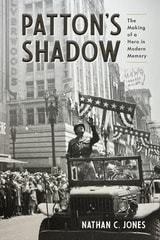
Patton's Shadow
The Making of a Hero in Modern MemoryNathan C. Jones
University of Alabama Press, 2024
An engrossing account of the myth and legend of George S. Patton and what his reputation illuminates about American culture and hero worship
Patton’s Shadow by Nathan C. Jones, a leading authority on George S. Patton, offers a definitive account of the creation of the Patton legend and what it illuminates about American culture and the worship of heroes. Jones traces how the persona of Patton, a brash and brilliant general in the European theater of World War II, transcended the individual man and became a cultural icon and byword for triumphal American might.
Patton was a hero lionized and celebrated in his own time. Patton as well as the US Army cultivated his persona during and after the war. His image was used to promote patriotism, commercial goods, and military recruitment. The 1970 Academy Award–winning film starring George C. Scott cemented his iconic image for millions of Americans, further embellishing Patton’s persona and introducing him to entirely new generations of young Americans.
Patton’s Shadow is an intellectually omnivorous tour de force that draws on ideas about heroes from sources as timeless as ancient mythology and as contemporary as Abraham Maslow, Max Weber, and Carl Jung. Jones artfully locates the honored altar that heroes occupy in the human heart and then answers insightful questions about what America’s embrace of Patton in particular as a military hero illuminates about the United States, about Patton’s generation, and about our own.
Jones’s engrossing work will fascinate readers interested in American history, military history, and the psychology of heroism.
Patton's War
An American General's Combat Leadership Volume 3: January 1-December 21, 1945Kevin M. Hymel
University of Missouri Press, 2026
As with his previous volume, Hymel relies on Patton’s original diaries (not the transcribed, embellished versions historians have relied on for many years) and personal letters to tell the general’s story. Hymel also mined various archives to explain Patton’s encounters with soldiers, government officials, civilians, and reporters to expand on his narrative.
Throughout this three-volume work, Patton emerges not as a larger-than-life myth, but as a human being, one held back by the personal prejudices and antisemitism that ultimately proved to be his demise. Despite these personal failings, Patton was, above all, as Hymel reveals, a commander bent on winning, or, as the general himself might have put it, getting the enemy to dance to his tune.
Patton's War
An American General's Combat Leadership, Volume 2: August–December 1944Kevin M. Hymel
University of Missouri Press, 2023
Finalist for the 2023 Gilder Lehrman Military History Prize
This second of three volumes of Patton’s War picks up where the first one left off, examining General George S. Patton’s leadership of the U.S. Third Army. The book follows Patton’s contributions to both the Normandy and Brittany campaigns—the closing of the Falaise Pocket in Normandy, and racing to the port cities in Brittany. It ends with Patton and his corps rescuing the besieged town of Bastogne in the Battle of the Bulge.
As he did in the preceding volume, Hymel relies not only on Patton’s diaries and letters, but countless veteran interviews, surveys, and memoirs. He also provides a unique insight missed by previous Patton scholars. Instead of using Patton’s transcribed diaries, which were heavily edited and embellished, he consults Patton’s original, hand-written diaries to uncover previously unknown information about the general.
This second volume of Hymel’s groundbreaking work shows Patton at the height of his generalship, successfully leading his army without the mistakes and caustic behavior that almost got him sent home earlier—even if we also see a Patton still guided at times by racism and antisemitism.
Patton's War
An American General's Combat Leadership, Volume I: November 1942–July 1944Kevin M. Hymel
University of Missouri Press, 2021
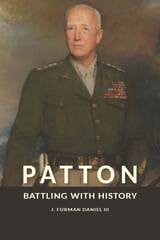
Patton
Battling with HistoryJ. Furman Daniel
University of Missouri Press, 2025
Patton deliberately cultivated the image of himself as a warrior from ages past; the more interesting truth is that he was an exceptionally dedicated student of history. He was a hard worker and voracious reader who gave a great deal of thought to how military history might inform his endeavors. Most scholars have overlooked this element of Patton’s character, which Daniel argues is essential to understanding the man’s genius.
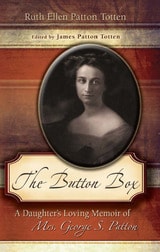
The Button Box
A Daughter's Loving Memoir of Mrs. George S. PattonRuth Ellen Patton Totten, Edited by James Patton Totten, Foreward by Carlo W. D'Este
University of Missouri Press, 2005
"There was never a moment in our lives that we were not reminded that our father was the finest, bravest, most gallant, and best-looking man who ever lived and that he was destined for unimaginable glory. This we took for granted. Being our father’s children was a special influence in all our lives, but the greatest, most pervasive, and most interesting influence in my life was Ma."
The Button Box is the loving memoir of Beatrice Ayer Patton (1886–1953), the wife of one of the greatest military figures in history, General George S. Patton, Jr. Written by the Pattons’ daughter, Ruth Ellen, the book covers Beatrice’s life from her youth in a wealthy New England family until her death, with an emphasis on her years of marriage to George Patton. A supportive and loving wife, Beatrice was accomplished in her own right as an equestrian, musician, lecturer, sailor, and internationally published author. Courageous and adventurous, Beatrice played a significant role in her husband’s life. Without her, General Patton might never have reached his own level of success.