Results by title
12 books match the query 'Paul'
A Biblical Path to the Triune God
Jesus, Paul and the Revelation of the TrinityDenis Farkasfalvy
Catholic University of America Press, 2021
Constructing Antichrist
Paul, Biblical Commentary, and the Development of Doctrine in the Early Middle AgesKevin L. Hughes
Catholic University of America Press, 2005
John Chrysostom on Paul
Praises and Problem PassagesMargaret M. Mitchell
SBL Press, 2022
A readily accessible text and translation for scholars and students of Paul, ancient Christian history, and biblical reception.
In this new volume in the Writings from the Greco-Roman World series, Margaret M. Mitchell collects twenty-five of John Chrysostom's lesser-known sermons on Pauline passages as well as some that focus on Paul himself. Mitchell presents the Greek text and an original translation of each of these fascinating sermons in a fresh, engaging style that seeks to recapture the vibrancy and dynamism of the live oratory behind the homilies. Extensive notes to each homily evaluate how Chrysostom dealt with some of the ethical, theological, historical, political, and literary problems present in Paul's writings. Mitchell's work on Chrysostom offers a model for scholars to explore and understand how ancient Christian interpreters found in Paul’s letters a legacy that was as problematic as it was precious.

Law and Liberty
Jesus, Paul, and the Newness of ChristianityRomano Penna
Catholic University of America Press, 2026
Paul and Scripture
Extending the ConversationChristopher D. Stanley
SBL Press, 2012
Paul and the Resurrected Body
Social Identity and Ethical PracticeMatt O'Reilly
SBL Press, 2020
A new reading of Pauline theology, ethics, and eschatology grounded in social-identity theory and sociorhetorical criticism
Readers often think of Paul’s attitude toward the resurrection of the body in individual terms: a single body raised as the climax of an individual’s salvation. In Paul and the Resurrected Body: Social Identity and Ethical Practice, Matt O’Reilly makes the case that, for Paul, the social dimension of future bodily resurrection is just as important, if not more so. Through a close reading of key texts in the letters to the Corinthians, Romans, and Philippians, O’Reilly argues that resurrection is integral to Paul’s understanding of Christian social identity. In Paul’s theological reasoning, a believer’s hope for the future depends on being identified as part of the people of God who will be resurrected.
Features
- A clarification of the eschatological basis for Paul’s ethical expectations
- Exploration of the social significance of Paul’s theological reasoning
- An integration of ancient rhetorical theory with contemporary social-identity theory
Paul as Infant and Nursing Mother
Metaphor, Rhetoric, and Identity in 1 ThessaJennifer Houston McNeel
SBL Press, 2014
Explore the significance of maternal metaphors in the writings of a first-century male missionary and theologian
Paul employed metaphors of childbirth or breastfeeding in four out of the seven undisputed epistles. In this book, McNeel uses cognitive metaphor theory and social identity analysis to examine the meaning and function of these maternal metaphors. She asserts that metaphors carry cognitive content and that they are central to how humans process information, construct reality, and shape group identity.
Features:
- A focus on “identity” as the way in which people understand themselves in relation to one another, to society, and to those perceived as outsiders
- Examination of metaphor as part of Paul’s rhetorical strategy
- Integration of the work of philosopher Max Black with the work of cognitive linguists George Lakoff and Mark Johnson
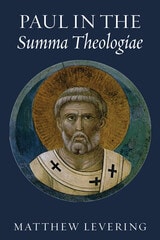
Paul in the Summa Theologiae
Matthew Levering
Catholic University of America Press, 2014
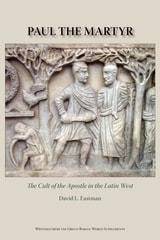
Paul the Martyr
The Cult of the Apostle in the Latin WestDavid L. Eastman
SBL Press, 2011
Ancient iconography of Paul is dominated by one image: Paul as martyr. Whether he is carrying a sword—the traditional instrument of his execution—or receiving a martyr's crown from Christ, the apostle was remembered and honored for his faithfulness to the point of death. As a result, Christians created a cult of Paul, centered on particular holy sites and characterized by practices such as the telling of stories, pilgrimage, and the veneration of relics. This study integrates literary, archaeological, artistic, and liturgical evidence to describe the development of the Pauline cult within the cultural context of the late antique West.

Pfeiffer Country
The Tenant Farms and Business Activities of Paul Pfeiffer in Clay County, Arkansas, 1902-1954Sherry Laymon
Butler Center for Arkansas Studies, 2009
Resurrection in Paul
Cognition, Metaphor, and TransformationFrederick S. Tappenden
SBL Press, 2016
Explore the embodied foundations of Paul's resurrection ideals
It is commonly recognized that Paul's resurrection ideals are bodily ideals, though this dictum is usually configured along literal and metaphorical lines. The realism of future resurrected bodies is disconnected from the metaphoricity of bodily transformation in the present. Drawing on cognitive linguistics, this fresh and innovative study addresses this problem. By eschewing the opposition of metaphor and realism, Tappenden explores the concepts and metaphors Paul uses to fashion notions of resurrection, and the uses to which those notions are put. Rather than asserting resurrection as a disembodied, cognicentric proposition, this book illuminates the body's central role in shaping and grounding the apostle's thought and writings.
Features:
- Close examination of Paul's letters within multiple, interlocking cultural contexts
- Provides a novel and fresh approach to assessing (in)coherence across the undisputed letters
- Addresses the materialist nature of early Christian and Judean resurrection ideals without compromising the metaphoricity of those ideals
The Ancient Martyrdom Accounts of Peter and Paul
David L. Eastman
SBL Press, 2015
New English translations based upon the most up-to-date critical editions
This book for the first time collects the various ancient accounts of the martydoms of Peter and Paul, which number more than a dozen, along with more than forty references to the martyrdoms from early Christian literature. At last a more complete picture of the traditions about the deaths of Peter and Paul is able to emerge.
Features:
- Greek, Latin, and Syriac accounts from antiquity translated into English
- Introductions and notes for each text
- Original texts are produced on facing pages for specialists