Results by title
3 books match the query 'Paul Ricoeur'
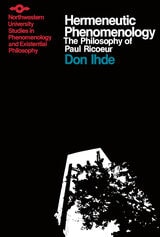
Hermeneutic Phenomenology
The Philosopher of Paul RicoeurDon Ihde
Northwestern University Press, 1971
Hermeneutic Phenomenology serves to introduce the philosophy of Paul Ricœur and give new perspectives to the philosophy of language.
[more]
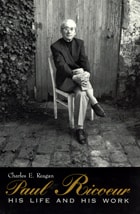
Paul Ricoeur
His Life and His WorkCharles E. Reagan
University of Chicago Press, 1996
One of the major intellectual figures of the twentieth century, Paul Ricoeur has influenced a generation of thinkers. In this, the first philosophically informed biography of Ricoeur, student, colleague, and confidant Charles E. Reagan provides an unusually accessible look at both the philosophy of this extraordinary thinker and the pivotal experiences that influenced his development.
"A valuable introduction to Ricoeur; highly recommended."—Library Journal
"[A] lively introduction to the life and thought of one of this century's most notable philosophers."—Norman Wirzba, Christian Century
"Reagan lucidly explains Ricoeur's difficult philosophy while shining overdue light on the personality behind it."—Carlin Romano, Philadelphia Inquirer
"Combines biographical and philosophical essays with a more personal memoir that makes Ricoeur's humane and magnanimous nature abundantly evident. Four revealing interviews, coupled with photographs, and an extensive bibliography of primary and secondary sources, complete this illuminating study."—Choice
[more]
Paul Ricoeur
Tradition and Innovation in Rhetorical TheoryAndreea Deciu Ritivoi
Southern Illinois University Press, 2006
This is the first book to systematically explore contemporary continental philosopher Paul Ricoeur's contribution to modem rhetorical theory. Andreea Deciu Ritivoi analyzes provocative test cases and investigates four topics central to the core vocabulary of the field-opinion, practical reasoning, commemoration, and solidarity. Her findings provide clarification on important problems and shed new light on troubling social and political issues. Placing Ricoeur's views in a larger intellectual context, Ritivoi identifies both the philosophical influences that have shaped them over the years and the correspondences with various relevant rhetorical theories. In doing so, she proves that a rhetorical enterprise refashioned with Ricoeur's help enables us to address questions that are crucially relevant to our time yet also grounded in the historical basis of the discipline.
[more]