Results by title
3 books match the query 'Peña, Manuel'

A Texas-Mexican Cancionero
Folksongs of the Lower BorderBy Américo Paredes
University of Texas Press, 1995
The folksongs of Texas's Mexican population pulsate with the lives of folk heroes, gringos, smugglers, generals, jailbirds, and beautiful women. In his cancionero, or songbook, Américo Paredes presents sixty-six of these songs in bilingual text—along with their music, notes on tempo and performance, and discography. Manuel Peña's new foreword situates these songs within the main currents of Mexican American music.
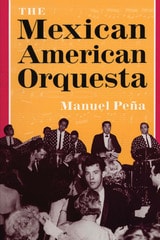
The Mexican American Orquesta
Music, Culture, and the Dialectic of ConflictBy Manuel Peña
University of Texas Press, 1999
The Mexican American orquesta is neither a Mexican nor an American music. Relying on both the Mexican orquesta and the American dance band for repertorial and stylistic cues, it forges a synthesis of the two. The ensemble emerges historically as a powerful artistic vehicle for the expression of what Manuel Peña calls the "dialectic of conflict." Grounded in ethnic and class conflict, this dialectic compels the orquesta and its upwardly mobile advocates to waver between acculturation and ethnic resistance. The musical result: a complex mesh of cultural elements—Mexican and American, working- and middle-class, traditional and contemporary.
In this book, Manuel Peña traces the evolution of the orquesta in the Southwest from its beginnings in the nineteenth century through its pinnacle in the 1970s and its decline since the 1980s. Drawing on fifteen years of field research, he embeds the development of the orquesta within a historical-materialist matrix to achieve the optimal balance between description and interpretation. Rich in ethnographic detail and boldly analytical, his book is the first in-depth study of this important but neglected field of artistic culture.
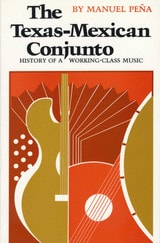
The Texas-Mexican Conjunto
History of a Working-class MusicBy Manuel H. Peña
University of Texas Press, 1985
Around 1930, a highly popular and distinctive type of accordion music, commonly known as conjunto, emerged among Texas-Mexicans. Manuel Peña's The Texas-Mexican Con;unto is the first comprehensive study of this unique folk style. The author's exhaustive fieldwork and personal interviews with performers, disc jockeys, dance promoters, recording company owners, and conjunto music lovers provide the crucial connection between an analysis of the music itself and the richness of the culture from which it sprang.
Using an approach that integrates musicological, historical, and sociological methods of analysis, Peña traces the development of the conjunto from its tentative beginnings to its preeminence as a full-blown style by the early 1960s. Biographical sketches of such major early performers as Narciso Martínez (El Huracán del Valle), Santiago Jiménez (El Flaco), Pedro Ayala, Valerio Longoria, Tony de la Rosa, and Paulino Bernal, along with detailed transcriptions of representative compositions, illustrate the various phases of conjunto evolution.
Peña also probes the vital connection between conjunto's emergence as a powerful symbolic expression and the transformation of Texas-Mexican society from a pre-industrial folk group to a community with increasingly divergent socioeconomic classes and ideologies. Of concern throughout the study is the interplay between ethnicity, class, and culture, and Peña's use of methods and theories from a variety of scholarly disciplines enables him to tell the story of conjunto in a manner both engaging and enlightening. This important study will be of interest to all students of Mexican American culture, ethnomusicology, and folklore.