Results by title
4 books match the query 'Penobscot Indians'
"Still They Remember Me"
Penobscot Transformer Tales, Volume 1Carol A. Dana, Margo Lukens, and Conor M. Quinn
University of Massachusetts Press, 2021
In "Still They Remember Me," stories are presented in the Penobscot language and English side-by-side, coupled with illustrations from members of the tribal community. For the first time, these stories are accessible to a young generation of Penobscot language learners and scholars of Native American literatures at all levels, from grade school to graduate school.
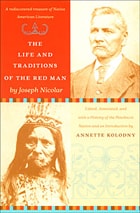
The Life and Traditions of the Red Man
A rediscovered treasure of Native American literatureJoseph Nicolar
Duke University Press, 2007
The Life and Traditions of the Red Man has not been widely available until now, largely because Nicolar passed away just a few months after the printing of the book was completed, and shortly afterwards most of the few hundred copies that had been printed were lost in a fire. This new edition has been prepared with the assistance of Nicolar’s descendants and members of the Penobscot Nation. It includes a summary history of the tribe; an introduction that illuminates the book’s narrative strategies, the aims of its author, and its key themes; and annotations providing historical context and explaining unfamiliar words and phrases. The book also contains a preface by Nicolar’s grandson, Charles Norman Shay, and an afterword by Bonnie D. Newsom, former Director of the Penobscot Nation’s Department of Cultural and Historic Preservation. The Life and Traditions of the Red Man is a remarkable narrative of Native American culture, spirituality, and literary daring.
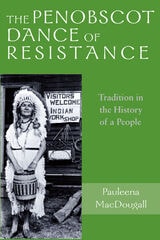
The Penobscot Dance of Resistance
Tradition in the History of a PeoplePauleena MacDougall
University of New Hampshire Press, 2004
Although historians predicted the demise of the Penobscot Indians early in the nineteenth century, the tribe is thriving at the opening of the twenty-first century. Having by the early 1800s been rendered all but invisible to the dominant culture, the Penobscots, by selectively adapting to changing circumstances, won back land and visibility. The vital importance of employing elements of cultural resistance as a survival mechanism has, until now, been underestimated. In a larger context, Dance of Resistance demonstrates how an examination of the history of one Indian nation provides a window on the complex interaction of cultural systems in America.
MacDougall demonstrates that Penobscot legend, linguistics, dance, and oral tradition became foundations of resistance against assimilation into the dominant culture. She thoughtfully and accessibly reconstructs from published, archival, and oral sources the tribe's metaphorical and triumphant Dance of Resistance—founded on spiritual power, reverence for homeland, and commitment to self-determination—from colonial times to the present. A decade of political activism culminated in the precedent-setting 1980 Maine Indian Land Claims settlement. Today the Penobscots run small industries, manage their natural resources, and provide health services, K through 8 education, and social services to the poor and elderly of their community.
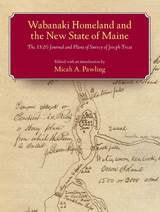
Wabanaki Homeland and the New State of Maine
The 1820 Journal and Plans of Survey of Joseph TreatMicah A. Pawling
University of Massachusetts Press, 2007
Edited, annotated, and with an introduction by Micah Pawling, this volume includes a complete transcription of Treat's journal, reproductions of dozens of hand-drawn maps, and records pertaining to the 1820 treaty between the Penobscot Nation and the governing authorities of Maine. As Pawling points out, Treat's journal offers more than the observations of a state agent conducting a survey. It re-creates a dialogue between Euro-Americans and Native peoples, showing how different perceptions of the land were negotiated and disseminated, and exposing the tensions that surfaced when assumptions and expectations clashed. In large part because of Neptune's influence, the maps, in addition to detailing the location of Wabanaki settlements, reflect a river-oriented Native perspective that would later serve as a key to Euro-American access to the region's interior.
The groundwork for cooperation between Treat and Neptune had been laid during the 1820 treaty negotiations, in which both men participated and which were successfully concluded just over a month before their expedition departed from Bangor, Maine. Despite conflicting interests and mutual suspicions, they were able to work together and cultivate a measure of trust as they traveled across northern Maine and western New Brunswick, mapping an old world together while envisioning its uncertain future.