Results by title

13 books match the query 'People with social disabilities'

cover of CANCELED - Notes from Home

CANCELED - Notes from Home

Jonna McKone

Rutgers University Press, 2021

Notes from Home weaves a tapestry of personal stories from a group of youth who have experienced family insecurity during childhood. At Rutgers University, the Price Family Fellows Program provides financial, emotional, and academic support for students who seek to steer their own narratives and achieve their dreams through education. Eight graduates of the program now share reflections, photographs, and memories in search of new, often surprising meanings of home and family.
 
Through portraiture, oral history, writing, and family archives, the contributors explore childhood, geography, immigration, education, and family relationships, recovering misunderstood or overlooked moments. In the process of making this work, the group found old family photos, returned to sites of significance, and made new friendships, discovering the transformational potential of this kind of storytelling to reframe hardship, loss, and uncertainty. In the words of one contributor, “I felt like this process was a necessary step that allowed me to acknowledge and comprehend what I was experiencing at the time. It allowed me to create a more coherent understanding that I am who I am because of my past and because I was the one who had control of molding my own, better path.” Each chapter, encompassing one person’s story, is strikingly unique in its vision and approach.
[more]
cover of Giants Among Us: First-Generation College Graduates Who Lead Activist Lives

Giants Among Us

First-Generation College Graduates Who Lead Activist Lives

Sandria Rodriguez

Vanderbilt University Press, 2001

How do children from undereducated and impoverished backgrounds get to college? What are the influences that lead them to overcome their socioeconomic disadvantages and sometimes the disapproval of families and friends to succeed in college? These are the basic questions Sandria Rodriguez posed to seventeen first-generation college graduates, and their compelling life stories make important contributions to what little is known about this phenomenon.

The daughter of parents who didn't finish elementary school, Rodriguez uses many examples from her own life in the course of examining the participants' experiences before, during, and after college that directed them toward social or educational activism. Together, the seventeen represent a wide range of diversity in terms of race, ethnicity, age, geographical area of childhood, and profession. Twelve of the seventeen hold advanced degrees, all are working professionals, and all come from families who were poor. Jerry, the son of German immigrants, owns an engineering company in Chicago; Chang, a native of China, is the first from his village to go to college; Grant, a sharecropper's son, is a lawyer with a nationally prominent law firm in Washington, D.C., and patron of fine arts; Arlene, a Mohawk Indian, is a storyteller and social activist; Alex, from Spanish Harlem, is an elementary school principal.

The book is divided into four parts. In the first two chapters, we meet the participants. In the three chapters that follow, Rodriguez examines how the participants as children perceived themselves within their families, schools, and communities. Chapters four and five focus on the campus life and the participants' activist experiences. Finally, chapter six offers recommendations for mentoring disadvantaged children, so that they can successfully "switch the track" and aim for something better.

Giants Among Us is an essential resource for college administrators, faculty, counselors, and student support-services staff--as well as K-12 educators--concerned with preparing, retaining and mentoring first-generation students.
[more]
cover of Poor Discipline

Poor Discipline

Jonathan Simon

University of Chicago Press, 1993

This powerful book reveals how modern strategies of punishment—and, by all accounts, their failure—relate to political and economic transformations in society at large. Jonathan Simon uses the practice of parole in California as a window to the changing historical understanding of what a corrections system does and how it works. Because California is representative of policies and practices on a national level, Simon explicitly presents his findings within a national framework.

When parole first emerged as a corrections strategy in the nineteenth century, work was supposed to keep ex-prisoners out of trouble. This strategy foundered in the changing economy after World War II. What followed was a rehabilitative strategy, where the clinical expertise of the parole agent replaced the discipline of the industrial labor market in defining and controlling criminal deviance. Today, Simon argues, as drastic changes in the economy have virtually locked out an entire class, rehabilitation has given way to mere management. The effect is isolation of the offender, either in jail or in an underclass community; the result is an escalating cycle of imprisonment, destabilization, and insecurity.

No significant improvement in the current penal crisis can be expected until we better understand the relationship between punishment and social order, a relationship which this book explores in theoretical, historical, and practical detail.
[more]
cover of Potential on the Periphery: College Access from the Ground Up

Potential on the Periphery

College Access from the Ground Up

Omari Scott Simmons

Rutgers University Press, 2019
Even high-performing students sometimes need assistance to transform their high school achievement into a higher education outcome that matches their potential, especially when those students come from vulnerable backgrounds. Without intervention, many of these students, lost in the transition between secondary school and higher education, would not attend selective colleges that provide greater opportunities. Potential on the Periphery profiles the Simmons Memorial Foundation (SMF), a grassroots non-profit organization co-founded by author Omari Scott Simmons, that promotes college access for students in North Carolina and Delaware. Simmons discusses how the organization has helped students secure admission and succeed in college, using this example to contextualize the broader realm of existing education practice, academic theory, and public policy. Using data gleaned from interviews with past student participants in the programs run by the SMF, Simmons illuminates the underlying factors thwarting student achievement, such as inadequate information about college options, limited opportunities for social capital acquisition, financial pressures, self-doubt, and political weakness. Simmons then identifies policy solutions and pragmatic strategies that college access organizations can adopt to address these factors. 
[more]
cover of Putting Poor People to Work: How the Work-First Idea Eroded College Access for the Poor

Putting Poor People to Work

How the Work-First Idea Eroded College Access for the Poor

Kathleen M. Shaw

Russell Sage Foundation, 2006
Today, a college education is increasingly viewed as the gateway to the American Dream—a necessary prerequisite for social mobility. Yet recent policy reforms in the United States effectively steer former welfare recipients away from an education that could further their career prospects, forcing them directly into the workforce where they often find only low-paying jobs with little opportunity for growth. In Putting Poor People to Work, Kathleen Shaw, Sara Goldrick-Rab, Christopher Mazzeo, and Jerry A. Jacobs explore this troubling disconnect between the principles of "work-first" and "college for all." Using comprehensive interviews with government officials and sophisticated data from six states over a four year period, Putting Poor People to Work shows how recent changes in public policy have reduced the quantity and quality of education and training available to adults with low incomes. The authors analyze how two policies encouraging work—the federal welfare reform law of 1996 and the Workforce Investment Act of 1998—have made moving people off of public assistance as soon as possible, with little regard to their long-term career prospects, a government priority. Putting Poor People to Work shows that since the passage of these "work-first" laws, not only are fewer low-income individuals pursuing postsecondary education, but when they do, they are increasingly directed towards the most ineffective, short-term forms of training, rather than higher-quality college-level education. Moreover, the schools most able and ready to serve poor adults—the community colleges—are deterred by these policies from doing so. Having a competitive, agile workforce that can compete with any in the world is a national priority. In a global economy where skills are paramount, that goal requires broad popular access to education and training. Putting Poor People to Work shows how current U.S. policy discourages poor Americans from seeking out a college education, stranding them in jobs with little potential for growth. This important new book makes a powerful argument for a shift in national priorities that would encourage the poor to embrace both work and education, rather than having to choose between the two. Institute for Research on Poverty Affiliated Books on Poverty and Public Policy">An Institute for Research on Poverty Affiliated Book on Poverty and Public Policy
[more]
cover of Social Programs that Work

Social Programs that Work

Jonathan Crane

Russell Sage Foundation, 1998
Many Americans seem convinced that government programs designed to help the poor have failed. Social Programs That Work shows that this is not true. Many programs have demonstrably improved the lives of people trapped at the bottom of the social and economic ladder. Social Programs That Work provides an in-depth look at some of the nation's best interventions over the past few decades, and considers their potential for national expansion. Examined here are programs designed to improve children's reading skills, curb juvenile delinquency and substance abuse, and move people off welfare into the workforce. Each contributor discusses the design and implementation of a particular program, and assesses how well particular goals were met. Among the critical issues addressed: Are good results permanent, or do they fade over time? Can they be replicated successfully under varied conditions? Are programs cost effective, and if so are the benefits seen immediately or only over the long term? How can public support be garnered for a large upfront investment whose returns may not be apparent for years? Some programs discussed in this volume were implemented only on a small, experimental scale, prompting discussion of their viability at the national level. An important concern for social policy is whether one-shot programs can lead to permanent results. Early interventions may be extremely effective at reducing future criminal behavior, as shown by the results of the High/Scope Perry preschool program. Evidence from the Life Skills Training Program suggests that a combination of initial intervention and occasional booster sessions can be an inexpensive and successful approach to reducing adolescent substance abuse. Social Programs That Work also acknowledges that simply placing welfare recipients in jobs isn't enough; they will also need long-term support to maintain those jobs. The successes and failures of social policy over the last thirty-five years have given us valuable feedback about the design of successful social policy. Social Programs That Work represents a landmark attempt to use social science criteria to identify and strengthen the programs most likely to make a real difference in addressing the nation's social ills.
[more]
cover of Street Saints: Renewing American Cities

Street Saints

Renewing American Cities

Barbara J. Elliott

Templeton Press, 2006

Based on eight years of hands-on experience and more than 300 interviews, Street Saints is both a book of motivational stories about unsung heroes and a sociological study of the "faith factor," documenting faith-based programs that are treating social maladies in America. This book takes readers on a tour of communities and institutions in America where faith-based initiatives are making a difference. It offers inspiration, role models, and guidelines for people who would like to give back to their own communities.

[more]
cover of The Best American Newspaper Narratives of 2012

The Best American Newspaper Narratives of 2012

George Getschow

University of North Texas Press, 2014
[more]
cover of The Crip Linguistics Reader

The Crip Linguistics Reader

Octavian Robinson

Gallaudet University Press, 2025

How you language is who you are; language shapes your identity, relationships, and experiences. The Crip Linguistics Reader is a wide-ranging and groundbreaking collection that challenges normative ideas about what is considered “good language.” This volume draws on the expertise of contributors across a variety of fields in the humanities, social sciences, and the arts; these writers bring an interdisciplinary and critical disability perspective to languaging by challenging dominant paradigms in linguistic inquiry. Essays include a wide range of topics, such as examining the relationship between disability and race in the context of language, investigating the compulsory nature of specific forms of language education, elucidating forms of linguistic care, and exploring the transmission of ableist ideologies about language. An essential read for scholars and educators, this collection showcases Crip Linguistics as an analytical framework that will transform ideological boundaries of language and communication along with our understanding of what languaging can be.
[more]
cover of The Culture of Inequality

The Culture of Inequality

Michael Lewis

University of Massachusetts Press, 1993

Why do America’s wars against poverty turn out to be wards against the poor? Why does a nation so committed to fighting crime show such a bad record of combatting it and so morbid a fascination with it? Why is American racism so deeply rooted? 

These and other questions are answered in this milestone study. Its central thesis is that the national faith in individual initiative and free opportunity has become a breeding ground for guilt about our own limited successes and prejudice against all who exhibit signs of failure. 
[more]
cover of The Dangerous Class: The Concept of the Lumpenproletariat

The Dangerous Class

The Concept of the Lumpenproletariat

Clyde W. Barrow

University of Michigan Press, 2020
Marx and Engels’ concept of the “lumpenproletariat,” or underclass (an anglicized, politically neutral term), appears in The Communist Manifesto and other writings. It refers to “the dangerous class, the social scum, that passively rotting mass thrown off by the lowest layers of old society,” whose lowly status made its residents potential tools of the capitalists against the working class. Surprisingly, no one has made a substantial study of the lumpenproletariat in Marxist thought until now. Clyde Barrow argues that recent discussions about the downward spiral of the American white working class (“its main problem is that it is not working”) have reactivated the concept of the lumpenproletariat, despite long held belief that it is a term so ill-defined as not to be theoretical. Using techniques from etymology, lexicology, and translation, Barrow brings analytical coherence to the concept of the lumpenproletariat, revealing it to be an inherent component of Marx and Engels’ analysis of the historical origins of capitalism. However, a proletariat that is destined to decay into an underclass may pose insurmountable obstacles to a theory of revolutionary agency in post-industrial capitalism. Barrow thus updates historical discussions of the lumpenproletariat in the context of contemporary American politics and suggests that all post-industrial capitalist societies now confront the choice between communism and dystopia.
 
[more]
cover of The Journey Before Us: First-Generation Pathways from Middle School to College

The Journey Before Us

First-Generation Pathways from Middle School to College

Laura Nichols

Rutgers University Press, 2020
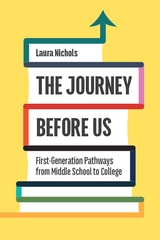
More students are enrolling in college than ever before in U.S. history. Yet, many never graduate. In The Journey Before Us, Laura Nichols examines why this is by sharing the experiences of aspiring first-generation college students as they move from middle-school to young adulthood. By following the educational trajectories and transitions of Latinx, mainly second-generation immigrant students and analyzing national data, Nichols explores the different paths that students take and the factors that make a difference. The interconnected role of schools, neighborhoods, policy, employment, advocates, identity, social class, and family reveal what must change to address the “college completion crisis.” Appropriate for anyone wanting to understand their own educational journey as well as students, teachers, counselors, school administrators, scholars, and policymakers, The Journey Before Us outlines what is needed so that education can once again be a means of social mobility for those who would be the first in their families to graduate from college.
[more]
cover of The Spectacular City: Violence and Performance in Urban Bolivia

The Spectacular City

Violence and Performance in Urban Bolivia

Daniel M. Goldstein

Duke University Press, 2004

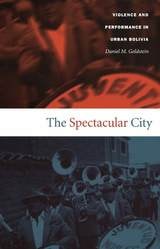
Since the Bolivian revolution in 1952, migrants have come to the city of Cochabamba, seeking opportunity and relief from rural poverty. They have settled in barrios on the city’s outskirts only to find that the rights of citizens—basic rights of property and security, especially protection from crime—are not available to them. In this ethnography, Daniel M. Goldstein considers the significance of and similarities between two kinds of spectacles—street festivals and the vigilante lynching of criminals—as they are performed in the Cochabamba barrio of Villa Pagador. By examining folkloric festivals and vigilante violence within the same analytical framework, Goldstein shows how marginalized urban migrants, shut out of the city and neglected by the state, use performance to assert their national belonging and to express their grievances against the inadequacies of the state’s official legal order.

During the period of Goldstein’s fieldwork in Villa Pagador in the mid-1990s, residents attempted to lynch several thieves and attacked the police who tried to intervene. Since that time, there have been hundreds of lynchings in the poor barrios surrounding Cochabamba. Goldstein presents the lynchings of thieves as a form of horrific performance, with elements of critique and political action that echo those of local festivals. He explores the consequences and implications of extralegal violence for human rights and the rule of law in the contemporary Andes. In rich detail, he provides an in-depth look at the development of Villa Pagador and of the larger metropolitan area of Cochabamba, illuminating a contemporary Andean city from both microethnographic and macrohistorical perspectives. Focusing on indigenous peoples’ experiences of urban life and their attempts to manage their sociopolitical status within the broader context of neoliberal capitalism and political decentralization, The Spectacular City highlights the deep connections between performance, law, violence, and the state.

[more]