Results by title
6 books match the query 'Pequot Indians'
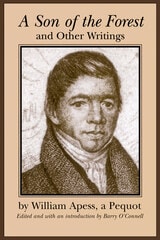
"A Son of the Forest" and Other Writings
William Apess
University of Massachusetts Press, 1997
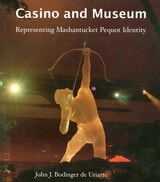
Casino and Museum
Representing Mashantucket Pequot IdentityJohn J. Bodinger de Uriarte
University of Arizona Press, 2007
To some degree, both institutions offer Native representations yet create different strategies for attracting and engaging visitors. While the casino is crucial as an economic generator, the museum has an important role as the space for authentic Mashantucket Pequot images and narratives. The book’s focus is on how the casino and the museum successfully deploy different strategies to take control of the tribe’s identity, image, and cultural agency.
Photographs in the book provide a view of Mashantucket, allowing the reader to study the spaces of the book’s central arguments. They are a key methodology of the project and offer a non-textual opportunity to navigate the sites as well as one finely focused way to work through the representation and formation of the Native American photographic subject—the powerful popular imagining of Native Americans. Casino and Museum presents a unique understanding of the prodigious role that representation plays in the contemporary poetics and politics of Native America. It is essential reading for scholars of Native American studies, museum studies, cultural studies, and photography.
Gambling and Survival in Native North America
Paul Pasquaretta
University of Arizona Press, 2003
The Pequots have found success at their southeastern Connecticut casino in spite of the odds. But in considering their story, Paul Pasquaretta shifts the focus from casinos to the political struggles that have marked the long history of indigenous-colonial relations. Viewing the survival of Native communities in the face of genocide and forced assimilation as a high-stakes game of chance, he examines gambling metaphors in historical and literary contexts to reveal strategies employed by several tribes as they participate in various "games" with white society--whether land re-acquisition, political positioning, or resistance to outside dominance.
Through a comparative analysis of texts spanning four centuries—colonial war narratives, nineteenth-century romance fiction, tribal memorials, Native American novels—Pasquaretta provides a framework for understanding Indian-white relations and the role of "chance" in the realm of colonialism. He explores two intertwining themes: the survival of indigenous peoples in the face of the European invasion of North America and the ongoing contest of Natives and newcomers that has transpired in the marketplace, on the battlefield, and in the courts. In so doing, he considers the impact of reservation gambling on the development of contemporary tribal communities and the role of traditional Indian gambling practices and stories in the survival of indigenous cultural traditions.
Gambling and Survival in Native North America is a wide-ranging book that shows how Native Americans have become active participants in their own survival despite the popular belief that Indian tribes, as "conquered peoples," have been rendered helpless for over a century. Working within a system devised to confine and even destroy them, they have found ways to remain in the game—and, against all odds, have learned to play it well.
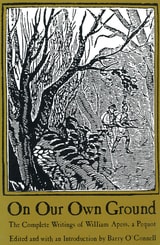
On Our Own Ground
The Complete Writings of William Apess, a PequotWilliam Apess
University of Massachusetts Press, 1992
William Apess was the first Native American to fully, and publicly, speak out regarding the racism and unfair treatment that he and others endured. The author's writing is eloquently delivered, instilling the reader with a realistic framework of a political, historical, and personal mindset.
The Pequot War
Alfred A. Cave
University of Massachusetts Press, 1996
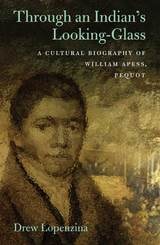
Through an Indian's Looking-Glass
A Cultural Biography of William Apess, PequotDrew Lopenzina
University of Massachusetts Press, 2017
The life of William Apess (1798–1839), a Pequot Indian, Methodist preacher, and widely celebrated writer, provides a lens through which to comprehend the complex dynamics of indigenous survival and resistance in the era of America's early nationhood. Apess's life intersects with multiple aspects of indigenous identity and existence in this period, including indentured servitude, slavery, service in the armed forces, syncretic engagements with Christian spirituality, and Native struggles for political and cultural autonomy. Even more, Apess offers a powerful and provocative voice for the persistence of Native presence in a time and place that was long supposed to have settled its “Indian question” in favor of extinction.
Through meticulous archival research, close readings of Apess's key works, and informed and imaginative speculation about his largely enigmatic life, Drew Lopenzina provides a vivid portrait of this singular Native American figure. This new biography will sit alongside Apess's own writing as vital reading for those interested in early America and indigeneity.